<turbo-stream action="append" target="posts_list"><template><turbo-frame class="main-list__list-item" data-testid="Post" id="post_285984">
    <div class="post" access="public">
  <div class="post__inner">
    <div class="post__main">
  <div class="post__content">
        <a data-turbo-frame="_top" class="post__meta" href="/supporters/posts/when-the-generator-went-quiet">
          Nov 17, 2026
</a>

      <div>
          <a data-turbo-frame="_top" class="post__title" href="/supporters/posts/when-the-generator-went-quiet">
            When the Generator Went Quiet
</a>      </div>


        <div
          class="post__body"
            data-controller="trim"
            data-trim-class-value="rich-text--trimmed"
            data-trim-height-value="220"
        >
          <div class="rich-text" data-trim-target="content">
            <body>
<p><span><img alt="" height="941" src="https://imgproxy.fourthwall.dev/oIGwOeU724BWaRaZO-A6Kt6LdPv31XFz8ryOquEpt5M/w:890/el:0/sm:1/q:90/enc/YWZlODgxN2ZmMDY4/MGI3OVqxNY4ph957/K6KfOW-NTC4JQjTS/writHuY6xeCY-2So/0s1uEPnQUxp_CJok/gXcYZCWrMmOSV1aX/HfSQCuVdy97fFIMQ/KAbSSE3PvsZS5LHK/7C3r9Wkm2vjJYCUm/vQAZrcoHOp0OIcEf/yE90xu-plgI.webp" width="1672" onerror="this.style.display='none'"></span></p>
<p>Isaiah 30:21 NKJV. Please read Isaiah 30:15–21 in your own Bible and notice the contrast between frantic plans and the steady guidance of God.</p>
<p><strong>Encouragement:</strong> God is not confused by the noise around you or the questions within you. In Christ, He remains near enough to guide the next faithful step.</p>
<p><strong>Invitation:</strong> Give God ten unhurried minutes today, then obey the clearest loving duty already in front of you.</p>
<p>This is an illustrative scene, not a report of a particular mission event. Before sunrise, the small generator behind the barangay store coughed twice and stopped. One moment it was rattling faithfully enough to wake every rooster within three streets. The next moment, the coastal village was quiet except for water folding onto the sand and a gecko offering one final opinion from the chapel wall.</p>
<p>At the edge of the beach, Marites and her nephew Carlo sat beside a weathered banca mending a fishing net. Damp rope crossed their knees. Coconut leaves shivered overhead. An open Bible rested on a wooden crate where the early light could reach it.</p>
<p>Carlo pulled at a knot and frowned. He had received two offers for the next school term. One would keep him on the island near his widowed mother. The other would send him to a larger town where the training was better and the expenses were higher. Everyone had advice. His uncle spoke with the confidence of a man who had never filled out the application. His friends had already decided which choice would make the best photographs. Even the neighbor who sold ice had a five-part plan.</p>
<p>Carlo had prayed, but his prayers had become crowded meetings in which he did most of the talking.</p>
<p>“How do you know when God is answering?” he asked.</p>
<p>Marites kept working the net. “Sometimes I know after I stop telling Him which answer to give.”</p>
<p>Carlo looked toward the silent generator. “Convenient morning for that lesson.”</p>
<p>“The generator has always supported spiritual growth,” she said. “Mostly by breaking.”</p>
<p>They laughed quietly, then returned to the patient work of finding one torn place at a time.</p>
<h2>When every voice sounds urgent</h2>
<p>Many of us want God’s guidance most when several reasonable paths stand in front of us. We may not be choosing between obvious good and obvious evil. We may be deciding about work, study, marriage, ministry, money, care for a parent, or whether to stay when leaving would be easier.</p>
<p>The difficulty is not always that God is silent. Sometimes our lives are so full of urgency that we cannot recognize a voice that refuses to compete by shouting.</p>
<p>Isaiah spoke to people who were tempted to build security through hurried alliances. They wanted visible strength, quick action, and a plan that could be explained to anxious neighbors. God called them back to trust. He did not praise passivity or careless thinking. He exposed the fear underneath their frantic movement.</p>
<p>We do this too. We gather opinions until we are too tired to recognize wisdom. We refresh messages, compare ourselves with people whose circumstances we do not know, and imagine that speed will protect us from regret. A decision begins to feel holy simply because it is urgent.</p>
<p>Yet the Lord is not hurried by our panic.</p>
<p>His guidance is rooted in His character. He is truthful, merciful, just, patient, and faithful. He will not guide us in a way that contradicts the life of Jesus or the clear teaching of Scripture. He may lead us into sacrifice, but never into selfishness disguised as obedience. He may ask for courage, but never for cruelty.</p>
<h2>The voice behind you</h2>
<p>Isaiah describes guidance with the picture of a voice directing the traveler in the way. The point is not that every decision will arrive with an audible sentence. Scripture gives us a richer pattern.</p>
<p>God guides through His written Word. He shapes judgment through prayer. He uses the counsel of mature believers. He opens and closes practical possibilities. He gives gifts, responsibilities, and convictions that become clearer over time. Above all, the Holy Spirit keeps pointing us to Christ.</p>
<p>The Spirit does not exist to decorate our preferred plan with religious language. He reveals Jesus, convicts us of sin, produces His fruit, and teaches us to walk in truth.</p>
<p>That means guidance is not merely information about the future. It is formation for the present.</p>
<p>We often ask, “Which road guarantees the easiest result?” God may be asking, “Will you walk with Me faithfully on the road you choose?” We ask for the complete map. He gives enough light for the next step and asks us to keep our hand in His.</p>
<p>Grace matters here. We are not saved by making a flawless sequence of decisions. We are saved by Christ. Our hope does not rest on correctly decoding every circumstance. It rests on the Savior who can correct, redirect, forgive, and redeem.</p>
<h2>Quiet is not emptiness</h2>
<p>The generator remained silent while the eastern sky turned gold. Without its metallic rattle, Carlo heard details that had been present all along: a paddle tapping the side of a banca, the sweep of a broom on a porch, a woman calling a child to breakfast, and the small tearing sound when Marites pulled damaged twine from the net.</p>
<p>“I thought quiet would make the answer obvious,” he said.</p>
<p>“Quiet makes things easier to hear,” she replied. “It does not make God our employee.”</p>
<p>That is an important mercy. Silence before God is not a technique for forcing Him to speak on schedule. It is an act of trust. We stop performing long enough to remember who He is.</p>
<p>Some prayers should contain fewer explanations. God already knows the history, the budget, the fear, and the conversation that keeps replaying at two in the morning. We can bring all of it honestly, then remain with Him without demanding immediate certainty.</p>
<p>In silence, hidden motives often rise. We notice that one choice promises applause. Another protects our pride. A third lets us avoid an apology. What we called confusion may partly be reluctance to obey something already clear.</p>
<p>God’s presence is not empty when no new instruction arrives. Communion with Him is itself a gift. The Lord is not only useful because He answers questions. He is worthy because He is God, and we are loved in His Son.</p>
<h2>Test the guidance</h2>
<p>Not every strong feeling is the voice of God. Excitement can feel spiritual. Fear can sound like prudence. A desire repeated often enough can borrow the tone of conviction.</p>
<p>Scripture therefore invites discernment, not superstition.</p>
<p>First, test a possible direction by the Bible. God will not lead us to dishonesty, exploitation, sexual unfaithfulness, revenge, neglect of those entrusted to us, or prideful contempt. A path that requires sin is not made holy by calling it a calling.</p>
<p>Second, look for the character of Christ. Does this decision make room for love, truth, humility, courage, service, and self-control? Does it treat people as neighbors rather than obstacles?</p>
<p>Third, seek wise counsel. Choose people who love God more than they love controlling your answer. Mature counsel may ask uncomfortable questions without taking ownership of your life.</p>
<p>Fourth, examine practical responsibility. Faith is not carelessness. Count the cost. Study the facts. Keep promises. Pay attention to timing. A closed door may be guidance, but sometimes it is simply a door that requires preparation and patience.</p>
<p>Finally, allow time when time is available. Some choices become clearer after the first emotion settles. Fruit needs a season before it can be examined.</p>
<h2>The next faithful knot</h2>
<p>Marites pointed to a tear in the net. Carlo had been studying the whole tangled bundle and had missed the broken strand beside his thumb.</p>
<p>“Start there,” she said.</p>
<p>He tied the loose ends together, pulled them snug, and moved to the next opening.</p>
<p>Many decisions work like that. We want to repair the entire future before breakfast. God asks us to attend to the next faithful knot.</p>
<p>Before Carlo knew whether he would leave the island, he could finish the application honestly. He could ask both schools direct questions about costs. He could speak with his mother instead of guessing what she wanted. He could pray with church leaders who knew his life. He could refuse to choose merely to impress his friends.</p>
<p>None of those actions guaranteed an outcome. Together, they created room for wisdom.</p>
<p>You may not know the final answer today. What responsibility is already clear? Make the call. Read the passage. Complete the form. Apologize. Ask for counsel. Rest before deciding. Serve the person in front of you.</p>
<p>Obedience in small things trains the heart to recognize God’s ways in larger ones.</p>
<h2>Sabbath and the freedom to stop</h2>
<p>Sabbath is one of God’s weekly gifts to a noisy world. It announces that He is Creator and Redeemer, and that our lives do not depend on continuous production.</p>
<p>For one sacred day, we stop ordinary work. We worship, receive, remember, and serve with compassion. The unfinished list remains unfinished, and the world continues under God’s care.</p>
<p>This rest can expose how much fear hides inside our decision-making. We imagine that if we pause, an opportunity will vanish and God will lose track of us. Sabbath answers with grace: your Father is awake when you sleep. Christ’s finished work, not your restless effort, is the ground of your acceptance.</p>
<p>Sabbath does not promise that Monday will contain every answer. It restores the soul that must live faithfully without possessing every answer.</p>
<p>In worship, we remember the story larger than our private crossroads. Jesus lived, died, rose, ministers for us, and will return. History is moving toward His kingdom, not toward the success or failure of one application.</p>
<p>That hope shrinks panic without making our choices meaningless. Our decisions matter, but they are not our savior.</p>
<h2>God can redirect a willing heart</h2>
<p>One reason we fear decisions is the belief that a single mistake will place us permanently outside God’s reach. Scripture does not support that fragile picture of providence.</p>
<p>Human choices have consequences. Wisdom matters. Sin wounds people. We should not use grace as an excuse for recklessness.</p>
<p>But God is not defeated by a sincere believer who misunderstands a circumstance. He can close a path, send counsel, awaken conviction, and teach through disappointment. He can bring us home after pride has carried us farther than we intended.</p>
<p>Peter misunderstood Jesus repeatedly and was still restored for service. Paul planned journeys and sometimes found the route redirected. The early church learned God’s will through prayer, Scripture, community, providence, and patient correction.</p>
<p>The safest place is not a future without uncertainty. It is a present surrendered to Christ.</p>
<p>When we discover that we were wrong, we do not need to defend the wrong turn until it becomes a lifestyle. We can confess, receive forgiveness, repair what we can, and follow the Shepherd from where we actually are.</p>
<h2>Hearing through compassionate service</h2>
<p>Sometimes guidance becomes clearer while we serve.</p>
<p>This does not mean staying busy to avoid prayer. It means that love places our questions in a healthier frame. When we bring food to a grieving family, help a child study, repair a neighbor’s roof, or sit beside someone at the clinic, our private anxieties stop occupying the entire room.</p>
<p>Service also tests our imagined callings. A person who says God is leading them to ministry can begin by serving without a platform. Someone considering mission work can learn to listen, honor local leadership, and help with ordinary tasks. Calling is not proved by how impressive it sounds. It becomes visible in faithful love.</p>
<p>On a Philippine island, Christian service should never turn neighbors into scenery for someone else’s spiritual adventure. The gospel teaches mutual dignity. We receive as well as give. We listen before proposing. We work beside people, not above them.</p>
<p>God’s voice consistently leads toward love of Him and love of neighbor.</p>
<h2>Waiting for the clearest voice</h2>
<p>The Christian hope looks beyond every earthly decision to the return of Jesus.</p>
<p>One day the voices of deception, fear, grief, and death will be silenced. Christ will raise those who sleep in Him. Justice will no longer be delayed. His people will see Him face to face, and guidance will give way to presence.</p>
<p>Until then, we walk by faith. We listen through Scripture. We pray. We learn in community. We take responsible steps. We accept that sometimes God’s wisdom will become visible only after we have traveled farther down the road.</p>
<p>Hope does not make us passive. It makes us patient enough to obey without pretending to be omniscient.</p>
<p>The sun cleared the clouds. Someone restarted the generator, and its familiar rattle returned to the village. Carlo smiled as though an old argument had resumed.</p>
<p>“Did you get your answer?” Marites asked.</p>
<p>“Not the whole answer.”</p>
<p>He held up the repaired part of the net.</p>
<p>“But I know the next knot.”</p>
<p>Sometimes that is how God’s guidance arrives—not as possession of the whole future, but as enough grace for the next faithful act.</p>
<h2>A practice for today</h2>
<p>Read Isaiah 30:15–21 slowly in your own NKJV Bible. Write your decision or worry in one sentence.</p>
<p>Then make four short lists: what Scripture makes clear, what facts you still need, whose wise counsel could help, and what loving duty is already yours today.</p>
<p>Set a timer for ten quiet minutes. Put the phone out of reach. Tell God honestly what you want and what you fear. Ask Him to make you willing to obey, even if His direction is slower or less impressive than the plan you imagined.</p>
<p>When the ten minutes end, do one concrete thing from the clearest list. Do not solve the entire future. Tie the next faithful knot.</p>
<p>If another person is also facing a difficult choice, encourage them without trying to control them. Pray with them. Ask a careful question. Remind them that Christ’s grace is larger than their uncertainty.</p>
<h2>Prayer</h2>
<p>Father, thank You that we do not have to shout above the noise to reach You. Through Jesus, You have brought us near and made us Your children. Quiet the fear that makes us rush, and expose the pride that asks You only to approve our plans. Teach us to recognize Your character in Scripture, to receive wise counsel, and to take responsible steps with humility. Give courage to those facing difficult decisions about family, work, study, health, and service. Protect us from confusing strong feelings with Your voice. Let Sabbath rest remind us that You hold the world while we stop. When we make mistakes, correct us with mercy and lead us back to the faithful path. Make us attentive to the people beside us and willing to serve without seeking attention. Keep our hope fixed on Christ and His return. Today, show us the next faithful knot and give us grace to tie it. Amen.</p>
</body>
          </div>
          <button class="text-button text-button--pale post__action-button hidden" data-action="click-&gt;trim#expand" data-trim-target="button">
    ...Continue reading
</button>
        </div>


        <div class="post__section">
          <div class="post-actions">
            <form class="post-actions__item-form" data-turbo="false" action="/supporters/sign_up" accept-charset="UTF-8" method="get">
  <button class="text-button text-button--small text-button--pale" aria-label="Become a member">
    
    <div class="post-actions__item">
      <svg xmlns="http://www.w3.org/2000/svg" width="14" height="14" fill="none" viewBox="0 0 16 16" role="img" class="post-actions__icon"><path fill="currentColor" fill-rule="evenodd" d="m2.662 7.721 5.14 5.918a.25.25 0 0 0 .378 0l5.142-5.92c1.856-2.21 1.25-4.386.03-5.37-.62-.5-1.407-.711-2.203-.513-.796.197-1.712.833-2.504 2.243a.75.75 0 0 1-1.308-.001c-.794-1.416-1.708-2.054-2.5-2.253-.79-.2-1.573.01-2.19.51-1.214.983-1.822 3.167.015 5.386Zm5.33-5.375C7.172 1.274 6.212.623 5.202.37c-1.292-.325-2.552.032-3.5.8-1.913 1.55-2.524 4.702-.19 7.515l.012.013 5.146 5.925a1.75 1.75 0 0 0 2.642 0l5.146-5.925.008-.009c2.362-2.805 1.75-5.956-.171-7.507-.95-.766-2.213-1.124-3.508-.802-1.01.25-1.974.898-2.795 1.966Z" clip-rule="evenodd"></path></svg>
    </div>

</button></form>
              <form class="post-actions__item-form" data-turbo="false" action="/supporters/sign_up" accept-charset="UTF-8" method="get">
    <button class="text-button text-button--small text-button--pale" aria-label="Become a member">
    
      <div class="post-actions__item">
        <svg xmlns="http://www.w3.org/2000/svg" width="14" height="14" fill="none" viewBox="0 0 16 16" role="img" class="post-actions__icon"><path fill="currentColor" fill-rule="evenodd" d="M1.75 2.25a.25.25 0 0 0-.25.25v8.067c0 .139.112.25.25.25H3c.967 0 1.75.784 1.75 1.75v1.21c0 .216.255.33.416.187l3.053-2.706a1.75 1.75 0 0 1 1.16-.44h4.871a.25.25 0 0 0 .25-.25V2.5a.25.25 0 0 0-.25-.25H1.75ZM0 2.5C0 1.534.784.75 1.75.75h12.5c.966 0 1.75.784 1.75 1.75v8.067a1.75 1.75 0 0 1-1.75 1.75H9.38a.25.25 0 0 0-.166.063L6.16 15.087c-1.13 1-2.911.199-2.911-1.31v-1.21a.25.25 0 0 0-.25-.25H1.75A1.75 1.75 0 0 1 0 10.567V2.5Z" clip-rule="evenodd"></path></svg>
        <span class="post-actions__item-number"></span>
      </div>

</button></form>
            
<div class="dropdown" data-controller="dropdown link-share" data-dropdown-placement-value="bottom-start" data-action="link-share:unavailable-&gt;dropdown#toggle" data-link-share-url-value="https://faith.143studio.com/supporters/posts/when-the-generator-went-quiet?utm_medium=copy-share-link&amp;utm_source=share-link&amp;utm_campaign=post-share-supporter">
      <div class="comment__menu" data-dropdown-target="button" data-action="click->link-share#share">
      <div class="post-actions__item">
        <svg xmlns="http://www.w3.org/2000/svg" width="14" height="14" fill="none" viewBox="0 0 16 16" role="img" class="post-actions__icon"><path fill="currentColor" fill-rule="evenodd" d="M6.996.471a1.41 1.41 0 0 1 2.008 0l4.943 5.013-1.068 1.053L8.75 2.35v9.121h-1.5V2.35L3.12 6.537 2.054 5.484 6.996.471ZM1.5 11.108v3.143c0 .138.111.249.249.249H14.25c.138 0 .249-.11.249-.25v-3.142H16v3.143c0 .965-.781 1.749-1.749 1.749H1.75A1.748 1.748 0 0 1 0 14.25v-3.142h1.5Z" clip-rule="evenodd"></path></svg>
        <span class="post-actions__item-number hidden@sm">Share</span>
      </div>
    </div>


  <div class="dropdown__menu hidden" data-dropdown-target="items">
    <div class="dropdown__items">
        <div class="dropdown__title">Share this post</div>


  <button class="dropdown__item" data-action="click-&gt;dropdown#hide" data-controller="clipboard" data-clipboard-text="https://faith.143studio.com/supporters/posts/when-the-generator-went-quiet?utm_medium=copy-share-link&amp;utm_source=share-link&amp;utm_campaign=post-share-supporter" type="button">
    <div class="dropdown__item-icon">
      <svg xmlns="http://www.w3.org/2000/svg" width="20" height="20" fill="none" viewBox="0 0 16 16" role="img"><path fill="currentColor" fill-rule="evenodd" d="M12.145 1.5a1.762 1.762 0 0 0-1.246.516L8.234 4.681l-1.06-1.06L9.837.955a3.264 3.264 0 0 1 4.615 0l.591.591a3.264 3.264 0 0 1 0 4.613l-3.849 3.85a3.262 3.262 0 0 1-4.614 0l-.593-.592 1.062-1.06.591.592a1.763 1.763 0 0 0 2.493 0l3.85-3.85a1.762 1.762 0 0 0 0-2.492l-.592-.591a1.764 1.764 0 0 0-1.247-.517ZM7.112 6.534c-.468 0-.916.186-1.247.516L2.016 10.9a1.762 1.762 0 0 0 0 2.492m0 0 .592.592a1.764 1.764 0 0 0 2.493 0l2.665-2.665 1.06 1.06-2.664 2.666a3.264 3.264 0 0 1-4.615 0l-.592-.592a3.263 3.263 0 0 1 0-4.614l3.85-3.85a3.264 3.264 0 0 1 4.614 0l.592.593-1.06 1.06-.592-.592c-.331-.33-.78-.516-1.247-.516" clip-rule="evenodd"></path></svg>
    </div>

  
    Copy link

</button>
  <a class="dropdown__item" data-action="click-&gt;dropdown#hide" href="https://twitter.com/intent/tweet?url=https%3A%2F%2Ffaith.143studio.com%2Fsupporters%2Fposts%2Fwhen-the-generator-went-quiet%3Futm_medium%3Dcopy-share-link%26utm_source%3Dshare-link%26utm_campaign%3Dpost-share-supporter" target="_blank">
    <div class="dropdown__item-icon">
      <svg xmlns="http://www.w3.org/2000/svg" width="20" height="20" viewBox="0 0 32 32" fill="none" role="img"><path d="M18.666 13.857 29.093 2h-2.47l-9.056 10.294L10.338 2H2l10.932 15.567L2 30h2.47l9.557-10.873L21.662 30H30M5.36 3.822h3.795L26.62 28.267h-3.794" fill="currentColor"></path></svg>
    </div>

  
    Share on X

</a>
  <a class="dropdown__item" data-action="click-&gt;dropdown#hide" href="https://facebook.com/sharer.php?u=https%3A%2F%2Ffaith.143studio.com%2Fsupporters%2Fposts%2Fwhen-the-generator-went-quiet%3Futm_medium%3Dcopy-share-link%26utm_source%3Dshare-link%26utm_campaign%3Dpost-share-supporter" target="_blank">
    <div class="dropdown__item-icon">
      <svg xmlns="http://www.w3.org/2000/svg" width="20" height="20" viewBox="0 0 14 14" fill="none" role="img"><path d="m5.27 14-.02-6.125H2.625V5.25H5.25V3.5C5.25 1.138 6.713 0 8.82 0c1.009 0 1.876.075 2.129.109v2.468H9.488c-1.146 0-1.368.545-1.368 1.344V5.25h3.255L10.5 7.875H8.12V14H5.27Z" fill="currentColor"></path></svg>
    </div>

  
    Share on Facebook

</a>
    </div>
  </div>
</div>
          </div>

        </div>

      </div>
</div>

  </div>
</div>

</turbo-frame><turbo-frame class="main-list__list-item" data-testid="Post" id="post_285983">
    <div class="post" access="public">
  <div class="post__inner">
    <div class="post__main">
  <div class="post__content">
        <a data-turbo-frame="_top" class="post__meta" href="/supporters/posts/the-umbrella-left-at-the-clinic-door">
          Nov 16, 2026
</a>

      <div>
          <a data-turbo-frame="_top" class="post__title" href="/supporters/posts/the-umbrella-left-at-the-clinic-door">
            The Umbrella Left at the Clinic Door
</a>      </div>


        <div
          class="post__body"
            data-controller="trim"
            data-trim-class-value="rich-text--trimmed"
            data-trim-height-value="220"
        >
          <div class="rich-text" data-trim-target="content">
            <body>
<p><span><img alt="" height="941" src="https://imgproxy.fourthwall.dev/iICum2Eg2cIWtOEiNHBLaH7I7Nc2nKgVZFPDRDxq578/w:890/el:0/sm:1/q:90/enc/NWZlNzY3ZmVkZmYx/MTBmMQx5e0TlFSju/Jdv-CmxYPKqZB2rh/EWymmEo_gAer5hDR/Uin-Q_Owuy5BXYgi/0gUQd87ry4ISXYyY/u9mF2sfT8W3KeFgS/5nyHUgc_TfAJpcRd/Rs-8YvME6kKtDNLN/X_j_frohkKDNElFA/xmWVw77tGGg.webp" width="1672" onerror="this.style.display='none'"></span></p>
<p>Hebrews 10:24–25 NKJV. Please open your own Bible and read Hebrews 10:19–25, noticing how confidence in Christ leads believers toward one another rather than away from one another.</p>
<p><strong>Encouragement:</strong> Christ gives us courage through His presence, His promises, and people who refuse to let us walk through the rain alone.</p>
<p><strong>Invitation:</strong> Encourage one person today with a specific word and one practical act of care.</p>
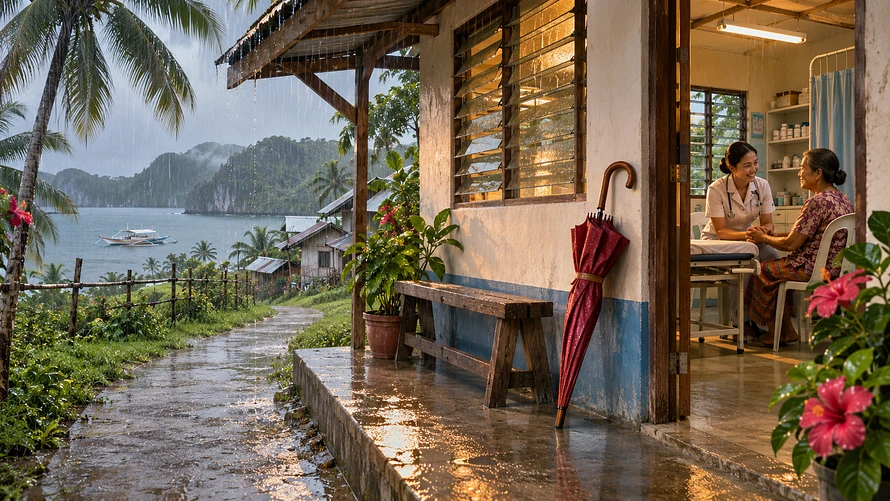
<p>This is an illustrative scene, not a report of a particular patient or mission event. The rain began while everyone inside the coastal barangay clinic was pretending it would not.</p>
<p>The sky over the Philippine island had been gray since lunch. Coconut leaves turned their pale undersides toward the wind, and the sea beyond the wet footpath had darkened from turquoise to slate. Still, the people in the waiting room watched the clouds with determined optimism. On an island, optimism about rain is sometimes less a forecast than a hobby.</p>
<p>When the first heavy drops struck the roof, Lina looked toward the doorway and remembered that her umbrella was hanging behind her kitchen door.</p>
<p>Beside her, Nanay Pilar held a small paper bag of medicine and studied the rain as though she might reason with it. Her son was working on another island. The walk home was not far, but the path was uneven and the downpour had already turned the low places into shining puddles.</p>
<p>“We can wait,” Lina said.</p>
<p>Nanay Pilar nodded. “The rain may finish before we do.”</p>
<p>Ten minutes later, the rain had become more committed.</p>
<p>Then Benjie arrived at the clinic door carrying an umbrella wide enough to shade a small committee. His shirt was wet at the shoulders, his sandals were muddy, and he looked faintly surprised to find half the waiting room staring at him.</p>
<p>“I only came to bring this,” he said, lifting the umbrella. “My wife said Lina would forget hers.”</p>
<p>Lina raised one eyebrow. “Your wife knows me too well.”</p>
<p>Benjie saw Nanay Pilar’s medicine bag and the slick path. A few minutes later, the three of them stepped into the rain together. Benjie held the umbrella. Lina steadied Nanay Pilar’s arm. Their pace was slow, and one side of Benjie became thoroughly wet, which is often the hidden cost of holding an umbrella for three people.</p>
<p>At Nanay Pilar’s gate, Lina noticed another folded umbrella tucked under the older woman’s arm.</p>
<p>“Where did that come from?”</p>
<p>“The clinic door,” Nanay Pilar said. “Someone left it for whoever needed it next.”</p>
<p>The quiet gift raised an important question: How many people keep walking because someone offered courage before they asked for it?</p>
<h2>Encouragement that pays attention</h2>
<p>Hebrews does not tell believers merely to think pleasant thoughts about one another. It tells us to consider one another—to pay attention carefully—so that we can stir up love and good works.</p>
<p>Consideration takes time. It notices the person who has become unusually quiet. It remembers the appointment someone mentioned last week. It sees the tired parent carrying two bags and a sleeping child. It asks why the same neighbor has missed worship twice without turning the answer into gossip.</p>
<p>We cannot encourage people we refuse to notice.</p>
<p>Modern life gives us many ways to look connected while remaining inattentive. We can react to a photograph, send a quick symbol, and scroll past a sentence that deserved a conversation. Digital contact can be useful and kind, especially across islands and countries, but it cannot replace the holy discipline of seeing the person in front of us.</p>
<p>Jesus paid attention. He noticed the woman who touched His garment in a crowd. He heard the blind man others told to be quiet. He welcomed children when the disciples considered them an interruption. His attention did not make every story easy, but it gave people the dignity of being seen by God.</p>
<p>Christian encouragement begins there. We do not approach another person as a project. We remember that Christ already knows them fully. We listen for how love can become truthful and useful in this particular moment.</p>
<p>Sometimes the needed word is, “You are not alone.” Sometimes it is, “I was wrong.” Sometimes it is, “You need rest, and I can cover this task.” Sometimes encouragement includes a loving warning because a friend is moving toward harm. Biblical encouragement is not flattery. It helps another person move toward Christ, truth, courage, and faithful action.</p>
<h2>Courage rooted in Christ</h2>
<p>The passage begins before the verses about meeting together. Hebrews points us to Jesus, our great High Priest, and to the new and living way opened through His sacrifice. We draw near to God because Christ has made the way, not because our record is impressive.</p>
<p>That order matters.</p>
<p>If encouragement depends only on our mood, it will disappear when we are tired. If community rests only on shared interests, it may fracture when preferences change. If courage depends on other people never disappointing us, fear will eventually return.</p>
<p>Our deepest confidence rests in Jesus.</p>
<p>He carried sin to the cross. He rose from the grave. He ministers for us and keeps His promises. When guilt tells us to hide, the gospel invites us to draw near with a true heart. When suffering tells us that hope is foolish, the resurrection answers that death does not receive the final word.</p>
<p>This grace changes how we encourage others. We do not need to pretend that everything will improve by Friday. We do not promise healing, money, success, or an easy answer that God has not promised. We can offer something stronger than optimism: the character of Christ, the truth of Scripture, and the assurance that no faithful life is forgotten by Him.</p>
<p>Lina could not control the rain or remove every concern represented by Nanay Pilar’s medicine bag. She could walk beside her. Benjie could hold the umbrella. An unknown neighbor could leave another umbrella at the door.</p>
<p>Ordinary care becomes Christian encouragement when it points, quietly and honestly, toward the God who stays near.</p>
<h2>When gathering feels difficult</h2>
<p>Hebrews urges believers not to abandon meeting together. This is more than an attendance statistic. Christian gathering is one of God’s gifts for sustaining hope.</p>
<p>We hear Scripture together. We pray for needs larger than our own. We sing when another person has temporarily forgotten the melody of hope. We receive correction and comfort. We share food, responsibilities, questions, and stories of grace.</p>
<p>Yet gathering can be difficult.</p>
<p>Some people carry church wounds. Some feel awkward entering a room where everyone else seems to know when to stand and where the cups are kept. Some are caring for a family member, working through grief, managing disability, or living far from a congregation. Others have been present physically while feeling almost invisible.</p>
<p>The answer is not to use Hebrews as a stick. The passage calls the whole community to consideration. If someone is missing, love asks why. If a new person arrives, hospitality makes room without interrogation. If a member cannot travel, the church finds another way to visit, call, pray, share the message, or bring the meal.</p>
<p>Gathering is not about protecting a program. It is about people drawing near to God and one another through Christ.</p>
<p>Healthy fellowship also makes room for honesty. We do not have to arrive polished. A person should be able to say, “This week was hard,” without receiving a lecture before receiving a chair. Encouragement listens before it solves.</p>
<p>At its best, the church is not a crowd of people proving strength. It is a family learning where to hold the umbrella.</p>
<h2>A word that is specific</h2>
<p>General kindness is pleasant, but specific encouragement is powerful.</p>
<p>“You are wonderful” may brighten a moment. “I saw how patiently you listened to that child” names the grace that is already growing. “God used your visit when I felt forgotten” helps someone understand that quiet faithfulness matters. “Your apology showed courage” strengthens the kind of humility a community needs.</p>
<p>Specific words are believable because they are rooted in attention.</p>
<p>They also protect encouragement from becoming manipulation. Flattery says what will gain influence. Christian encouragement says what is true and useful for building another person up.</p>
<p>This does not require eloquence. Benjie did not deliver a speech at the clinic. He said, “My wife thought you would need this,” and brought what was needed. Nanay Pilar did not write the name of the person who left the folded umbrella. The gift spoke clearly enough: someone expected a stranger to encounter rain and decided that stranger should not face it unprotected.</p>
<p>There is gentle humor in how often God’s care arrives through people carrying ordinary objects. A bowl. A chair. A cup. A rope. An umbrella with one bent rib. We wait for a dramatic sign while mercy is standing at the doorway shaking off rain.</p>
<p>Do not underestimate the word or object God has placed in your hands.</p>
<h2>Encouragement without control</h2>
<p>Care becomes unhealthy when the helper tries to own the outcome.</p>
<p>We may offer advice, then become offended when it is not followed. We may give assistance and expect access to private details. We may use another person’s vulnerable story to make ourselves look compassionate.</p>
<p>That is not the way of Jesus.</p>
<p>Christlike encouragement respects dignity. It asks rather than assumes. It keeps confidence. It does not make the receiver perform gratitude. It knows when a problem requires trained medical, pastoral, legal, or professional help rather than another homemade opinion.</p>
<p>At the clinic, nobody opened Nanay Pilar’s paper bag to inspect it. Nobody asked her to explain her health to the whole waiting room. They saw a slippery path and offered safe company. Their help was modest, appropriate, and enough for the next stretch of road.</p>
<p>Encouragement can be this simple: “Would it help if I came with you?” “May I bring supper?” “Do you want me to listen, pray, or help you make a plan?”</p>
<p>These questions return choice to the person receiving care.</p>
<p>They also keep the helper humble. We are not the Savior. Jesus is. We are witnesses and neighbors, members of one body, servants who give what God has supplied and trust Him with what remains beyond us.</p>
<h2>Sabbath as shared courage</h2>
<p>By sunset the rain had moved out over the sea. Water still dripped from the clinic roof, but the western sky opened into gold.</p>
<p>In the barangay, families prepared for Sabbath. Ordinary work slowed. Food was covered, tools were put away, and the week’s unfinished list was asked to wait outside for a while.</p>
<p>Sabbath is encouragement written into time.</p>
<p>Every week, God reminds us that we are His creatures and His redeemed children. We do not keep the world turning through anxiety. We rest because the Creator remains faithful. We worship because salvation is received through grace. We gather because none of us carries the whole song alone.</p>
<p>For someone who has spent the week encouraging others, Sabbath says, “You may receive now.” For someone who feels forgotten, the shared table says, “There is a place for you.” For someone ashamed of weakness, the gospel says, “Draw near through Christ.”</p>
<p>The day also teaches us to notice. With ordinary business set aside, we may finally hear the concern beneath a friend’s cheerful answer. We may remember the neighbor who cannot come. We may have time to walk slowly enough for another person’s pace.</p>
<p>Sabbath fellowship is not a performance of happiness. It is a community resting together under mercy.</p>
<h2>Encouraging one another toward the Day</h2>
<p>Hebrews gives urgency to encouragement because the Day is approaching. Christian hope looks forward.</p>
<p>Jesus will return. Those who sleep in Him will rise. The lonely will not be forgotten, injustice will not be permanent, and death will not keep its claim. God’s kingdom will be whole, and every wound surrendered to Christ will meet His healing truth.</p>
<p>We remind one another of that future because present trouble can narrow our vision.</p>
<p>Pain says, “This moment is the whole story.” Fear says, “You will always walk alone.” Disappointment says, “Nothing faithful matters.” Encouragement answers with the promises of God.</p>
<p>We do not deny the rain. We open the umbrella and point toward the coming dawn.</p>
<p>Every visit, prayer, meal, honest word, and shared burden becomes a small sign of the kingdom we await. These acts do not earn salvation. Jesus saves us. But His saved people begin to practice the love of His future in the middle of the present storm.</p>
<p>The church encourages one another not merely to feel better but to remain faithful—loving God, serving neighbors, resisting despair, and watching for Christ.</p>
<h2>A practice for today</h2>
<p>Read Hebrews 10:19–25 in your NKJV Bible. Write the name of one person who may need encouragement today.</p>
<p>Before contacting them, pray for enough attention to be specific. Ask yourself what you have genuinely seen: patience, endurance, repentance, generosity, courage, faithful work, or quiet care.</p>
<p>Send one simple message naming that grace. Avoid vague praise. Tell the truth kindly.</p>
<p>Then add one practical offer you can actually keep: a visit, a meal, a ride, a phone call, help with a task, or prayer at a particular time. If the person declines, respect the answer and continue to care without pressure.</p>
<p>Finally, leave room to receive. Tell one trustworthy person where you need encouragement. Christian community has two open hands: one to give and one to accept.</p>
<h2>Prayer</h2>
<p>Lord Jesus, thank You for opening the way for us to draw near to God. When guilt, fear, or disappointment tells us to hide, fix our hope on Your grace, Your resurrection, and Your faithful promises. Teach us to consider one another with patient attention. Give us words that are truthful and acts of care that protect dignity. Forgive us for flattery, control, gossip, and the pride that refuses help. Make our homes, churches, and mission communities places where weary people are noticed and courage is shared. Let Sabbath rest remind us that we live by Your strength, not endless striving. Stay near to those facing illness, grief, loneliness, or uncertainty, and lead them to wise help. Keep us faithful as we wait for Your return, when every storm will end and Your people will gather in unbroken joy. Today, show us one person to encourage and one grace to receive. Amen.</p>
</body>
          </div>
          <button class="text-button text-button--pale post__action-button hidden" data-action="click-&gt;trim#expand" data-trim-target="button">
    ...Continue reading
</button>
        </div>


        <div class="post__section">
          <div class="post-actions">
            <form class="post-actions__item-form" data-turbo="false" action="/supporters/sign_up" accept-charset="UTF-8" method="get">
  <button class="text-button text-button--small text-button--pale" aria-label="Become a member">
    
    <div class="post-actions__item">
      <svg xmlns="http://www.w3.org/2000/svg" width="14" height="14" fill="none" viewBox="0 0 16 16" role="img" class="post-actions__icon"><path fill="currentColor" fill-rule="evenodd" d="m2.662 7.721 5.14 5.918a.25.25 0 0 0 .378 0l5.142-5.92c1.856-2.21 1.25-4.386.03-5.37-.62-.5-1.407-.711-2.203-.513-.796.197-1.712.833-2.504 2.243a.75.75 0 0 1-1.308-.001c-.794-1.416-1.708-2.054-2.5-2.253-.79-.2-1.573.01-2.19.51-1.214.983-1.822 3.167.015 5.386Zm5.33-5.375C7.172 1.274 6.212.623 5.202.37c-1.292-.325-2.552.032-3.5.8-1.913 1.55-2.524 4.702-.19 7.515l.012.013 5.146 5.925a1.75 1.75 0 0 0 2.642 0l5.146-5.925.008-.009c2.362-2.805 1.75-5.956-.171-7.507-.95-.766-2.213-1.124-3.508-.802-1.01.25-1.974.898-2.795 1.966Z" clip-rule="evenodd"></path></svg>
    </div>

</button></form>
              <form class="post-actions__item-form" data-turbo="false" action="/supporters/sign_up" accept-charset="UTF-8" method="get">
    <button class="text-button text-button--small text-button--pale" aria-label="Become a member">
    
      <div class="post-actions__item">
        <svg xmlns="http://www.w3.org/2000/svg" width="14" height="14" fill="none" viewBox="0 0 16 16" role="img" class="post-actions__icon"><path fill="currentColor" fill-rule="evenodd" d="M1.75 2.25a.25.25 0 0 0-.25.25v8.067c0 .139.112.25.25.25H3c.967 0 1.75.784 1.75 1.75v1.21c0 .216.255.33.416.187l3.053-2.706a1.75 1.75 0 0 1 1.16-.44h4.871a.25.25 0 0 0 .25-.25V2.5a.25.25 0 0 0-.25-.25H1.75ZM0 2.5C0 1.534.784.75 1.75.75h12.5c.966 0 1.75.784 1.75 1.75v8.067a1.75 1.75 0 0 1-1.75 1.75H9.38a.25.25 0 0 0-.166.063L6.16 15.087c-1.13 1-2.911.199-2.911-1.31v-1.21a.25.25 0 0 0-.25-.25H1.75A1.75 1.75 0 0 1 0 10.567V2.5Z" clip-rule="evenodd"></path></svg>
        <span class="post-actions__item-number"></span>
      </div>

</button></form>
            
<div class="dropdown" data-controller="dropdown link-share" data-dropdown-placement-value="bottom-start" data-action="link-share:unavailable-&gt;dropdown#toggle" data-link-share-url-value="https://faith.143studio.com/supporters/posts/the-umbrella-left-at-the-clinic-door?utm_medium=copy-share-link&amp;utm_source=share-link&amp;utm_campaign=post-share-supporter">
      <div class="comment__menu" data-dropdown-target="button" data-action="click->link-share#share">
      <div class="post-actions__item">
        <svg xmlns="http://www.w3.org/2000/svg" width="14" height="14" fill="none" viewBox="0 0 16 16" role="img" class="post-actions__icon"><path fill="currentColor" fill-rule="evenodd" d="M6.996.471a1.41 1.41 0 0 1 2.008 0l4.943 5.013-1.068 1.053L8.75 2.35v9.121h-1.5V2.35L3.12 6.537 2.054 5.484 6.996.471ZM1.5 11.108v3.143c0 .138.111.249.249.249H14.25c.138 0 .249-.11.249-.25v-3.142H16v3.143c0 .965-.781 1.749-1.749 1.749H1.75A1.748 1.748 0 0 1 0 14.25v-3.142h1.5Z" clip-rule="evenodd"></path></svg>
        <span class="post-actions__item-number hidden@sm">Share</span>
      </div>
    </div>


  <div class="dropdown__menu hidden" data-dropdown-target="items">
    <div class="dropdown__items">
        <div class="dropdown__title">Share this post</div>


  <button class="dropdown__item" data-action="click-&gt;dropdown#hide" data-controller="clipboard" data-clipboard-text="https://faith.143studio.com/supporters/posts/the-umbrella-left-at-the-clinic-door?utm_medium=copy-share-link&amp;utm_source=share-link&amp;utm_campaign=post-share-supporter" type="button">
    <div class="dropdown__item-icon">
      <svg xmlns="http://www.w3.org/2000/svg" width="20" height="20" fill="none" viewBox="0 0 16 16" role="img"><path fill="currentColor" fill-rule="evenodd" d="M12.145 1.5a1.762 1.762 0 0 0-1.246.516L8.234 4.681l-1.06-1.06L9.837.955a3.264 3.264 0 0 1 4.615 0l.591.591a3.264 3.264 0 0 1 0 4.613l-3.849 3.85a3.262 3.262 0 0 1-4.614 0l-.593-.592 1.062-1.06.591.592a1.763 1.763 0 0 0 2.493 0l3.85-3.85a1.762 1.762 0 0 0 0-2.492l-.592-.591a1.764 1.764 0 0 0-1.247-.517ZM7.112 6.534c-.468 0-.916.186-1.247.516L2.016 10.9a1.762 1.762 0 0 0 0 2.492m0 0 .592.592a1.764 1.764 0 0 0 2.493 0l2.665-2.665 1.06 1.06-2.664 2.666a3.264 3.264 0 0 1-4.615 0l-.592-.592a3.263 3.263 0 0 1 0-4.614l3.85-3.85a3.264 3.264 0 0 1 4.614 0l.592.593-1.06 1.06-.592-.592c-.331-.33-.78-.516-1.247-.516" clip-rule="evenodd"></path></svg>
    </div>

  
    Copy link

</button>
  <a class="dropdown__item" data-action="click-&gt;dropdown#hide" href="https://twitter.com/intent/tweet?url=https%3A%2F%2Ffaith.143studio.com%2Fsupporters%2Fposts%2Fthe-umbrella-left-at-the-clinic-door%3Futm_medium%3Dcopy-share-link%26utm_source%3Dshare-link%26utm_campaign%3Dpost-share-supporter" target="_blank">
    <div class="dropdown__item-icon">
      <svg xmlns="http://www.w3.org/2000/svg" width="20" height="20" viewBox="0 0 32 32" fill="none" role="img"><path d="M18.666 13.857 29.093 2h-2.47l-9.056 10.294L10.338 2H2l10.932 15.567L2 30h2.47l9.557-10.873L21.662 30H30M5.36 3.822h3.795L26.62 28.267h-3.794" fill="currentColor"></path></svg>
    </div>

  
    Share on X

</a>
  <a class="dropdown__item" data-action="click-&gt;dropdown#hide" href="https://facebook.com/sharer.php?u=https%3A%2F%2Ffaith.143studio.com%2Fsupporters%2Fposts%2Fthe-umbrella-left-at-the-clinic-door%3Futm_medium%3Dcopy-share-link%26utm_source%3Dshare-link%26utm_campaign%3Dpost-share-supporter" target="_blank">
    <div class="dropdown__item-icon">
      <svg xmlns="http://www.w3.org/2000/svg" width="20" height="20" viewBox="0 0 14 14" fill="none" role="img"><path d="m5.27 14-.02-6.125H2.625V5.25H5.25V3.5C5.25 1.138 6.713 0 8.82 0c1.009 0 1.876.075 2.129.109v2.468H9.488c-1.146 0-1.368.545-1.368 1.344V5.25h3.255L10.5 7.875H8.12V14H5.27Z" fill="currentColor"></path></svg>
    </div>

  
    Share on Facebook

</a>
    </div>
  </div>
</div>
          </div>

        </div>

      </div>
</div>

  </div>
</div>

</turbo-frame><turbo-frame class="main-list__list-item" data-testid="Post" id="post_285982">
    <div class="post" access="public">
  <div class="post__inner">
    <div class="post__main">
  <div class="post__content">
        <a data-turbo-frame="_top" class="post__meta" href="/supporters/posts/the-rope-coiled-beside-the-banca">
          Nov 15, 2026
</a>

      <div>
          <a data-turbo-frame="_top" class="post__title" href="/supporters/posts/the-rope-coiled-beside-the-banca">
            The Rope Coiled Beside the Banca
</a>      </div>


        <div
          class="post__body"
            data-controller="trim"
            data-trim-class-value="rich-text--trimmed"
            data-trim-height-value="220"
        >
          <div class="rich-text" data-trim-target="content">
            <body>
<p><span><img alt="" height="941" src="https://imgproxy.fourthwall.dev/wamXoEmi_y45IfmrJ5J7ey-y2kjRyE-SJ60A4-ZO_OY/w:890/el:0/sm:1/q:90/enc/OTdkYTYxNWE5MTQ5/MTE4MkUwvfAAGQec/Xeo0Rvpj38sYdBFF/WVc-FFxgx3AHREKy/fNvzo6k59XGx2BH6/mQSMHEGjrCC1euPZ/mPl6MCX9ko_6FO2_/h_3U-YaDmEmqMtu9/j-zj9W9-ztnuU3kj/QMOSt04-1dg8BU6k/lJP9GWCCBXA.webp" width="1672" onerror="this.style.display='none'"></span></p>
<p>Ecclesiastes 4:9–10 NKJV. Please open your own Bible and read Ecclesiastes 4:7–12, paying attention to the difference between lonely striving and shared strength.</p>
<p><strong>Encouragement:</strong> God often answers our need through ordinary people who are willing to take hold of the same rope.</p>
<p><strong>Invitation:</strong> Ask for one honest kind of help today, then offer one practical kind of help without keeping score.</p>
<p>This is an illustrative scene, not a report of a particular family or mission event. The rope looked as if it had survived three typhoons, two arguments, and at least one goat.</p>
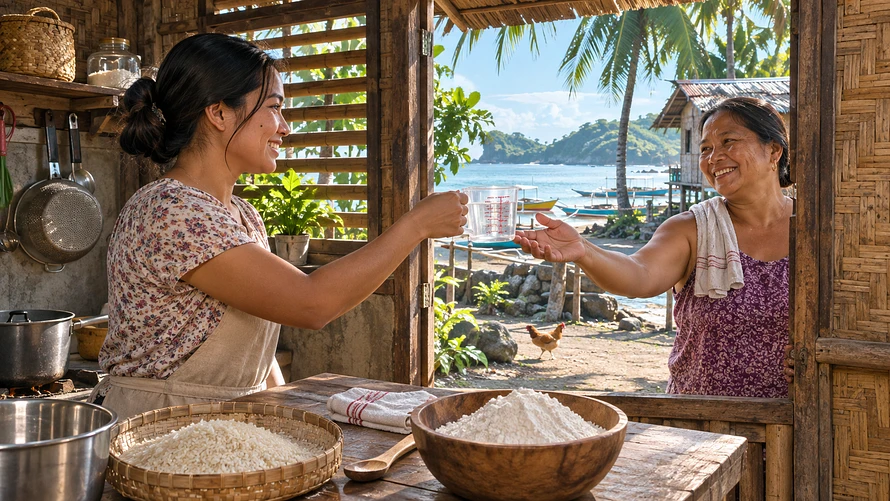
<p>It lay beside a wooden banca at a small landing on a Philippine island, dark with seawater and twisted into a knot that seemed personally offended by the sunrise. Coconut palms leaned above the shore. A brief shower had polished the sand, and the first light spread across the turquoise water in long bands of gold.</p>
<p>Tomas had been working at the knot since before the roosters reached agreement about morning. He pulled one loop, loosened another, and somehow made the middle worse. Sweat ran down his temple though the air was still cool.</p>
<p>“You are negotiating with it too politely,” Mila said.</p>
<p>She had come to help push the banca into deeper water. Instead, she crouched beside the rope and studied it with the seriousness of someone reading a medicine label.</p>
<p>“It knows I need it,” Tomas answered. “That has made it proud.”</p>
<p>Mila took one end. Tomas took the other. Together they lifted, turned, and separated the wet strands until the knot surrendered. From the path came Nanay Cora carrying a woven basket with rice cakes and calamansi. She watched for a moment, then nodded toward the rope.</p>
<p>“That is how trouble behaves,” she said. “It tightens when one person pulls from only one side.”</p>
<p>Nobody wrote the sentence down. Mila was busy coiling the rope, Tomas was checking the outrigger, and Nanay Cora had already begun explaining that breakfast was not a suggestion. Yet the picture remained: two neighbors holding the same weathered line, neither pretending to be stronger than both of them together.</p>
<p>What if some burdens feel unbearable not because we lack faith, but because we keep treating a shared load as a private examination?</p>
<h2>The lonely work beneath the work</h2>
<p>Ecclesiastes looks honestly at human striving. The Teacher describes a person laboring without companion or family, never satisfied with what he gains, and never stopping to ask whom the labor is for. The tragedy is not work itself. Scripture honors diligent work. The tragedy is work sealed off from love, community, and meaning.</p>
<p>We can be surrounded by people and still live this way.</p>
<p>We answer, “I am fine,” because the truthful answer would take longer. We carry every assignment, every worry, and every family need as proof that we are dependable. We may even call it faithfulness. Quietly, however, our soul begins to resemble Tomas pulling one side of the knot. Effort increases. Freedom does not.</p>
<p>There are many reasons we resist help. Perhaps help was offered in the past with conditions attached. Perhaps someone used our weakness as conversation material. Perhaps we learned early that competent people do not need anybody. Perhaps we fear that if we name one need, all the other needs will tumble out behind it like cups from an overfilled cupboard.</p>
<p>God understands those fears. He does not shame us for having limits. He created human beings for communion—with Him and with one another. Before sin entered the world, God said it was not good for the human to be alone. Need is not evidence that creation has failed. Some forms of need belong to the goodness of being creatures rather than gods.</p>
<p>The gospel meets us here. Jesus did not save us from a distance. He took on human flesh, entered our sorrow, bore our sin, and opened the way home through His death and resurrection. We are rescued by grace, not by impressive self-sufficiency. The Christian life begins when we admit that we cannot save ourselves.</p>
<p>Why, then, would we imagine that maturity means never needing help again?</p>
<h2>Two are better than one</h2>
<p>Ecclesiastes says two are better than one because they have a good reward for their labor. If one falls, the other can lift that person. The passage is wonderfully concrete. It does not speak only of warm feelings. It speaks of work, falling, warmth, danger, and a cord made stronger by more than one strand.</p>
<p>Biblical friendship has hands.</p>
<p>It carries a pail. It listens long enough to understand the real question. It sits beside the clinic window. It watches a child while a parent rests. It shares a meal without turning generosity into a speech. It says, “I can come at three,” rather than, “Let me know if you need anything,” and then vanishing into the fog of good intentions.</p>
<p>Mila did not give Tomas a lecture about rope management. She took an end.</p>
<p>That small action matters because service can protect dignity. When someone is tired, grieving, or overwhelmed, they may not need to become the center of a rescue drama. They may simply need a companion who joins the task. Christlike help does not make the helper large and the receiver small. It remembers that both stand on level ground before grace.</p>
<p>This is especially important in ministry and mission relationships. A visitor does not arrive as the hero of an island community. People already possess knowledge, courage, humor, skill, and deep networks of care. Faithful service listens first, honors local leadership, and works beside neighbors. We do not use another person’s difficulty as scenery for our importance.</p>
<p>The strongest picture is not one impressive person dragging everyone else. It is a community learning to take hold together.</p>
<h2>The courage to be lifted</h2>
<p>The verse about helping someone who falls is comforting when we imagine ourselves as the helper. It becomes more demanding when we are the one on the ground.</p>
<p>Receiving help requires courage. It asks us to surrender control over how we appear. It may require a plain sentence: “I do not know what to do next.” “I cannot carry this alone.” “Would you sit with me while I make the call?”</p>
<p>Those sentences can feel risky. Yet hiding has risks too. Unspoken strain can turn into resentment. Exhaustion can make a small problem look like a verdict on our whole life. Isolation gives fear a room where it can repeat itself without interruption.</p>
<p>Wise help brings another voice into that room.</p>
<p>Not every person is a safe confidant, and Scripture does not require reckless disclosure. Choose someone trustworthy: a mature friend, family member, pastor, counselor, doctor, or other qualified professional appropriate to the need. If there is abuse, danger, or a medical crisis, seek trained help and a safe plan. Prayer and practical care are allies, not rivals.</p>
<p>Sometimes the most faithful act is to let another person lift one corner.</p>
<p>Tomas could have insisted that the rope was his responsibility. After all, it belonged to his banca. But ownership of a task did not require isolation in the task. When Mila took the other end, she did not take away his dignity. She helped restore his freedom to move.</p>
<p>Grace often works like that. It does not erase our responsibility. It releases us from pretending that responsibility means solitude.</p>
<h2>Help without a scoreboard</h2>
<p>Christian service is easily distorted when we begin keeping accounts.</p>
<p>We remember every favor we performed and forget every mercy we received. We offer help, then quietly expect loyalty, agreement, gratitude, or influence in return. The gift develops a string, and the string becomes another rope around someone’s ankle.</p>
<p>Jesus gives differently. His grace cannot be purchased. We do not earn His love by becoming useful, and we do not repay the cross by accumulating religious favors. We receive salvation as a gift, then serve because His love is reshaping us.</p>
<p>That means practical help can be generous without becoming controlling. We can ask what is actually useful instead of assuming. We can respect a no. We can serve quietly. We can refuse to retell another person’s vulnerable moment for attention.</p>
<p>It also means the person receiving help is not trapped in debt. Gratitude is beautiful, but Christian community is not a market where every kindness must be returned to the same person in the same amount. Today Mila holds the rope. Tomorrow Tomas may repair a loose step at her home. Next month both may need Nanay Cora to remind them to eat breakfast.</p>
<p>Love circulates.</p>
<p>Paul describes the church as a body. No part is complete by itself. The hand does not invoice the foot for assistance. Each receives life from Christ, the Head, and each contributes according to the gifts God supplies.</p>
<p>This protects us from both pride and despair. We are not the whole body, so we do not need to do everything. We are part of the body, so our faithful contribution matters.</p>
<h2>Sabbath and the unfinished rope</h2>
<p>By late afternoon the banca had returned. The catch was modest, the sun was lower, and the rope was damp again. Tomas rinsed it and began making a careful coil beneath the shelter.</p>
<p>There was more work available. There is always more work available. A board could be sanded. A net could be mended. A list could be extended with impressive speed.</p>
<p>But sunset was approaching, and the household prepared to welcome Sabbath.</p>
<p>Sabbath rest is a weekly confession that God remains God when our hands stop. We lay down ordinary labor, not because every rope is perfectly coiled, but because creation and redemption do not depend on our endless effort. We receive the day as a gift from the One who made us and saves us.</p>
<p>For people who struggle to accept help, Sabbath can feel like being lifted. God interrupts the argument that our worth depends on output. He gathers rich and poor, strong and tired, helper and helped into the same holy time. All receive. All rest under mercy.</p>
<p>The unfinished task may still be present after sunset, but it loses its throne.</p>
<p>Rest also creates room for community. Meals take longer. Scripture is opened. Songs are sung with varying levels of agreement about the correct key. A neighbor’s absence is noticed. Someone who carried the week alone discovers a table where another chair can be added.</p>
<p>The peace of Sabbath is not escape from compassionate service. Jesus showed that mercy belongs within the day. Rest restores us to love God and neighbor without the feverish need to prove ourselves.</p>
<h2>When the load cannot be fixed</h2>
<p>Some burdens are not knots that two people can untie before breakfast.</p>
<p>Grief cannot be repaired with a clever sentence. Chronic illness may continue. A family may wait for reconciliation that has not come. Financial pressure may require months of patient decisions. Loneliness may remain even after someone has bravely joined a group.</p>
<p>In those seasons, companionship is still a gift.</p>
<p>The friend who cannot fix the loss can refuse to disappear. The church that cannot answer every question can bring food, offer transport, pray without performance, and remember important dates. Compassion does not need to promise a miracle or a financial outcome. It can tell the truth: “I do not know how this will change, but you should not have to face today unseen.”</p>
<p>Jesus Himself wept at Lazarus’s tomb even though resurrection was coming. His tears teach us that hope does not hurry sorrow out of the room.</p>
<p>Our ultimate hope rests in Christ’s return. The dead who sleep in Him will rise. Separation, sickness, exploitation, and death will not continue forever. God will make all things new, and no faithful act of love will be wasted.</p>
<p>Until then, we become signs of that coming kingdom by staying near, lifting carefully, and allowing ourselves to be lifted.</p>
<h2>A practice for today</h2>
<p>Read Ecclesiastes 4:7–12 in your NKJV Bible. On a sheet of paper, draw two short columns.</p>
<p>At the top of the first, write, “One burden I should name.” Choose something specific and appropriate to share. It might be a task, a decision, a ride, a meal, a prayer need, or the need for skilled counsel. Write the name of one trustworthy person you can approach.</p>
<p>At the top of the second, write, “One rope I can take hold of.” Think of someone whose load could be made lighter by one concrete action. Ask before assuming. Offer a clear, manageable form of help.</p>
<p>Then take both steps within twenty-four hours: make one honest request and one practical offer.</p>
<p>Do not measure your faith by whether you can carry everything. Measure the next step by whether it moves toward truth, grace, and love.</p>
<h2>Prayer</h2>
<p>Lord Jesus, thank You for coming near and carrying what we could never carry alone. Forgive us for the pride that hides our need and for the pride that turns service into a performance. Give us wisdom to choose trustworthy companions, courage to ask for help, and humility to receive it. Open our eyes to the burdens beside us. Teach us to serve in practical ways that protect dignity and expect nothing in return. Bless homes, churches, and mission communities with honest friendship and shared strength. Let Sabbath rest loosen our frantic striving and remind us that we live by Your grace. Stay close to those whose burdens cannot be quickly fixed. Keep our hope rooted in Your resurrection and Your promised return, when every faithful friendship will be gathered into Your unbroken kingdom. Today, show us one burden to name and one rope to take hold of. Amen.</p>
</body>
          </div>
          <button class="text-button text-button--pale post__action-button hidden" data-action="click-&gt;trim#expand" data-trim-target="button">
    ...Continue reading
</button>
        </div>


        <div class="post__section">
          <div class="post-actions">
            <form class="post-actions__item-form" data-turbo="false" action="/supporters/sign_up" accept-charset="UTF-8" method="get">
  <button class="text-button text-button--small text-button--pale" aria-label="Become a member">
    
    <div class="post-actions__item">
      <svg xmlns="http://www.w3.org/2000/svg" width="14" height="14" fill="none" viewBox="0 0 16 16" role="img" class="post-actions__icon"><path fill="currentColor" fill-rule="evenodd" d="m2.662 7.721 5.14 5.918a.25.25 0 0 0 .378 0l5.142-5.92c1.856-2.21 1.25-4.386.03-5.37-.62-.5-1.407-.711-2.203-.513-.796.197-1.712.833-2.504 2.243a.75.75 0 0 1-1.308-.001c-.794-1.416-1.708-2.054-2.5-2.253-.79-.2-1.573.01-2.19.51-1.214.983-1.822 3.167.015 5.386Zm5.33-5.375C7.172 1.274 6.212.623 5.202.37c-1.292-.325-2.552.032-3.5.8-1.913 1.55-2.524 4.702-.19 7.515l.012.013 5.146 5.925a1.75 1.75 0 0 0 2.642 0l5.146-5.925.008-.009c2.362-2.805 1.75-5.956-.171-7.507-.95-.766-2.213-1.124-3.508-.802-1.01.25-1.974.898-2.795 1.966Z" clip-rule="evenodd"></path></svg>
    </div>

</button></form>
              <form class="post-actions__item-form" data-turbo="false" action="/supporters/sign_up" accept-charset="UTF-8" method="get">
    <button class="text-button text-button--small text-button--pale" aria-label="Become a member">
    
      <div class="post-actions__item">
        <svg xmlns="http://www.w3.org/2000/svg" width="14" height="14" fill="none" viewBox="0 0 16 16" role="img" class="post-actions__icon"><path fill="currentColor" fill-rule="evenodd" d="M1.75 2.25a.25.25 0 0 0-.25.25v8.067c0 .139.112.25.25.25H3c.967 0 1.75.784 1.75 1.75v1.21c0 .216.255.33.416.187l3.053-2.706a1.75 1.75 0 0 1 1.16-.44h4.871a.25.25 0 0 0 .25-.25V2.5a.25.25 0 0 0-.25-.25H1.75ZM0 2.5C0 1.534.784.75 1.75.75h12.5c.966 0 1.75.784 1.75 1.75v8.067a1.75 1.75 0 0 1-1.75 1.75H9.38a.25.25 0 0 0-.166.063L6.16 15.087c-1.13 1-2.911.199-2.911-1.31v-1.21a.25.25 0 0 0-.25-.25H1.75A1.75 1.75 0 0 1 0 10.567V2.5Z" clip-rule="evenodd"></path></svg>
        <span class="post-actions__item-number"></span>
      </div>

</button></form>
            
<div class="dropdown" data-controller="dropdown link-share" data-dropdown-placement-value="bottom-start" data-action="link-share:unavailable-&gt;dropdown#toggle" data-link-share-url-value="https://faith.143studio.com/supporters/posts/the-rope-coiled-beside-the-banca?utm_medium=copy-share-link&amp;utm_source=share-link&amp;utm_campaign=post-share-supporter">
      <div class="comment__menu" data-dropdown-target="button" data-action="click->link-share#share">
      <div class="post-actions__item">
        <svg xmlns="http://www.w3.org/2000/svg" width="14" height="14" fill="none" viewBox="0 0 16 16" role="img" class="post-actions__icon"><path fill="currentColor" fill-rule="evenodd" d="M6.996.471a1.41 1.41 0 0 1 2.008 0l4.943 5.013-1.068 1.053L8.75 2.35v9.121h-1.5V2.35L3.12 6.537 2.054 5.484 6.996.471ZM1.5 11.108v3.143c0 .138.111.249.249.249H14.25c.138 0 .249-.11.249-.25v-3.142H16v3.143c0 .965-.781 1.749-1.749 1.749H1.75A1.748 1.748 0 0 1 0 14.25v-3.142h1.5Z" clip-rule="evenodd"></path></svg>
        <span class="post-actions__item-number hidden@sm">Share</span>
      </div>
    </div>


  <div class="dropdown__menu hidden" data-dropdown-target="items">
    <div class="dropdown__items">
        <div class="dropdown__title">Share this post</div>


  <button class="dropdown__item" data-action="click-&gt;dropdown#hide" data-controller="clipboard" data-clipboard-text="https://faith.143studio.com/supporters/posts/the-rope-coiled-beside-the-banca?utm_medium=copy-share-link&amp;utm_source=share-link&amp;utm_campaign=post-share-supporter" type="button">
    <div class="dropdown__item-icon">
      <svg xmlns="http://www.w3.org/2000/svg" width="20" height="20" fill="none" viewBox="0 0 16 16" role="img"><path fill="currentColor" fill-rule="evenodd" d="M12.145 1.5a1.762 1.762 0 0 0-1.246.516L8.234 4.681l-1.06-1.06L9.837.955a3.264 3.264 0 0 1 4.615 0l.591.591a3.264 3.264 0 0 1 0 4.613l-3.849 3.85a3.262 3.262 0 0 1-4.614 0l-.593-.592 1.062-1.06.591.592a1.763 1.763 0 0 0 2.493 0l3.85-3.85a1.762 1.762 0 0 0 0-2.492l-.592-.591a1.764 1.764 0 0 0-1.247-.517ZM7.112 6.534c-.468 0-.916.186-1.247.516L2.016 10.9a1.762 1.762 0 0 0 0 2.492m0 0 .592.592a1.764 1.764 0 0 0 2.493 0l2.665-2.665 1.06 1.06-2.664 2.666a3.264 3.264 0 0 1-4.615 0l-.592-.592a3.263 3.263 0 0 1 0-4.614l3.85-3.85a3.264 3.264 0 0 1 4.614 0l.592.593-1.06 1.06-.592-.592c-.331-.33-.78-.516-1.247-.516" clip-rule="evenodd"></path></svg>
    </div>

  
    Copy link

</button>
  <a class="dropdown__item" data-action="click-&gt;dropdown#hide" href="https://twitter.com/intent/tweet?url=https%3A%2F%2Ffaith.143studio.com%2Fsupporters%2Fposts%2Fthe-rope-coiled-beside-the-banca%3Futm_medium%3Dcopy-share-link%26utm_source%3Dshare-link%26utm_campaign%3Dpost-share-supporter" target="_blank">
    <div class="dropdown__item-icon">
      <svg xmlns="http://www.w3.org/2000/svg" width="20" height="20" viewBox="0 0 32 32" fill="none" role="img"><path d="M18.666 13.857 29.093 2h-2.47l-9.056 10.294L10.338 2H2l10.932 15.567L2 30h2.47l9.557-10.873L21.662 30H30M5.36 3.822h3.795L26.62 28.267h-3.794" fill="currentColor"></path></svg>
    </div>

  
    Share on X

</a>
  <a class="dropdown__item" data-action="click-&gt;dropdown#hide" href="https://facebook.com/sharer.php?u=https%3A%2F%2Ffaith.143studio.com%2Fsupporters%2Fposts%2Fthe-rope-coiled-beside-the-banca%3Futm_medium%3Dcopy-share-link%26utm_source%3Dshare-link%26utm_campaign%3Dpost-share-supporter" target="_blank">
    <div class="dropdown__item-icon">
      <svg xmlns="http://www.w3.org/2000/svg" width="20" height="20" viewBox="0 0 14 14" fill="none" role="img"><path d="m5.27 14-.02-6.125H2.625V5.25H5.25V3.5C5.25 1.138 6.713 0 8.82 0c1.009 0 1.876.075 2.129.109v2.468H9.488c-1.146 0-1.368.545-1.368 1.344V5.25h3.255L10.5 7.875H8.12V14H5.27Z" fill="currentColor"></path></svg>
    </div>

  
    Share on Facebook

</a>
    </div>
  </div>
</div>
          </div>

        </div>

      </div>
</div>

  </div>
</div>

</turbo-frame><turbo-frame class="main-list__list-item" data-testid="Post" id="post_285981">
    <div class="post" access="public">
  <div class="post__inner">
    <div class="post__main">
  <div class="post__content">
        <a data-turbo-frame="_top" class="post__meta" href="/supporters/posts/the-chair-saved-for-the-quiet-child">
          Nov 14, 2026
</a>

      <div>
          <a data-turbo-frame="_top" class="post__title" href="/supporters/posts/the-chair-saved-for-the-quiet-child">
            The Chair Saved for the Quiet Child
</a>      </div>


        <div
          class="post__body"
            data-controller="trim"
            data-trim-class-value="rich-text--trimmed"
            data-trim-height-value="220"
        >
          <div class="rich-text" data-trim-target="content">
            <body>
<p><span><img alt="" height="941" src="https://imgproxy.fourthwall.dev/7jHonZ3ayJ42ialyltVVVvukbZdVid0gg8BAxXo7vMY/w:890/el:0/sm:1/q:90/enc/ODA0YTQzYjI4MmZj/NDA1M_XUdVs6GCh8/BeVkmastLyXTh7nh/IOrXpFzfF0Y1ZjfO/IWepa5e7EVz-mH0O/YZA9fDAYltCOToIj/cAi2-uVot0fuwpqt/n-K0A9S5dca3TKX4/3G6QBTtXwqhJUVE4/dB8I8c8_1mTL-CCN/X6H8brjkumI.webp" width="1672" onerror="this.style.display='none'"></span></p>
<p>Mark 10:14 NKJV. Please open your own Bible and read Mark 10:13–16 slowly, noticing who moves toward Jesus and who tries to manage the doorway.</p>
<p><strong>Encouragement:</strong> Jesus does not treat quiet, small, uncertain people as interruptions. He makes room for them and calls His church to do the same.</p>
<p><strong>Invitation:</strong> Save one chair, learn one name, and give one overlooked person your unhurried attention this week.</p>
<p>This scene is illustrative, not a report of a particular child, family, church, or mission event. On a small Philippine island, the Sabbath morning breeze arrived before most of the congregation did. It carried salt from the water, smoke from somebody’s breakfast fire, and the faint opinion of a rooster that believed sunrise required his personal supervision.</p>
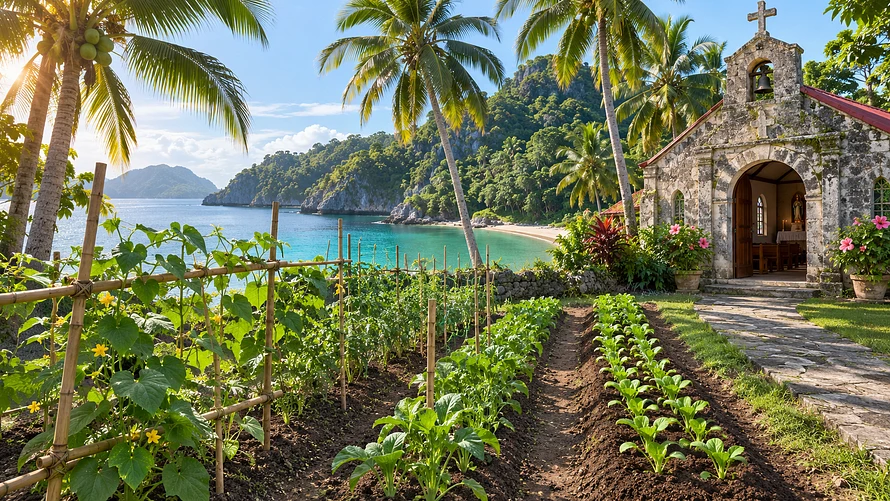
<p>The chapel stood a short walk above the shore. Its concrete walls were painted cream, though the sea air had begun adding its own gray decorations near the windows. On the veranda, two young teachers arranged low plastic chairs for the children’s class. Red chairs went in one row, blue chairs in another, and one green chair refused to match anything.</p>
<p>“Put it at the end,” Mara said.</p>
<p>Her cousin Benjie turned the green chair around as though another angle might improve its manners. “It still looks green.”</p>
<p>“That is usually what green chairs do.”</p>
<p>They laughed quietly and kept working. A woven mat went near the front. A jar held pencils sharpened to very different lengths. A paper boat, left from the previous week, rested beside an open Bible. No printed words were visible from where the children would sit; the Bible was simply open, waiting to be read aloud.</p>
<p>Mara counted the chairs. Twelve children usually came. She set out thirteen.</p>
<p>“Who is the extra chair for?” Benjie asked.</p>
<p>Mara looked down the coconut-lined footpath. “Someone who has not decided yet.”</p>
<p>Near the bend stood a boy named Nico. He was new to the barangay and had come with his aunt to the market during the week. A neighbor had invited him to the children’s class, but he had not said yes. He had not said no either. At eight years old, he had already learned a useful adult skill: standing close enough to observe while pretending he was on his way somewhere else.</p>
<p>Nico watched the other children arrive. They greeted one another, compared sandals, and argued cheerfully about whether the paper boat could survive actual water. He stayed near a palm tree and studied the path as though it contained important government documents.</p>
<p>Mara saw him. She did not call his name across the yard. She did not wave both arms and make twelve children turn around. She simply left the green chair empty.</p>
<p>The question beneath this ordinary scene is one many people carry long after childhood: Is there a place for me if I am not sure how to enter?</p>
<h2>Christian encouragement for children and families</h2>
<p>Mark 10:13–16 gives us a tender and uncomfortable picture. People bring children to Jesus so He can touch them. The disciples rebuke those who come. Perhaps they think they are protecting Jesus’ time. Perhaps they believe more serious matters deserve His attention. Whatever their reasoning, they become guards at a door Jesus intends to keep open.</p>
<p>Jesus is displeased. He tells them to let the little children come and not forbid them. Then He receives the children, embraces them, and blesses them.</p>
<p>Read the complete passage in your own NKJV Bible. Notice that the children do not give speeches. They do not demonstrate advanced understanding. They are brought in dependence, and Jesus welcomes them.</p>
<p>The kingdom of God is received, not achieved.</p>
<p>That truth begins with grace. None of us enters God’s family by being impressive enough. We come because Christ has opened the way. His life reveals the Father’s love. His death carries the guilt of our sin. His resurrection declares that death and evil will not have the final word. We are saved by His mercy, not by our spiritual résumé.</p>
<p>Children often understand dependence more honestly than adults do. They ask for help before checking whether the request will make them look competent. They receive food they did not buy, sleep under roofs they did not build, and trust hands stronger than their own. This does not mean every child is naturally saintly. Anyone who has watched two children negotiate one mango knows the doctrine of human selfishness remains well supported.</p>
<p>But children remind us that life itself is received.</p>
<p>Adults spend years trying to hide this fact. We prefer to appear self-sufficient. We organize, plan, earn, repair, and explain. These are useful abilities, but they cannot reconcile us to God. The gospel asks us to come with empty hands and trust what Jesus has done.</p>
<p>That can feel harder than working for approval. Work gives us something to count. Grace gives us Someone to trust.</p>
<h2>The people near the edge</h2>
<p>Nico moved from the palm tree to the chapel steps. That was progress, though no one announced it.</p>
<p>The class began with a song. One child sang loudly, one sang in a key known only to migrating birds, and another moved her lips without producing any sound. Mara welcomed everyone and told them they would hear how Jesus received children who were almost kept away.</p>
<p>“Why would anybody stop them?” a girl asked.</p>
<p>Benjie looked at the row of children. “Sometimes people think God only wants the ones who already know what to do.”</p>
<p>Nico could hear from the steps.</p>
<p>Church communities do not usually say, “Only confident people may enter.” We communicate it in smaller ways. We use words newcomers do not understand. We keep conversations inside familiar circles. We assume quiet people prefer to be ignored. We plan every chair for the people already expected.</p>
<p>Children notice these signals quickly. So do widows, newcomers, people with disabilities, tired parents, teenagers who are unsure what they believe, and adults returning after years away. Many stand near the edge, watching to see whether the welcome is real.</p>
<p>Compassionate Christian service begins by noticing without embarrassing.</p>
<p>Jesus saw people others treated as delays. He heard blind beggars when crowds tried to silence them. He spoke with women others avoided. He touched people labeled unclean. He welcomed children when His own disciples tried to improve the guest list.</p>
<p>Following Jesus means letting His attention retrain ours.</p>
<p>This is not a call to perform friendliness. People can feel when welcome is a project designed to make the helper feel noble. Genuine hospitality respects choice. Mara did not drag Nico from the path or demand his story. She made the place visible and left room for him to decide.</p>
<p>Love can be patient at the doorway.</p>
<h2>A chair is a small theology</h2>
<p>An empty chair can look like wasted space. In the kingdom of God, it can become a promise.</p>
<p>The chair says, “We expected that someone else might come.”</p>
<p>It says, “Your arrival will not inconvenience us.”</p>
<p>It says, “You do not have to take another person’s place to belong.”</p>
<p>Churches express theology through ordinary arrangements. A shaded place for an elderly neighbor says something about dignity. A clear path for a wheelchair says something about the body of Christ. Simple words for a new believer say something about patience. Safe procedures for children say something about protection. A meal with enough for one more says something about grace.</p>
<p>Buildings and programs do not save people. Jesus saves people. Yet our practical choices can either support the truth we preach or quietly contradict it.</p>
<p>If we teach that Christ welcomes sinners but make newcomers feel like trespassers, our chairs are arguing with our sermon.</p>
<p>If we say children matter but give them exhausted leftovers of time, unsafe spaces, or adults who have not prepared, our schedule is speaking louder than our words.</p>
<p>Children’s ministry is not entertainment offered while important worship happens elsewhere. It is discipleship. It is also a trust. Adults who serve children must be accountable, appropriate, and safe. Warmth never replaces wise safeguards. Christian communities should protect children, respect parents and guardians, and respond seriously to any concern.</p>
<p>Jesus’ welcome is tender, never careless.</p>
<h2>Receiving the kingdom</h2>
<p>Mara opened the Bible and read the passage aloud. She explained that receiving God’s kingdom like a child does not mean refusing to grow in wisdom. Scripture calls believers to mature faith. It means receiving the gift of God with trust rather than pride.</p>
<p>“Can somebody earn a blessing?” Benjie asked.</p>
<p>Several hands rose.</p>
<p>One child said yes because she had swept the floor without being asked.</p>
<p>Another said no because blessings were not wages.</p>
<p>A third said it depended on whether the blessing was dessert.</p>
<p>The class considered this with the seriousness it deserved.</p>
<p>God does care about obedience. Grace does not make our choices unimportant. But obedience is our response to love, not the price of love. We do not persuade Christ to receive us by behaving perfectly. He receives us, forgives us, and begins teaching us how to live.</p>
<p>This protects children from a cruel misunderstanding: that God is pleased only when they never make mistakes. It also protects adults who still carry that fear from childhood.</p>
<p>The Father is not waiting for one wrong move so He can remove your chair.</p>
<p>Sin is serious because it wounds people and separates us from God. Confession matters. Repentance matters. But forgiveness rests on Christ’s faithfulness. When we fall, we return to Him. When we are ashamed, we do not need to hide behind the palm tree forever.</p>
<p>Grace creates courage to come closer.</p>
<h2>Sabbath room for people</h2>
<p>The class ended before the main worship service. Families began gathering inside the chapel. Someone tested a microphone, producing one loud thump that startled a gecko into reconsidering its location.</p>
<p>Sabbath is a weekly testimony that people are more than their output. For six days we work, solve, carry, sell, teach, fish, cook, repair, and count. On the seventh day, God invites us to rest in His completed care.</p>
<p>Children need this truth. Adults do too.</p>
<p>The world often measures children by grades, speed, behavior, confidence, or future usefulness. The world measures adults by income, efficiency, influence, and visible success. Sabbath interrupts the measuring. It says our deepest identity is received from the Creator and Redeemer.</p>
<p>We gather because God is worthy, not because we completed every task. We rest because His love is sufficient, not because the week behaved politely.</p>
<p>Sabbath can make churches spacious again. There is time to hear the quiet answer. Time to share food. Time to walk with a child instead of rushing ahead. Time to notice the person on the step.</p>
<p>Rest becomes a form of hospitality when it gives another person unhurried attention.</p>
<h2>When the green chair moved</h2>
<p>Nico waited until the songbooks were carried inside. Then he approached the veranda.</p>
<p>Mara was collecting pencils. She looked up and smiled, but she did not make a speech.</p>
<p>“Is the class finished?” he asked.</p>
<p>“For today.”</p>
<p>He touched the back of the green chair. “Why was this one empty?”</p>
<p>“We thought someone might need it.”</p>
<p>Nico nodded. “It is a strange color.”</p>
<p>“We have noticed.”</p>
<p>He sat down anyway.</p>
<p>They talked for a few minutes. He asked whether the paper boat belonged to anyone. Mara said it belonged to the class and could be tested after lunch if an adult went with them to the water. Benjie found another sheet of paper and showed him how to fold one.</p>
<p>Nothing dramatic happened. Nico did not announce a lifelong commitment. The chapel bell did not ring by itself. A quiet child simply sat in a chair that had been saved for someone who had not decided yet.</p>
<p>That is often how belonging begins.</p>
<p>The church cannot control another person’s response to God. We can prepare the space, speak the truth clearly, pray faithfully, protect what is vulnerable, and welcome without pressure. The Holy Spirit works in hearts with a patience deeper than ours.</p>
<p>Some people come quickly. Others stand near the path for weeks. Love does not need to humiliate hesitation.</p>
<h2>Hope for every family</h2>
<p>Families are not all alike. Some children live with both parents. Some live with grandparents, aunts, older siblings, foster families, or one tired parent doing the work of several people. Some homes are joyful. Some carry grief no visitor can see.</p>
<p>The church should not use one idealized family picture to make everyone else feel like a damaged exception.</p>
<p>Jesus forms a family of faith where people receive one another in grace. This does not erase the importance of healthy homes. It calls every home and congregation to reflect God’s faithful love.</p>
<p>Parents and guardians need encouragement, not constant comparison. Children need adults who keep promises, apologize when wrong, and show that faith belongs in kitchens, markets, boats, classrooms, and hard conversations—not only inside the chapel.</p>
<p>The resurrection and the Second Coming give this welcome a future. Jesus will return. Those who sleep in Him will rise. The family of God will be gathered from every place. No child of God will remain outside because there was no room.</p>
<p>Until that day, each act of Christian hospitality points ahead. The extra chair, the learned name, the patient answer, the protected child, and the shared meal become small signs of the coming kingdom.</p>
<p>We do not create that kingdom by our kindness. Christ brings it. We simply practice its welcome while we wait for the King.</p>
<h2>A practice for today</h2>
<p>Read Mark 10:13–16 in your own NKJV Bible. Ask where you see yourself in the scene. Are you bringing someone toward Jesus? Guarding the doorway without realizing it? Standing near the edge? Receiving His blessing with empty hands?</p>
<p>Then choose one concrete action.</p>
<p>Save a chair beside you at church or at a shared meal. Learn the name of a child or newcomer and use it kindly. Explain one unfamiliar practice without making the person feel foolish. Ask a parent or guardian what practical support would help. Give a quiet person room to answer without finishing the sentence for them.</p>
<p>If you serve children, review one safety practice and one lesson before the next gathering. Prepare as though their questions matter, because they do.</p>
<p>Do not turn the action into a photograph or a story about your generosity. Let it remain a simple place where the welcome of Jesus becomes visible.</p>
<h2>Prayer</h2>
<p>Lord Jesus, thank You for welcoming us when we could not earn a place near You. Forgive us for the times we have guarded doors You meant to keep open. Give us eyes for children, newcomers, quiet neighbors, tired families, and everyone standing near the edge. Teach us to make room without pressure, to protect without controlling, and to speak truth with tenderness. Bless parents, guardians, teachers, and church volunteers with patience and wisdom. Let our Sabbath worship show that people are precious before they are productive. Help us receive Your kingdom with trusting hearts, serve with humility, and wait with hope for Your return and the resurrection. This week, show us whose name to learn, whose story to hear, and where to save one chair. Amen.</p>
</body>
          </div>
          <button class="text-button text-button--pale post__action-button hidden" data-action="click-&gt;trim#expand" data-trim-target="button">
    ...Continue reading
</button>
        </div>


        <div class="post__section">
          <div class="post-actions">
            <form class="post-actions__item-form" data-turbo="false" action="/supporters/sign_up" accept-charset="UTF-8" method="get">
  <button class="text-button text-button--small text-button--pale" aria-label="Become a member">
    
    <div class="post-actions__item">
      <svg xmlns="http://www.w3.org/2000/svg" width="14" height="14" fill="none" viewBox="0 0 16 16" role="img" class="post-actions__icon"><path fill="currentColor" fill-rule="evenodd" d="m2.662 7.721 5.14 5.918a.25.25 0 0 0 .378 0l5.142-5.92c1.856-2.21 1.25-4.386.03-5.37-.62-.5-1.407-.711-2.203-.513-.796.197-1.712.833-2.504 2.243a.75.75 0 0 1-1.308-.001c-.794-1.416-1.708-2.054-2.5-2.253-.79-.2-1.573.01-2.19.51-1.214.983-1.822 3.167.015 5.386Zm5.33-5.375C7.172 1.274 6.212.623 5.202.37c-1.292-.325-2.552.032-3.5.8-1.913 1.55-2.524 4.702-.19 7.515l.012.013 5.146 5.925a1.75 1.75 0 0 0 2.642 0l5.146-5.925.008-.009c2.362-2.805 1.75-5.956-.171-7.507-.95-.766-2.213-1.124-3.508-.802-1.01.25-1.974.898-2.795 1.966Z" clip-rule="evenodd"></path></svg>
    </div>

</button></form>
              <form class="post-actions__item-form" data-turbo="false" action="/supporters/sign_up" accept-charset="UTF-8" method="get">
    <button class="text-button text-button--small text-button--pale" aria-label="Become a member">
    
      <div class="post-actions__item">
        <svg xmlns="http://www.w3.org/2000/svg" width="14" height="14" fill="none" viewBox="0 0 16 16" role="img" class="post-actions__icon"><path fill="currentColor" fill-rule="evenodd" d="M1.75 2.25a.25.25 0 0 0-.25.25v8.067c0 .139.112.25.25.25H3c.967 0 1.75.784 1.75 1.75v1.21c0 .216.255.33.416.187l3.053-2.706a1.75 1.75 0 0 1 1.16-.44h4.871a.25.25 0 0 0 .25-.25V2.5a.25.25 0 0 0-.25-.25H1.75ZM0 2.5C0 1.534.784.75 1.75.75h12.5c.966 0 1.75.784 1.75 1.75v8.067a1.75 1.75 0 0 1-1.75 1.75H9.38a.25.25 0 0 0-.166.063L6.16 15.087c-1.13 1-2.911.199-2.911-1.31v-1.21a.25.25 0 0 0-.25-.25H1.75A1.75 1.75 0 0 1 0 10.567V2.5Z" clip-rule="evenodd"></path></svg>
        <span class="post-actions__item-number"></span>
      </div>

</button></form>
            
<div class="dropdown" data-controller="dropdown link-share" data-dropdown-placement-value="bottom-start" data-action="link-share:unavailable-&gt;dropdown#toggle" data-link-share-url-value="https://faith.143studio.com/supporters/posts/the-chair-saved-for-the-quiet-child?utm_medium=copy-share-link&amp;utm_source=share-link&amp;utm_campaign=post-share-supporter">
      <div class="comment__menu" data-dropdown-target="button" data-action="click->link-share#share">
      <div class="post-actions__item">
        <svg xmlns="http://www.w3.org/2000/svg" width="14" height="14" fill="none" viewBox="0 0 16 16" role="img" class="post-actions__icon"><path fill="currentColor" fill-rule="evenodd" d="M6.996.471a1.41 1.41 0 0 1 2.008 0l4.943 5.013-1.068 1.053L8.75 2.35v9.121h-1.5V2.35L3.12 6.537 2.054 5.484 6.996.471ZM1.5 11.108v3.143c0 .138.111.249.249.249H14.25c.138 0 .249-.11.249-.25v-3.142H16v3.143c0 .965-.781 1.749-1.749 1.749H1.75A1.748 1.748 0 0 1 0 14.25v-3.142h1.5Z" clip-rule="evenodd"></path></svg>
        <span class="post-actions__item-number hidden@sm">Share</span>
      </div>
    </div>


  <div class="dropdown__menu hidden" data-dropdown-target="items">
    <div class="dropdown__items">
        <div class="dropdown__title">Share this post</div>


  <button class="dropdown__item" data-action="click-&gt;dropdown#hide" data-controller="clipboard" data-clipboard-text="https://faith.143studio.com/supporters/posts/the-chair-saved-for-the-quiet-child?utm_medium=copy-share-link&amp;utm_source=share-link&amp;utm_campaign=post-share-supporter" type="button">
    <div class="dropdown__item-icon">
      <svg xmlns="http://www.w3.org/2000/svg" width="20" height="20" fill="none" viewBox="0 0 16 16" role="img"><path fill="currentColor" fill-rule="evenodd" d="M12.145 1.5a1.762 1.762 0 0 0-1.246.516L8.234 4.681l-1.06-1.06L9.837.955a3.264 3.264 0 0 1 4.615 0l.591.591a3.264 3.264 0 0 1 0 4.613l-3.849 3.85a3.262 3.262 0 0 1-4.614 0l-.593-.592 1.062-1.06.591.592a1.763 1.763 0 0 0 2.493 0l3.85-3.85a1.762 1.762 0 0 0 0-2.492l-.592-.591a1.764 1.764 0 0 0-1.247-.517ZM7.112 6.534c-.468 0-.916.186-1.247.516L2.016 10.9a1.762 1.762 0 0 0 0 2.492m0 0 .592.592a1.764 1.764 0 0 0 2.493 0l2.665-2.665 1.06 1.06-2.664 2.666a3.264 3.264 0 0 1-4.615 0l-.592-.592a3.263 3.263 0 0 1 0-4.614l3.85-3.85a3.264 3.264 0 0 1 4.614 0l.592.593-1.06 1.06-.592-.592c-.331-.33-.78-.516-1.247-.516" clip-rule="evenodd"></path></svg>
    </div>

  
    Copy link

</button>
  <a class="dropdown__item" data-action="click-&gt;dropdown#hide" href="https://twitter.com/intent/tweet?url=https%3A%2F%2Ffaith.143studio.com%2Fsupporters%2Fposts%2Fthe-chair-saved-for-the-quiet-child%3Futm_medium%3Dcopy-share-link%26utm_source%3Dshare-link%26utm_campaign%3Dpost-share-supporter" target="_blank">
    <div class="dropdown__item-icon">
      <svg xmlns="http://www.w3.org/2000/svg" width="20" height="20" viewBox="0 0 32 32" fill="none" role="img"><path d="M18.666 13.857 29.093 2h-2.47l-9.056 10.294L10.338 2H2l10.932 15.567L2 30h2.47l9.557-10.873L21.662 30H30M5.36 3.822h3.795L26.62 28.267h-3.794" fill="currentColor"></path></svg>
    </div>

  
    Share on X

</a>
  <a class="dropdown__item" data-action="click-&gt;dropdown#hide" href="https://facebook.com/sharer.php?u=https%3A%2F%2Ffaith.143studio.com%2Fsupporters%2Fposts%2Fthe-chair-saved-for-the-quiet-child%3Futm_medium%3Dcopy-share-link%26utm_source%3Dshare-link%26utm_campaign%3Dpost-share-supporter" target="_blank">
    <div class="dropdown__item-icon">
      <svg xmlns="http://www.w3.org/2000/svg" width="20" height="20" viewBox="0 0 14 14" fill="none" role="img"><path d="m5.27 14-.02-6.125H2.625V5.25H5.25V3.5C5.25 1.138 6.713 0 8.82 0c1.009 0 1.876.075 2.129.109v2.468H9.488c-1.146 0-1.368.545-1.368 1.344V5.25h3.255L10.5 7.875H8.12V14H5.27Z" fill="currentColor"></path></svg>
    </div>

  
    Share on Facebook

</a>
    </div>
  </div>
</div>
          </div>

        </div>

      </div>
</div>

  </div>
</div>

</turbo-frame><turbo-frame class="main-list__list-item" data-testid="Post" id="post_285980">
    <div class="post" access="public">
  <div class="post__inner">
    <div class="post__main">
  <div class="post__content">
        <a data-turbo-frame="_top" class="post__meta" href="/supporters/posts/the-hammer-set-down-at-sunset">
          Nov 13, 2026
</a>

      <div>
          <a data-turbo-frame="_top" class="post__title" href="/supporters/posts/the-hammer-set-down-at-sunset">
            The Hammer Set Down at Sunset
</a>      </div>


        <div
          class="post__body"
            data-controller="trim"
            data-trim-class-value="rich-text--trimmed"
            data-trim-height-value="220"
        >
          <div class="rich-text" data-trim-target="content">
            <body>
<p><span><img alt="" height="941" src="https://imgproxy.fourthwall.dev/lqWlUU4I1ldUFw6KloiXXj5vyFRE9kQuj-gTGL4FN1o/w:890/el:0/sm:1/q:90/enc/OWNiNTc4ZWZiOGNi/ZGNmOSTAa1UnuM2y/sD7HTS5njFLfPXzt/Vimtm6MzoyyJ3r6G/dC-9aPBHumqCsmwO/4dqk1wCJ6vzHMMQ4/1_pG61gi2B3EZBnt/uBc-B57TbkCDnNjC/5SCnPEHyMMeDsIth/-jrmN9oYJY2jxp_V/tuWBzF8L33g.webp" width="1672" onerror="this.style.display='none'"></span></p>
<p>Encouragement: Returning to God is not retreat from real work. In quiet confidence, He gives our hurried hearts the strength to do the next faithful thing and leave the unfinished in His care.</p>
<p>Invitation: Read slowly, then let God quiet what urgency cannot solve.</p>
<p><strong>Isaiah 30:15 NKJV — read Isaiah 30:15–18 in your own Bible.</strong></p>
<h2>The Last Strike of the Day</h2>
<p>This opening scene is illustrative, shaped from familiar details of Philippine island life rather than presented as a real person’s testimony.</p>
<p>The small banca had been turned sideways beneath an open repair shed where the hill fell toward the cove. One outrigger rested on a wooden stand. The other pointed through the posts toward water turning from turquoise to deep blue.</p>
<p>All afternoon, a carpenter had worked a stubborn section of hull. He had measured, planed, checked the curve, and measured again. The new strip of wood almost fit. Almost is a bothersome word when the tide is expected to be good tomorrow.</p>
<p>From the barangay below came the ordinary sounds of evening: a pot lid ringing against a basin, a motorcycle slowing for chickens, children being called home with the patient firmness of people who had already called twice. Someone at a nearby house tested the first notes of a hymn on a guitar and then started over.</p>
<p>The carpenter raised the wooden mallet for one more adjustment. He could see three more things that needed doing. Then the sun appeared beneath a line of cloud and poured orange light across the bench. Every curled shaving looked briefly edged with fire.</p>
<p>He lowered the mallet without striking.</p>
<p>The boat would still be unfinished in the morning. The weather might change. A customer might be disappointed. None of those facts became less real because the tool was set down.</p>
<p>But another fact was also real: the day had reached its boundary.</p>
<p>He brushed sawdust from the bench, placed the hand plane beside the mallet, and stood looking toward the cove. The nearly finished hull did not accuse him. Only his own hurry did that.</p>
<p>Then the guitar below found the tune. A second voice joined. The carpenter closed the shed and walked down the coconut-lined path while there was still enough light to see the stones.</p>
<h2>Finding Peace Through Scripture When Overwhelmed</h2>
<p>Isaiah 30 speaks to people who are not merely busy. Judah is frightened and politically anxious. Its leaders are making plans for security, turning toward Egypt and relying on human power rather than listening to God. Their urgency feels reasonable because the danger is real.</p>
<p>Into that anxious planning comes Isaiah 30:15. The verse connects returning and rest with salvation, and quietness and confidence with strength. It is beautiful, but it is not sentimental. The final words of the verse show resistance: the people were unwilling.</p>
<p>That is painfully recognizable. We often say we want peace, but what we really want is a peaceful feeling while we continue grasping for control. We ask God to calm us without allowing Him to redirect us. We want rest that does not interrupt the plan.</p>
<p>Read Isaiah 30:15–18 in your own NKJV Bible and notice the movement. God exposes misplaced trust. The people choose speed. Yet the Lord still waits to be gracious. Judgment is not His last word. Mercy remains open.</p>
<p>Finding peace through Scripture when overwhelmed does not mean using a verse to numb ourselves. It means letting the Word name what hurry is doing to us. It means allowing God to ask whether our speed is obedience or fear wearing work clothes.</p>
<p>The carpenter in our illustrative scene has a real task. The banca matters to the family who depends on it. Careful workmanship matters. Setting down the hammer is not a celebration of laziness. It is recognition that faithful work has limits because human beings have limits.</p>
<h2>When Urgency Pretends to Be Wisdom</h2>
<p>Urgency can be useful. A child with a fever needs attention. A storm warning calls for preparation. A loose outrigger must be repaired before the boat crosses open water. Scripture does not praise delay when action is required.</p>
<p>But urgency can also become a permanent atmosphere. Every message feels immediate. Every unfinished task feels morally charged. We begin to treat ordinary delays as personal failures. We hurry through prayer so we can return to the work we hope will make us feel safe.</p>
<p>The trouble is that hurry makes poor promises. It says, “If you finish enough, no one will be disappointed.” It says, “If you answer quickly enough, nothing will go wrong.” It says, “If you keep moving, you will not have to feel what is underneath.”</p>
<p>None of those promises can be kept.</p>
<p>Quiet confidence does not come from completing every task. It comes from returning to the God who remains faithful when tasks remain incomplete. This is why Isaiah begins with returning. Peace is relational before it is emotional. We turn from false sources of security and turn toward the Lord.</p>
<p>Sometimes the false source is obvious: money, influence, approval, or a powerful alliance. Sometimes it is respectable. It may be our reputation for reliability. It may be our ability to solve other people’s problems. It may even be ministry itself.</p>
<p>Good work becomes a poor god. It cannot forgive us, resurrect us, or promise that love will remain when our strength is gone.</p>
<h2>Quietness Is Not Passivity</h2>
<p>Biblical quietness is not indifference to suffering. Jesus withdrew to pray and then returned to teach, heal, and serve. The prophets called people back to God and forward into justice. Sabbath rest creates room for compassion; it does not cancel it.</p>
<p>In a coastal barangay, quiet confidence may look like securing boats before a storm without surrendering to panic. It may mean asking neighbors who needs help rather than guarding only one household. It may mean listening to an elderly fisher describe currents that no app has noticed. It may mean postponing a trip when wisdom says the water is unsafe.</p>
<p>In a family, it may look like answering a tense question after one slow breath instead of ten sharp words. In a church, it may mean praying before reacting to a rumor. At work, it may mean admitting a deadline must be renegotiated rather than hiding an error until it grows.</p>
<p>Quietness creates space in which truth can be heard. Confidence gives us courage to act on that truth even when the action is not impressive.</p>
<p>This kind of peace is not produced by personality. Some believers are naturally calm; others think in twelve open tabs before breakfast. God’s invitation is for both. The quiet person may need courage to speak. The energetic person may need courage to stop. Each can return to the same gracious Lord.</p>
<h2>Grace for the Unfinished Boat</h2>
<p>The gospel meets us in unfinished places. We come to Christ without having repaired ourselves. We do not present a polished record and ask Him to approve it. We confess sin, need, and helplessness, and He gives grace.</p>
<p>Jesus’ finished work does what our endless activity never can. At the cross, He bears sin. In the resurrection, He breaks death’s claim. Our salvation rests in Him, not in the number of useful things we complete before sunset.</p>
<p>This truth changes the emotional meaning of unfinished work. The task may still matter. It may still require discipline tomorrow. But it no longer serves as evidence for whether we deserve love.</p>
<p>That is especially important for caregivers, pastors, teachers, parents, health workers, and mission volunteers. Service is full of unfinished boats. There is always another person to visit, another lesson to prepare, another repair to fund, another prayer request arriving just as the lights go out.</p>
<p>Compassion without limits becomes exhaustion. Limits without compassion become coldness. Grace teaches us to hold both. We serve because Christ loves us, not so Christ will love us. We rest because we are creatures, not machines. We return tomorrow because faithfulness is usually a long obedience, not one heroic evening.</p>
<p>The carpenter setting down the mallet is not abandoning the boat. He is refusing to make a savior out of his own hands.</p>
<h2>Sabbath: God’s Boundary in Time</h2>
<p>Sabbath is a weekly school of quiet confidence. For sacred hours, God calls us away from ordinary labor and reminds us that He is Creator and Redeemer. The world continues without our management.</p>
<p>At first, this can feel uncomfortable. When we stop, thoughts become loud. We remember the message not answered, the expense not covered, the conversation not resolved. Work often protects us from hearing our own fear.</p>
<p>Sabbath gives that fear somewhere better to go. We bring it into worship. We open Scripture. We eat with people who know our names apart from our jobs. We walk beneath trees or beside water and let creation announce that God’s care is older than our deadlines.</p>
<p>Rest is not earned by finishing everything. If it were, rest would never arrive. God places a boundary around time and says, in effect, “Come back to Me with the boat still unfinished.”</p>
<p>That invitation is deeply practical. It can reshape Friday decisions. We prepare what can reasonably be prepared. We communicate honestly. We avoid manufacturing emergencies through neglect. Then, when the boundary arrives, we set down the tool.</p>
<p>Some seasons require mercy and necessary care on Sabbath. Jesus made clear that doing good is lawful. A sick child still needs comfort. A neighbor in danger still needs help. Sabbath is not a rigid performance; it is God’s gracious gift. Its center is relationship, worship, mercy, and freedom from the tyranny of endless production.</p>
<h2>The Strength We Receive by Waiting</h2>
<p>Isaiah 30:18 says the Lord waits to be gracious. That line deserves our attention. While anxious people run toward their chosen rescue, God is not frantic. His patience is not weakness. He sees the whole situation and remains ready to show mercy.</p>
<p>Waiting on God does not always give immediate clarity. Sometimes we pray and the decision is still difficult. Sometimes we rest and wake to the same problem. Quiet confidence is not a guarantee that uncertainty will disappear overnight.</p>
<p>It is strength for meeting uncertainty without being ruled by it.</p>
<p>We may receive strength to ask a wiser question, apologize, consult someone experienced, simplify a plan, or accept that a good outcome cannot be forced. We may discover that the answer is steady labor, just no longer anxious labor.</p>
<p>The next morning, our illustrative carpenter may return to the shed. In daylight, the stubborn curve may make more sense. Or it may require another day. Either way, he begins from rest rather than resentment.</p>
<p>Many mistakes happen not because we lack skill, but because fatigue narrows our vision. We strike harder when we should measure again. We send the message when we should sleep. We confuse intensity with faithfulness.</p>
<p>God’s quiet does not make us less responsible. It makes responsibility more humane.</p>
<h2>Hope Beyond Every Repair</h2>
<p>Even the best repaired banca will weather again. Tools rust. Roofs leak. Bodies grow tired. Our careful work is meaningful, but it cannot make the present world permanent.</p>
<p>Christian hope reaches beyond maintenance. Jesus is coming again. The resurrection promises that death and decay are not the final condition of God’s creation. There will be restoration no human craft can complete.</p>
<p>This future hope does not make present work meaningless. It gives it direction. Every honest repair, every protected life, every shared meal, and every act of compassionate service becomes a sign of the kingdom we await. We care for people and places because God intends renewal, not abandonment.</p>
<p>At the same time, the Second Coming releases us from the fantasy that we must finish history ourselves. Christ is Savior. The mission belongs to Him. We participate with joy and seriousness, but we do not carry the weight of being the Messiah.</p>
<p>That may be one of the most freeing truths an overwhelmed Christian can hear. Your faithfulness matters. Your exhaustion is not holy. Your limits are not betrayal. The returning Christ will complete what grace began.</p>
<h2>Set Down One Hammer</h2>
<p>What is the hammer in your hand today? It may be a literal tool, a phone, a spreadsheet, a stack of school papers, a church plan, or an argument you keep rehearsing. Which task has begun telling you that you are not allowed to rest until it is solved?</p>
<p>Choose one concrete boundary for this evening. Write tomorrow’s next step on paper so your mind does not have to hold it all night. Tell someone when you will respond. Put the tool in its place. Silence one unnecessary notification. Then give God ten undistracted minutes with Isaiah 30:15–18 open before you.</p>
<p>Read slowly. Notice the words about returning, rest, quietness, confidence, grace, and waiting. Ask where you have chosen speed because trust felt too vulnerable.</p>
<p>Do not try to manufacture a peaceful emotion. Simply tell God the truth. “I am afraid this will fail.” “I do not want to disappoint them.” “I am tired of carrying this.” Honest prayer is already a form of returning.</p>
<p>If the Spirit brings to mind a duty you have avoided, write the first responsible action for tomorrow. Rest is not escape. If He brings to mind a burden that is not yours to control, name it and release it again.</p>
<p>Then receive the boundary of the day. The sun goes down over every island whether the workbench is clear or crowded. Evening is not a verdict on your worth. It is a gift that says you may stop.</p>
<p>The boat is unfinished. God is not.</p>
<h2>Prayer</h2>
<p>Gracious Father, we return to You with hurried minds and unfinished work. Forgive us for placing our confidence in speed, approval, and our ability to control outcomes. Thank You for waiting to be gracious.</p>
<p>Give us wisdom to recognize true urgency and courage to resist false urgency. Help us work carefully, serve compassionately, speak honestly, and rest without guilt. Teach us to receive Sabbath as Your gift and to trust that the world remains in Your hands when our tools are still.</p>
<p>Thank You for Jesus, whose finished work is our salvation. Root our worth in His grace, not our productivity. Keep resurrection hope and the promise of His return before us when every repair feels temporary.</p>
<p>Show us what to do tomorrow, and grant us permission to leave tomorrow with You tonight. In Jesus’ name, amen.</p>
<p><strong>Today’s gentle action:</strong> Write down tomorrow’s first faithful step, set one tool aside, and read Isaiah 30:15–18 without multitasking.</p>
<p>If a visual reminder would help you return to Scripture during a hurried week, visit the live <a href="https://faith.143studio.com/collections/digital" data-turbo="false">Verse of the Day Picture Cards</a>. Let the image point you back to your own open Bible.</p>
</body>
          </div>
          <button class="text-button text-button--pale post__action-button hidden" data-action="click-&gt;trim#expand" data-trim-target="button">
    ...Continue reading
</button>
        </div>


        <div class="post__section">
          <div class="post-actions">
            <form class="post-actions__item-form" data-turbo="false" action="/supporters/sign_up" accept-charset="UTF-8" method="get">
  <button class="text-button text-button--small text-button--pale" aria-label="Become a member">
    
    <div class="post-actions__item">
      <svg xmlns="http://www.w3.org/2000/svg" width="14" height="14" fill="none" viewBox="0 0 16 16" role="img" class="post-actions__icon"><path fill="currentColor" fill-rule="evenodd" d="m2.662 7.721 5.14 5.918a.25.25 0 0 0 .378 0l5.142-5.92c1.856-2.21 1.25-4.386.03-5.37-.62-.5-1.407-.711-2.203-.513-.796.197-1.712.833-2.504 2.243a.75.75 0 0 1-1.308-.001c-.794-1.416-1.708-2.054-2.5-2.253-.79-.2-1.573.01-2.19.51-1.214.983-1.822 3.167.015 5.386Zm5.33-5.375C7.172 1.274 6.212.623 5.202.37c-1.292-.325-2.552.032-3.5.8-1.913 1.55-2.524 4.702-.19 7.515l.012.013 5.146 5.925a1.75 1.75 0 0 0 2.642 0l5.146-5.925.008-.009c2.362-2.805 1.75-5.956-.171-7.507-.95-.766-2.213-1.124-3.508-.802-1.01.25-1.974.898-2.795 1.966Z" clip-rule="evenodd"></path></svg>
    </div>

</button></form>
              <form class="post-actions__item-form" data-turbo="false" action="/supporters/sign_up" accept-charset="UTF-8" method="get">
    <button class="text-button text-button--small text-button--pale" aria-label="Become a member">
    
      <div class="post-actions__item">
        <svg xmlns="http://www.w3.org/2000/svg" width="14" height="14" fill="none" viewBox="0 0 16 16" role="img" class="post-actions__icon"><path fill="currentColor" fill-rule="evenodd" d="M1.75 2.25a.25.25 0 0 0-.25.25v8.067c0 .139.112.25.25.25H3c.967 0 1.75.784 1.75 1.75v1.21c0 .216.255.33.416.187l3.053-2.706a1.75 1.75 0 0 1 1.16-.44h4.871a.25.25 0 0 0 .25-.25V2.5a.25.25 0 0 0-.25-.25H1.75ZM0 2.5C0 1.534.784.75 1.75.75h12.5c.966 0 1.75.784 1.75 1.75v8.067a1.75 1.75 0 0 1-1.75 1.75H9.38a.25.25 0 0 0-.166.063L6.16 15.087c-1.13 1-2.911.199-2.911-1.31v-1.21a.25.25 0 0 0-.25-.25H1.75A1.75 1.75 0 0 1 0 10.567V2.5Z" clip-rule="evenodd"></path></svg>
        <span class="post-actions__item-number"></span>
      </div>

</button></form>
            
<div class="dropdown" data-controller="dropdown link-share" data-dropdown-placement-value="bottom-start" data-action="link-share:unavailable-&gt;dropdown#toggle" data-link-share-url-value="https://faith.143studio.com/supporters/posts/the-hammer-set-down-at-sunset?utm_medium=copy-share-link&amp;utm_source=share-link&amp;utm_campaign=post-share-supporter">
      <div class="comment__menu" data-dropdown-target="button" data-action="click->link-share#share">
      <div class="post-actions__item">
        <svg xmlns="http://www.w3.org/2000/svg" width="14" height="14" fill="none" viewBox="0 0 16 16" role="img" class="post-actions__icon"><path fill="currentColor" fill-rule="evenodd" d="M6.996.471a1.41 1.41 0 0 1 2.008 0l4.943 5.013-1.068 1.053L8.75 2.35v9.121h-1.5V2.35L3.12 6.537 2.054 5.484 6.996.471ZM1.5 11.108v3.143c0 .138.111.249.249.249H14.25c.138 0 .249-.11.249-.25v-3.142H16v3.143c0 .965-.781 1.749-1.749 1.749H1.75A1.748 1.748 0 0 1 0 14.25v-3.142h1.5Z" clip-rule="evenodd"></path></svg>
        <span class="post-actions__item-number hidden@sm">Share</span>
      </div>
    </div>


  <div class="dropdown__menu hidden" data-dropdown-target="items">
    <div class="dropdown__items">
        <div class="dropdown__title">Share this post</div>


  <button class="dropdown__item" data-action="click-&gt;dropdown#hide" data-controller="clipboard" data-clipboard-text="https://faith.143studio.com/supporters/posts/the-hammer-set-down-at-sunset?utm_medium=copy-share-link&amp;utm_source=share-link&amp;utm_campaign=post-share-supporter" type="button">
    <div class="dropdown__item-icon">
      <svg xmlns="http://www.w3.org/2000/svg" width="20" height="20" fill="none" viewBox="0 0 16 16" role="img"><path fill="currentColor" fill-rule="evenodd" d="M12.145 1.5a1.762 1.762 0 0 0-1.246.516L8.234 4.681l-1.06-1.06L9.837.955a3.264 3.264 0 0 1 4.615 0l.591.591a3.264 3.264 0 0 1 0 4.613l-3.849 3.85a3.262 3.262 0 0 1-4.614 0l-.593-.592 1.062-1.06.591.592a1.763 1.763 0 0 0 2.493 0l3.85-3.85a1.762 1.762 0 0 0 0-2.492l-.592-.591a1.764 1.764 0 0 0-1.247-.517ZM7.112 6.534c-.468 0-.916.186-1.247.516L2.016 10.9a1.762 1.762 0 0 0 0 2.492m0 0 .592.592a1.764 1.764 0 0 0 2.493 0l2.665-2.665 1.06 1.06-2.664 2.666a3.264 3.264 0 0 1-4.615 0l-.592-.592a3.263 3.263 0 0 1 0-4.614l3.85-3.85a3.264 3.264 0 0 1 4.614 0l.592.593-1.06 1.06-.592-.592c-.331-.33-.78-.516-1.247-.516" clip-rule="evenodd"></path></svg>
    </div>

  
    Copy link

</button>
  <a class="dropdown__item" data-action="click-&gt;dropdown#hide" href="https://twitter.com/intent/tweet?url=https%3A%2F%2Ffaith.143studio.com%2Fsupporters%2Fposts%2Fthe-hammer-set-down-at-sunset%3Futm_medium%3Dcopy-share-link%26utm_source%3Dshare-link%26utm_campaign%3Dpost-share-supporter" target="_blank">
    <div class="dropdown__item-icon">
      <svg xmlns="http://www.w3.org/2000/svg" width="20" height="20" viewBox="0 0 32 32" fill="none" role="img"><path d="M18.666 13.857 29.093 2h-2.47l-9.056 10.294L10.338 2H2l10.932 15.567L2 30h2.47l9.557-10.873L21.662 30H30M5.36 3.822h3.795L26.62 28.267h-3.794" fill="currentColor"></path></svg>
    </div>

  
    Share on X

</a>
  <a class="dropdown__item" data-action="click-&gt;dropdown#hide" href="https://facebook.com/sharer.php?u=https%3A%2F%2Ffaith.143studio.com%2Fsupporters%2Fposts%2Fthe-hammer-set-down-at-sunset%3Futm_medium%3Dcopy-share-link%26utm_source%3Dshare-link%26utm_campaign%3Dpost-share-supporter" target="_blank">
    <div class="dropdown__item-icon">
      <svg xmlns="http://www.w3.org/2000/svg" width="20" height="20" viewBox="0 0 14 14" fill="none" role="img"><path d="m5.27 14-.02-6.125H2.625V5.25H5.25V3.5C5.25 1.138 6.713 0 8.82 0c1.009 0 1.876.075 2.129.109v2.468H9.488c-1.146 0-1.368.545-1.368 1.344V5.25h3.255L10.5 7.875H8.12V14H5.27Z" fill="currentColor"></path></svg>
    </div>

  
    Share on Facebook

</a>
    </div>
  </div>
</div>
          </div>

        </div>

      </div>
</div>

  </div>
</div>

</turbo-frame><turbo-frame class="main-list__list-item" data-testid="Post" id="post_285979">
    <div class="post" access="public">
  <div class="post__inner">
    <div class="post__main">
  <div class="post__content">
        <a data-turbo-frame="_top" class="post__meta" href="/supporters/posts/the-measuring-cup-passed-next-door">
          Nov 12, 2026
</a>

      <div>
          <a data-turbo-frame="_top" class="post__title" href="/supporters/posts/the-measuring-cup-passed-next-door">
            The Measuring Cup Passed Next Door
</a>      </div>


        <div
          class="post__body"
            data-controller="trim"
            data-trim-class-value="rich-text--trimmed"
            data-trim-height-value="220"
        >
          <div class="rich-text" data-trim-target="content">
            <body>
<p><span><img alt="" height="941" src="https://imgproxy.fourthwall.dev/STVkHinLqdQZM4Emdt8KLqdvT3iMyKQomB2WI2_DHfU/w:890/el:0/sm:1/q:90/enc/OWYxNzEzM2M2MGUy/YjBkZUGZzsx8-TK7/fbrPzQd179Nw7Rv6/COW_loOQkVSBUIdm/pChoLBIs-AnaaCPb/RGqfkqxLL0h0Z_lW/WLEYSlzR7dPEhTwK/Ebi1KMKU4Iw3gNE6/DJbbd3EE9wPkA_xe/NQDUa6cuBAEpwBmk/kFcR3O6Qlgg.webp" width="1672" onerror="this.style.display='none'"></span></p>
<p>Encouragement: God’s provision is not permission to stop caring or planning. It is an invitation to trust Him enough to receive today’s grace and share what is already in our hands.</p>
<p>Invitation: Open your Bible and notice how trust became practical generosity.</p>
<p><strong>1 Kings 17:14 NKJV — read 1 Kings 17:8–16 in your own Bible.</strong></p>
<h2>The Cup on the Table</h2>
<p>This opening scene is illustrative, drawn from ordinary patterns of Philippine island life rather than from a claimed firsthand testimony.</p>
<p>Before sunrise had cleared the coconut tops, the kitchen window was already open to the sea. The tide below the barangay was low enough to show the dark rocks. A rooster across the footpath had been announcing morning with the confidence of someone who had never once checked a clock.</p>
<p>On the table sat a metal measuring cup, scratched along one side and polished bright on the handle by years of use. Beside it were two covered bowls. One belonged in the kitchen. The other had been placed near the edge of the table because it was going next door.</p>
<p>The rice sack in the corner was not empty, but neither was it reassuringly full. A careful hand could lift it and know, almost before looking, how many meals remained. There were school lunches to consider, a market day still two mornings away, and a repair bill folded beneath a jar on the shelf. Arithmetic was happening in that room long before anyone reached for a pencil.</p>
<p>Then a neighbor called softly from the path. Her husband had gone to the mainland clinic with their youngest child. She had returned late and had not cooked. She did not ask for much. In truth, she almost did not ask at all.</p>
<p>The person at the table looked at the measuring cup, then at the sack, then toward the window where dawn was laying a gold road across the water. The cup went into the rice. It came out level, not overflowing. Half went into the family pot. Half went into the bowl by the edge.</p>
<p>There was no dramatic music. No sack suddenly grew heavier. The rooster did not become reverent. He simply crowed again, apparently pleased with his own sermon.</p>
<p>Yet something holy had happened. Anxiety had not vanished, but it had lost the right to make every decision. Trust had become measurable. It looked like half a cup moving next door.</p>
<h2>A Daily Bible Reflection on Trusting God for Provision</h2>
<p>First Kings 17 leads us into a season of drought, scarcity, and difficult obedience. Elijah is sent to Zarephath, where he meets a widow gathering sticks. Her circumstances are not softened for the reader. She has only a small amount of flour and oil. Her future, as she understands it, has narrowed to one final meal.</p>
<p>The prophet’s request can sound severe if we rush through the story. That is why we should read the whole passage slowly in our own Bibles. The narrative does not celebrate pressure, careless giving, or religious manipulation. It reveals God entering a real crisis and asking for trust where fear has already counted the last portion.</p>
<p>The promise in 1 Kings 17:14 is specific to that moment and that household. We should not turn it into a slogan that guarantees every pantry will remain full or every bill will disappear. Scripture never gives us permission to sell certainty God has not promised. Faith is not a technique for controlling outcomes.</p>
<p>What the passage does reveal is God’s character. He sees the overlooked. He can sustain life through means that appear painfully ordinary. He includes a widow outside Israel in His work of mercy. He makes room for both receiving and giving in the same small home.</p>
<p>That matters when we read this passage during our own lean seasons. Some shortages are visible: food, medicine, income, clean water, transportation. Others are quieter: energy, patience, confidence, the ability to hope after another disappointing phone call. We may look at what remains and think, “This is only enough for one more day.”</p>
<p>God does not shame us for noticing the shortage. The widow noticed hers accurately. Trust begins not by pretending the jar is full, but by bringing the nearly empty jar into God’s presence.</p>
<h2>Provision Is More Than a Full Shelf</h2>
<p>We often recognize provision only after it has taken the shape we requested. If the money arrives, we call it provision. If the job opens, we call it provision. If the rain comes, we call it provision. These can certainly be gifts from God.</p>
<p>But provision also arrives as wisdom to revise a plan, courage to ask for help, a friend who listens without trying to fix everything, a church member who knows which clinic has the needed medicine, or a neighbor who divides a meal before anyone feels embarrassed. Sometimes God provides by increasing what we possess. Sometimes He provides by teaching a community to stop treating every need as private.</p>
<p>The coastal kitchen in our illustrative scene does not contain magic rice. It contains a person who refuses to let fear become the household manager. That person still counts. Still plans. Still saves what can be saved. Still goes to market. Trust does not make practical wisdom unnecessary.</p>
<p>Yet practical wisdom without grace can become a locked door. We can guard every cup so tightly that the soul becomes smaller than the sack. We can tell ourselves we will become generous when we feel secure, forgetting that complete security is always one more purchase, one more deposit, or one more solved problem away.</p>
<p>Biblical trust asks a different question: “What faithful thing can I do with what God has placed in my care today?”</p>
<p>The answer may be to share food. It may be to protect the grocery money from an impulsive expense. It may be to help someone make a budget without humiliating them. It may be to receive help gratefully instead of insisting that Christian maturity means never needing anyone. The widow of Zarephath both gave and received. Grace moved in more than one direction.</p>
<h2>The Dignity of Enough for Today</h2>
<p>Jesus taught His disciples to pray for daily bread. Daily bread is a humble phrase. It does not demand a warehouse before breakfast. It asks the Father for what is needed and trains the heart to return tomorrow.</p>
<p>This does not mean Christians should avoid savings, preparation, or long-term responsibility. Joseph stored grain. Proverbs honors diligence. Parents rightly plan for school fees, medicine, and emergencies. The problem is not preparation. The problem is asking stored resources to give us the peace that belongs only to God.</p>
<p>A full shelf can still leave the heart terrified. A small meal can be received with deep peace. The difference is not the number of cans or kilos. It is where the soul has placed its final confidence.</p>
<p>For readers carrying heavy financial pressure, this needs to be said gently: your hardship is not proof that you lack faith. Poverty is not a spiritual defect. Illness is not a moral failure. An unpaid bill does not make you less loved by God. The church is called to bear burdens precisely because needs are real, not imaginary.</p>
<p>Compassionate service belongs at the center of Christian life. We cannot read about the widow’s jar and then ignore the person whose cupboard is bare. We cannot praise generosity while designing church life so that people are ashamed to admit they need groceries. The grace of Christ moves us toward both prayer and practical care.</p>
<p>If you have abundance, the passage asks what your abundance is for. If you have little, it reminds you that your dignity is not measured by what you can give. If you are in between, as many people are, it invites you to hold planning and generosity in the same open hand.</p>
<h2>Grace Before the Measuring</h2>
<p>The deepest provision in Scripture is not an improved circumstance but Jesus Christ Himself. We do not earn God’s attention by giving away the correct amount. We do not purchase blessing with sacrifice. Grace comes first.</p>
<p>Christ gives Himself for people who cannot repay Him. At the cross, He bears sin and opens the way home to the Father. In His resurrection, He defeats the power that makes every earthly shortage feel final. Because He lives, our lives are not trapped inside today’s visible resources.</p>
<p>This grace changes how we measure. Without grace, we measure people by usefulness, success, or neediness. We measure ourselves by productivity. We measure God’s favor by how smoothly the week is going.</p>
<p>With grace, another standard appears. We are loved before we perform. We can serve without turning service into a transaction. We can receive without surrendering dignity. We can admit uncertainty without surrendering hope.</p>
<p>The widow in 1 Kings did not become part of God’s story because she had plenty. She became part of the story in the middle of her lack. Her home, which looked like the least likely place for ministry, became a place where God’s faithfulness was known.</p>
<p>That should encourage small congregations, tired caregivers, families between paydays, and mission workers whose plans seem larger than their resources. God is not embarrassed by small beginnings. He is not waiting for us to look impressive before He can work through willing hearts.</p>
<h2>Sabbath and the Jar We Cannot Control</h2>
<p>Sabbath rest is one of God’s clearest lessons in trust. For one day, we stop producing as though the world depends entirely on our effort. We remember that creation is God’s work before it is our workplace. We receive time as a gift.</p>
<p>This can be difficult when resources feel uncertain. Rest may appear irresponsible. The mind says, “One more task. One more sale. One more hour. Then you may breathe.” But the promised finish line keeps moving.</p>
<p>Sabbath does not excuse neglected responsibilities. It gives those responsibilities their proper size. The roof may still need repair. The market may still open after sunset. The budget may still require attention. Yet for sacred hours, we practice the truth that God remains God when our hands are still.</p>
<p>Imagine the measuring cup washed and turned upside down to dry before sunset. The meal has been simple. The next week is not fully solved. Still, a family sings, opens Scripture, walks by the water, visits someone lonely, and lets the soul become quiet.</p>
<p>That rest is not denial. It is resistance against the lie that human worth is equal to output. It is a weekly confession that provision finally comes from the Creator, not from endless motion.</p>
<h2>When the Jar Does Become Empty</h2>
<p>Some readers will rightly ask, “What about the times when the food really does run out?” Scripture does not hide those moments. Believers have known hunger, displacement, persecution, illness, and grief. Faithfulness is not a guarantee of comfortable circumstances.</p>
<p>When a jar becomes empty, the Christian response is not to blame the person holding it. We pray, and we act. We share resources. We connect families with trustworthy help. We advocate for justice. We make room at the table. We do not use a Bible verse to avoid the cost of compassion.</p>
<p>And when our combined efforts still cannot prevent loss, we grieve honestly. Christianity does not ask us to call suffering good. It points us to a Savior who entered suffering, wept at a grave, and promises to make all things new.</p>
<p>The resurrection and the Second Coming keep hope from shrinking to the size of one earthly outcome. Christ will return. The dead in Christ will rise. Exploitation, hunger, and death will not have the final word. God’s future is not a vague escape from the world’s pain; it is the restoration toward which compassionate service already points.</p>
<p>Every shared bowl is a small protest against scarcity’s cruelest message: “You are alone.” Every meal offered with dignity says, “There is a coming table, and grace has already made room.”</p>
<h2>A Faithful Measure for Today</h2>
<p>Return to the coastal kitchen. The bowl has gone next door. The family pot is smaller than it would have been. No one knows whether the repair bill will change. The sun has risen high enough to turn the water silver.</p>
<p>Trust did not answer every question. It answered one question: “What does love require this morning?”</p>
<p>That is often how God guides us. We want the entire month explained. He gives light for the next faithful step. We want certainty about the harvest. He asks what we will do with the measuring cup in our hand.</p>
<p>Perhaps your practical step today is to check on a neighbor who has gone quiet. Perhaps it is to set aside a small amount for someone’s meal. Perhaps it is to call your church and admit that your own cupboard is low. Receiving help can be an act of truth and courage.</p>
<p>Perhaps your step is not financial at all. You may have an hour, a useful skill, a listening ear, or a ride to the clinic. Provision is not limited to money. God often answers prayer through ordinary people who notice one another.</p>
<p>Do not attempt every good action at once. Choose one. Make it specific enough to complete before the day ends. Let your action be free of performance. There is no need to photograph the bowl or turn the neighbor into a story. Quiet kindness is still seen by God.</p>
<p>Then open your Bible and read 1 Kings 17:8–16 slowly. Notice the widow’s honesty, Elijah’s dependence, God’s instruction, and the daily rhythm of provision. Ask where fear is making your decisions and where grace is inviting a more faithful measure.</p>
<h2>Prayer</h2>
<p>Father, You see what is in our cupboards, our accounts, our calendars, and our tired hearts. Thank You that we do not have to pretend our resources are larger than they are. Give us wisdom to plan carefully, humility to receive help, and courage to share without seeking praise.</p>
<p>Protect us from using faith as a promise of easy outcomes. Teach us instead to trust Your character. Make our churches safe places for honest need and practical compassion. Show us the one faithful action that belongs to today.</p>
<p>Thank You for Jesus, our deepest provision, and for the hope of His resurrection and return. Let Sabbath rest loosen fear’s grip on us. Until every hunger and sorrow is ended in Your restored world, make our tables places of grace and our hands ready for service.</p>
<p>In Jesus’ name, amen.</p>
<p><strong>Today’s gentle action:</strong> Measure one shareable gift—food, time, transportation, or attention—and offer it quietly to one person who may need it.</p>
<p>For another daily Scripture image to keep near your desk or kitchen table, visit the live <a href="https://faith.143studio.com/collections/digital" data-turbo="false">Verse of the Day Picture Cards</a>. A card is never a substitute for opening your own Bible; it can simply help you carry the invitation into the day.</p>
</body>
          </div>
          <button class="text-button text-button--pale post__action-button hidden" data-action="click-&gt;trim#expand" data-trim-target="button">
    ...Continue reading
</button>
        </div>


        <div class="post__section">
          <div class="post-actions">
            <form class="post-actions__item-form" data-turbo="false" action="/supporters/sign_up" accept-charset="UTF-8" method="get">
  <button class="text-button text-button--small text-button--pale" aria-label="Become a member">
    
    <div class="post-actions__item">
      <svg xmlns="http://www.w3.org/2000/svg" width="14" height="14" fill="none" viewBox="0 0 16 16" role="img" class="post-actions__icon"><path fill="currentColor" fill-rule="evenodd" d="m2.662 7.721 5.14 5.918a.25.25 0 0 0 .378 0l5.142-5.92c1.856-2.21 1.25-4.386.03-5.37-.62-.5-1.407-.711-2.203-.513-.796.197-1.712.833-2.504 2.243a.75.75 0 0 1-1.308-.001c-.794-1.416-1.708-2.054-2.5-2.253-.79-.2-1.573.01-2.19.51-1.214.983-1.822 3.167.015 5.386Zm5.33-5.375C7.172 1.274 6.212.623 5.202.37c-1.292-.325-2.552.032-3.5.8-1.913 1.55-2.524 4.702-.19 7.515l.012.013 5.146 5.925a1.75 1.75 0 0 0 2.642 0l5.146-5.925.008-.009c2.362-2.805 1.75-5.956-.171-7.507-.95-.766-2.213-1.124-3.508-.802-1.01.25-1.974.898-2.795 1.966Z" clip-rule="evenodd"></path></svg>
    </div>

</button></form>
              <form class="post-actions__item-form" data-turbo="false" action="/supporters/sign_up" accept-charset="UTF-8" method="get">
    <button class="text-button text-button--small text-button--pale" aria-label="Become a member">
    
      <div class="post-actions__item">
        <svg xmlns="http://www.w3.org/2000/svg" width="14" height="14" fill="none" viewBox="0 0 16 16" role="img" class="post-actions__icon"><path fill="currentColor" fill-rule="evenodd" d="M1.75 2.25a.25.25 0 0 0-.25.25v8.067c0 .139.112.25.25.25H3c.967 0 1.75.784 1.75 1.75v1.21c0 .216.255.33.416.187l3.053-2.706a1.75 1.75 0 0 1 1.16-.44h4.871a.25.25 0 0 0 .25-.25V2.5a.25.25 0 0 0-.25-.25H1.75ZM0 2.5C0 1.534.784.75 1.75.75h12.5c.966 0 1.75.784 1.75 1.75v8.067a1.75 1.75 0 0 1-1.75 1.75H9.38a.25.25 0 0 0-.166.063L6.16 15.087c-1.13 1-2.911.199-2.911-1.31v-1.21a.25.25 0 0 0-.25-.25H1.75A1.75 1.75 0 0 1 0 10.567V2.5Z" clip-rule="evenodd"></path></svg>
        <span class="post-actions__item-number"></span>
      </div>

</button></form>
            
<div class="dropdown" data-controller="dropdown link-share" data-dropdown-placement-value="bottom-start" data-action="link-share:unavailable-&gt;dropdown#toggle" data-link-share-url-value="https://faith.143studio.com/supporters/posts/the-measuring-cup-passed-next-door?utm_medium=copy-share-link&amp;utm_source=share-link&amp;utm_campaign=post-share-supporter">
      <div class="comment__menu" data-dropdown-target="button" data-action="click->link-share#share">
      <div class="post-actions__item">
        <svg xmlns="http://www.w3.org/2000/svg" width="14" height="14" fill="none" viewBox="0 0 16 16" role="img" class="post-actions__icon"><path fill="currentColor" fill-rule="evenodd" d="M6.996.471a1.41 1.41 0 0 1 2.008 0l4.943 5.013-1.068 1.053L8.75 2.35v9.121h-1.5V2.35L3.12 6.537 2.054 5.484 6.996.471ZM1.5 11.108v3.143c0 .138.111.249.249.249H14.25c.138 0 .249-.11.249-.25v-3.142H16v3.143c0 .965-.781 1.749-1.749 1.749H1.75A1.748 1.748 0 0 1 0 14.25v-3.142h1.5Z" clip-rule="evenodd"></path></svg>
        <span class="post-actions__item-number hidden@sm">Share</span>
      </div>
    </div>


  <div class="dropdown__menu hidden" data-dropdown-target="items">
    <div class="dropdown__items">
        <div class="dropdown__title">Share this post</div>


  <button class="dropdown__item" data-action="click-&gt;dropdown#hide" data-controller="clipboard" data-clipboard-text="https://faith.143studio.com/supporters/posts/the-measuring-cup-passed-next-door?utm_medium=copy-share-link&amp;utm_source=share-link&amp;utm_campaign=post-share-supporter" type="button">
    <div class="dropdown__item-icon">
      <svg xmlns="http://www.w3.org/2000/svg" width="20" height="20" fill="none" viewBox="0 0 16 16" role="img"><path fill="currentColor" fill-rule="evenodd" d="M12.145 1.5a1.762 1.762 0 0 0-1.246.516L8.234 4.681l-1.06-1.06L9.837.955a3.264 3.264 0 0 1 4.615 0l.591.591a3.264 3.264 0 0 1 0 4.613l-3.849 3.85a3.262 3.262 0 0 1-4.614 0l-.593-.592 1.062-1.06.591.592a1.763 1.763 0 0 0 2.493 0l3.85-3.85a1.762 1.762 0 0 0 0-2.492l-.592-.591a1.764 1.764 0 0 0-1.247-.517ZM7.112 6.534c-.468 0-.916.186-1.247.516L2.016 10.9a1.762 1.762 0 0 0 0 2.492m0 0 .592.592a1.764 1.764 0 0 0 2.493 0l2.665-2.665 1.06 1.06-2.664 2.666a3.264 3.264 0 0 1-4.615 0l-.592-.592a3.263 3.263 0 0 1 0-4.614l3.85-3.85a3.264 3.264 0 0 1 4.614 0l.592.593-1.06 1.06-.592-.592c-.331-.33-.78-.516-1.247-.516" clip-rule="evenodd"></path></svg>
    </div>

  
    Copy link

</button>
  <a class="dropdown__item" data-action="click-&gt;dropdown#hide" href="https://twitter.com/intent/tweet?url=https%3A%2F%2Ffaith.143studio.com%2Fsupporters%2Fposts%2Fthe-measuring-cup-passed-next-door%3Futm_medium%3Dcopy-share-link%26utm_source%3Dshare-link%26utm_campaign%3Dpost-share-supporter" target="_blank">
    <div class="dropdown__item-icon">
      <svg xmlns="http://www.w3.org/2000/svg" width="20" height="20" viewBox="0 0 32 32" fill="none" role="img"><path d="M18.666 13.857 29.093 2h-2.47l-9.056 10.294L10.338 2H2l10.932 15.567L2 30h2.47l9.557-10.873L21.662 30H30M5.36 3.822h3.795L26.62 28.267h-3.794" fill="currentColor"></path></svg>
    </div>

  
    Share on X

</a>
  <a class="dropdown__item" data-action="click-&gt;dropdown#hide" href="https://facebook.com/sharer.php?u=https%3A%2F%2Ffaith.143studio.com%2Fsupporters%2Fposts%2Fthe-measuring-cup-passed-next-door%3Futm_medium%3Dcopy-share-link%26utm_source%3Dshare-link%26utm_campaign%3Dpost-share-supporter" target="_blank">
    <div class="dropdown__item-icon">
      <svg xmlns="http://www.w3.org/2000/svg" width="20" height="20" viewBox="0 0 14 14" fill="none" role="img"><path d="m5.27 14-.02-6.125H2.625V5.25H5.25V3.5C5.25 1.138 6.713 0 8.82 0c1.009 0 1.876.075 2.129.109v2.468H9.488c-1.146 0-1.368.545-1.368 1.344V5.25h3.255L10.5 7.875H8.12V14H5.27Z" fill="currentColor"></path></svg>
    </div>

  
    Share on Facebook

</a>
    </div>
  </div>
</div>
          </div>

        </div>

      </div>
</div>

  </div>
</div>

</turbo-frame><turbo-frame class="main-list__list-item" data-testid="Post" id="post_285978">
    <div class="post" access="public">
  <div class="post__inner">
    <div class="post__main">
  <div class="post__content">
        <a data-turbo-frame="_top" class="post__meta" href="/supporters/posts/the-bread-that-could-not-be-rushed">
          Nov 11, 2026
</a>

      <div>
          <a data-turbo-frame="_top" class="post__title" href="/supporters/posts/the-bread-that-could-not-be-rushed">
            The Bread That Could Not Be Rushed
</a>      </div>


        <div
          class="post__body"
            data-controller="trim"
            data-trim-class-value="rich-text--trimmed"
            data-trim-height-value="220"
        >
          <div class="rich-text" data-trim-target="content">
            <body>
<p><span><img alt="" height="941" src="https://imgproxy.fourthwall.dev/0KkMuP8AFs1W8aMxh33tf5oB3U_ALquC1JAb-iuH758/w:890/el:0/sm:1/q:90/enc/MTc0N2VlZTI5ZTEx/OTc2YsFrGFzpholA/YIpOkRszhF0k8zfY/V3jkyGcYRjdhbrhs/m3EVLkWmvwjhNdzx/m7hLKX02NpRqUc5O/DXxCrorD3OMHK0Hy/VT8xiygIP78q6pJu/-itj-gSn9gVwfXiU/VrjsbB3PqFTsILI-/YKwprfojuZ8.webp" width="1672" onerror="this.style.display='none'"></span></p>
<p>Romans 12:12 NKJV</p>
<p>Encouragement: God is present in the slow middle of the story. He can keep hope alive, teach patience under pressure, and steady an honest prayer before the answer arrives.</p>
<p>Invitation: Read Romans 12:9–13 in your own Bible today.</p>
<h2>The Dough That Looked Unchanged</h2>
<p>The following scene is illustrative. It is shaped from ordinary details of Philippine island life, not presented as a report about a particular family or event.</p>
<p>Before sunrise, Lina lifted the cloth from the wooden bowl and frowned at the dough.</p>
<p>It looked exactly as it had twenty minutes earlier.</p>
<p>The small barangay bakery stood on a hill above the bay. Its bamboo walls allowed the salt air to move through. A clay oven warmed in one corner, and a woven basket of flour sat on the table. Beyond the open window, coconut palms were black shapes against the growing light. A fishing banca rested near the shore, its outriggers making two thin lines across the quiet water.</p>
<p>Lina pressed one finger gently into the dough. The small hollow remained.</p>
<p>Her nephew Joel, who had been given the serious responsibility of keeping the fire alive, looked over her shoulder.</p>
<p>“Is it broken?” he asked.</p>
<p>“Dough is not a radio.”</p>
<p>“The radio breaks often.”</p>
<p>“That is why this is not encouraging.”</p>
<p>He considered the bowl. “Maybe it needs more yeast.”</p>
<p>“Maybe it needs more time.”</p>
<p>That answer bothered both of them.</p>
<p>The first customers would arrive after dawn. A teacher had ordered bread for a school meeting. Two neighbors had asked Lina to save rolls for breakfast. The flour had cost more that week, and the bakery’s old scale had developed a personality: it gave one answer on the first attempt and a second answer when anyone looked skeptical.</p>
<p>Lina had mixed the dough carefully. She had followed the same steps she had followed for years. Still, the bowl offered no visible evidence that anything was happening.</p>
<p>Many seasons of faith feel like that bowl before sunrise. We have prayed, worked, apologized, planned, waited, and tried again. The surface of life appears unchanged. We begin to wonder whether patience is simply a respectable word for standing beside a problem that refuses to move.</p>
<p>The temptation is to force the process.</p>
<p>Add more. Push harder. Open the oven too soon. Send another worried message. Make a decision only to escape uncertainty. Say something dramatic so at least the silence will end.</p>
<p>But some faithful work cannot be rushed without being damaged.</p>
<h2>Three Practices in One Short Verse</h2>
<p>Open your own NKJV Bible and read Romans 12:9–13. The passage is practical and relational. Paul speaks about sincere love, honoring others, diligent service, generosity, hospitality, and care for people in need. At the center stands a short rhythm for difficult seasons: hope, patience, and prayer.</p>
<p>Romans 12:12 does not offer three unrelated religious activities. It describes a life held steady under pressure.</p>
<p>Hope gives the heart a horizon.</p>
<p>Patience keeps faith from abandoning the present.</p>
<p>Prayer keeps the relationship with God open while the story remains unfinished.</p>
<p>We need all three.</p>
<p>Hope without patience can become restless prediction. We decide exactly how God must answer and exactly when He should do it. If events do not follow our imagined schedule, hope collapses into disappointment.</p>
<p>Patience without hope can become dull resignation. We endure, but we stop expecting God’s goodness. We protect ourselves from pain by wanting nothing.</p>
<p>Prayer without either hope or patience can become an anxious attempt to control God with enough words.</p>
<p>Biblical faith brings the three together. We rejoice because our future rests in Christ. We endure because suffering does not cancel His presence. We continue in prayer because He welcomes us to speak honestly, repeatedly, and humbly.</p>
<p>This is Christian encouragement while waiting that can survive an ordinary morning. It does not promise that the dough will rise by the time we finish reading. It reminds us who God is while we stand beside the bowl.</p>
<h2>Hope Has a Name</h2>
<p>Christian hope is not confidence that every plan will succeed.</p>
<p>Lina could prepare carefully and still have a poor baking day. The school meeting might change. A storm could interrupt the market. A customer might decide to buy elsewhere. Faith did not give her control over every condition.</p>
<p>Our hope is deeper than favorable circumstances. Our hope is Jesus Christ.</p>
<p>He entered this world, lived among ordinary people, carried our sins at the cross, and rose from the dead. His resurrection is God’s declaration that sin, injustice, suffering, and death will not hold creation forever. Christ will return. The dead in Him will rise. God will make all things new.</p>
<p>That future changes how we wait now.</p>
<p>We are not waiting inside an abandoned story. We are waiting inside a story whose ending has been secured by the risen Lord.</p>
<p>This does not make present grief small. A delayed medical answer is still frightening. A job search can exhaust a family. A strained relationship can make every meal feel heavy. A long prayer for a child, a spouse, or a parent can wear grooves into the heart. Christian hope does not ask us to smile over those realities as though pain were evidence of weak faith.</p>
<p>Hope tells the truth and then looks toward Christ.</p>
<p>It says, “This hurts, and Jesus is still Lord.”</p>
<p>It says, “I do not know what next month holds, and the resurrection is still true.”</p>
<p>It says, “The answer I want has not arrived, and God has not stopped being good.”</p>
<p>Hope is not a mood we manufacture. It is a response to the character and promises of God.</p>
<h2>Patient Does Not Mean Passive</h2>
<p>Joel added a small piece of wood to the oven fire. Lina checked the cloth again, then stopped herself from lifting it.</p>
<p>“Watching it every minute will not help,” she said.</p>
<p>“Then what do we do?”</p>
<p>“Everything else.”</p>
<p>They washed the trays. They counted the paper bags. Joel swept flour from the floor, although much of it appeared to move from one side of the room to the other. Lina prepared coconut filling for another batch. She checked the list for the school order and set aside the correct number of bags.</p>
<p>The dough needed time, but the waiting was not empty.</p>
<p>Biblical patience is not laziness. It is faithful endurance under conditions we cannot fully control.</p>
<p>Sometimes waiting includes making a phone call, completing an application, seeking medical advice, attending counseling, studying, budgeting, or asking a trusted person for help. Sometimes it means resting because frantic activity is beginning to damage the body and mind. Sometimes patience means refusing to send the angry message tonight and choosing a calmer conversation tomorrow.</p>
<p>Wisdom asks, “What belongs to my responsibility, and what must remain in God’s hands?”</p>
<p>That question protects us from two errors.</p>
<p>The first is neglect disguised as trust. We cannot ignore a leaking roof and call the rain a test of faith. We cannot refuse appropriate care and assume prayer makes wisdom unnecessary. God often answers through skilled people, practical planning, and ordinary work.</p>
<p>The second error is control disguised as responsibility. We act as though everything depends on one more hour of worry. We revisit the same decision without gaining new information. We rehearse conversations that have not happened. We carry tomorrow as if anxiety were a form of preparation.</p>
<p>Patience does today’s work and releases tomorrow’s ownership.</p>
<h2>Prayer That Stays in the Room</h2>
<p>Paul tells believers to continue steadfastly in prayer. That kind of prayer is not always dramatic.</p>
<p>Sometimes it is one sentence repeated while rice cooks.</p>
<p>“Lord, give me wisdom.”</p>
<p>Sometimes it is silence before an open Bible.</p>
<p>Sometimes it is a family naming one concern at the table and refusing to decorate it with religious phrases.</p>
<p>Sometimes it is a church member praying with another person and then helping with transportation, food, childcare, or a needed appointment.</p>
<p>Prayer keeps us in relationship with God. We bring Him gratitude, confusion, fear, repentance, desire, and praise. We do not need to hide the impatient parts of ourselves. He already knows them.</p>
<p>The Psalms show faithful people asking how long. Jesus taught His disciples to keep asking, seeking, and knocking. In Gethsemane, He prayed honestly in anguish and surrendered Himself to the Father’s will.</p>
<p>Continuing in prayer does not mean saying more words until God surrenders to our plan. It means returning our whole selves to Him again and again.</p>
<p>Prayer may change circumstances. We should ask boldly for healing, provision, reconciliation, guidance, and deliverance. Yet prayer also changes the person who waits. It exposes false urgency. It softens bitterness. It reminds us that we are children, not managers of the universe. It gives the Holy Spirit room to correct the request, redirect the action, or strengthen us for an answer we would not have chosen.</p>
<p>The bakery was still quiet when Lina leaned both hands on the table.</p>
<p>“Lord,” she prayed, “help me do what I can without becoming afraid of what I cannot do.”</p>
<p>It was not a polished prayer. It was enough to tell the truth.</p>
<h2>The Sabbath Refuses to Be Rushed</h2>
<p>The weekly Sabbath is one of God’s clearest lessons in patient trust.</p>
<p>For six days we work. Then the sun lowers, and unfinished tasks remain unfinished. There is always another message, another sale, another repair, another load of laundry, or another item that could be added to the list.</p>
<p>Sabbath tells us to stop because God is Creator and Redeemer.</p>
<p>We do not stop because every problem has been solved. We stop because our lives do not depend on uninterrupted production.</p>
<p>For someone under financial pressure, rest can feel irresponsible. For a caregiver, it can seem impossible. For a business owner, closing before every opportunity is complete can feel like watching bread leave the oven too early.</p>
<p>But Sabbath is not abandonment of duty. It is ordered trust. We prepare responsibly, care for urgent human needs, worship, share food, walk in creation, serve with mercy, and receive time as a gift.</p>
<p>The world continues without our supervision.</p>
<p>That truth is humbling and comforting.</p>
<p>Sabbath teaches the heart that waiting is not wasted when it is held by God. Seeds grow in hidden soil. bodies restore during sleep. Grief changes slowly. Character forms through repeated obedience. The kingdom advances through grace in ways no dashboard can fully measure.</p>
<p>We rest not because nothing matters, but because God remains faithful while we rest.</p>
<h2>The Neighbor Who Needed Breakfast</h2>
<p>As the sky brightened, a woman from two houses away appeared at the bakery door. Her husband had traveled to another island for work, and one of her children had been sick during the night. She looked tired enough to forget why she had come.</p>
<p>Lina offered her a chair and poured water.</p>
<p>“The bread is late,” Lina said.</p>
<p>The woman smiled. “Then I am early.”</p>
<p>They sat for a few minutes while Joel tended the fire. The woman did not need a lesson about patience. She needed someone to listen. Lina could not solve the family’s uncertainty, but she could make room at the table.</p>
<p>Romans 12 places patience and prayer among commands about sincere love and practical generosity. That context matters. Waiting with God should not make us so absorbed in our own unanswered prayer that we overlook the person beside us.</p>
<p>Sometimes the faithful action during a long wait is to serve someone else.</p>
<p>Service does not purchase our answer from God. It is not a bargain. We love because Christ has loved us. We share because grace has made us part of one body.</p>
<p>The person waiting for employment can still encourage a discouraged friend.</p>
<p>The person grieving can still offer a sincere prayer, while also receiving care without shame.</p>
<p>The church waiting for clarity can still feed neighbors, visit the lonely, and teach children Scripture.</p>
<p>The family facing uncertainty can still welcome someone to the table.</p>
<p>Compassion keeps waiting from becoming isolation.</p>
<h2>When the Surface Finally Changes</h2>
<p>After nearly an hour, Lina lifted the cloth again.</p>
<p>The dough had risen.</p>
<p>Not dramatically. It did not leap from the bowl or produce a testimony suitable for a microphone. It was simply larger, softer, and ready for the next step.</p>
<p>Joel leaned close.</p>
<p>“What did you do?”</p>
<p>“We waited.”</p>
<p>“That is not doing.”</p>
<p>“You will understand when you are older.”</p>
<p>“People say that when they do not want to explain.”</p>
<p>Lina laughed and divided the dough.</p>
<p>Some readers will reach the visible change they have prayed for. A door will open. The result will come. The relationship will soften. The long season will turn.</p>
<p>Others will not see that change soon. Some prayers remain unanswered in the way we desire. Some losses cannot be reversed in this life. Christian writing must be honest about that.</p>
<p>Our faith is not a technique for making every bowl rise.</p>
<p>The deepest Christian promise is not that every present problem resolves before sunset. It is that nothing can separate believers from the love of God in Christ, that the dead in Christ will rise, and that Jesus will return to end suffering forever.</p>
<p>This is why hope can outlive a disappointing result.</p>
<p>This is why patience can remain more than resignation.</p>
<p>This is why prayer can continue after we have run out of explanations.</p>
<p>The answer may be provision. It may be redirection. It may be strength to endure. It may be a community that helps carry the burden. It may be a peace that does not remove grief but keeps grief from becoming the only voice in the room.</p>
<p>God does not waste faithful waiting.</p>
<p>We may not see everything He is forming. But in Christ, we can trust that the slow middle is not outside His care.</p>
<h2>A Gentle Practice for Today</h2>
<p>Read Romans 12:9–13 in your own NKJV Bible. Notice how hope, patience, and prayer sit beside sincere love, generosity, and hospitality.</p>
<p>Then take a sheet of paper and write three short lines:</p>
<p><strong>Hope:</strong> Write one promise of God that remains true regardless of today’s outcome. You may write, “Jesus is risen and will return.”</p>
<p><strong>Patience:</strong> Write one responsible action you can take today without trying to control tomorrow.</p>
<p><strong>Prayer:</strong> Write one honest sentence to God about the part of waiting that hurts.</p>
<p>Finally, choose one small act of love for someone else. Send encouragement. Bring food. Save a seat. Listen without fixing. Help with one practical task.</p>
<p>Do not force an answer by the end of the day. Place the page inside your Bible and return to it later.</p>
<p>The bakery will open. The trays will fill. Some loaves will turn out beautifully, and one may lean to the side for reasons no one can explain. The customers will arrive with their own worries. The tide will move along the shore. Another evening will come.</p>
<p>Through all of it, God remains present.</p>
<p>Hope can breathe.</p>
<p>Patience can work.</p>
<p>Prayer can stay in the room.</p>
<h2>Prayer</h2>
<p>Lord Jesus, thank You for meeting us in unfinished stories. You know the answers we are waiting for, the fears we repeat, and the pressure we feel to force what cannot be rushed. Root our hope in Your resurrection and in the promise of Your return. Teach us patience that is active, wise, and honest. Keep us faithful in prayer without turning prayer into an attempt to control You.</p>
<p>Show us what belongs to today’s responsibility and what must be released into Your hands. Protect us from neglect disguised as trust and anxiety disguised as diligence. Give rest to exhausted minds, wisdom to families making decisions, strength to those enduring illness or grief, and practical provision to those carrying financial need.</p>
<p>Make us attentive to neighbors while we wait. Let our churches become places of sincere love, hospitality, dignity, Sabbath rest, and compassionate service. When circumstances change, keep us grateful. When they do not change quickly, keep us close to You. And when this world’s long waiting finally ends, raise the sleeping saints, restore creation, and gather Your people in the kingdom Christ has promised. Until then, help us rejoice in hope, remain patient in tribulation, and continue steadfastly in prayer. Amen.</p>
</body>
          </div>
          <button class="text-button text-button--pale post__action-button hidden" data-action="click-&gt;trim#expand" data-trim-target="button">
    ...Continue reading
</button>
        </div>


        <div class="post__section">
          <div class="post-actions">
            <form class="post-actions__item-form" data-turbo="false" action="/supporters/sign_up" accept-charset="UTF-8" method="get">
  <button class="text-button text-button--small text-button--pale" aria-label="Become a member">
    
    <div class="post-actions__item">
      <svg xmlns="http://www.w3.org/2000/svg" width="14" height="14" fill="none" viewBox="0 0 16 16" role="img" class="post-actions__icon"><path fill="currentColor" fill-rule="evenodd" d="m2.662 7.721 5.14 5.918a.25.25 0 0 0 .378 0l5.142-5.92c1.856-2.21 1.25-4.386.03-5.37-.62-.5-1.407-.711-2.203-.513-.796.197-1.712.833-2.504 2.243a.75.75 0 0 1-1.308-.001c-.794-1.416-1.708-2.054-2.5-2.253-.79-.2-1.573.01-2.19.51-1.214.983-1.822 3.167.015 5.386Zm5.33-5.375C7.172 1.274 6.212.623 5.202.37c-1.292-.325-2.552.032-3.5.8-1.913 1.55-2.524 4.702-.19 7.515l.012.013 5.146 5.925a1.75 1.75 0 0 0 2.642 0l5.146-5.925.008-.009c2.362-2.805 1.75-5.956-.171-7.507-.95-.766-2.213-1.124-3.508-.802-1.01.25-1.974.898-2.795 1.966Z" clip-rule="evenodd"></path></svg>
    </div>

</button></form>
              <form class="post-actions__item-form" data-turbo="false" action="/supporters/sign_up" accept-charset="UTF-8" method="get">
    <button class="text-button text-button--small text-button--pale" aria-label="Become a member">
    
      <div class="post-actions__item">
        <svg xmlns="http://www.w3.org/2000/svg" width="14" height="14" fill="none" viewBox="0 0 16 16" role="img" class="post-actions__icon"><path fill="currentColor" fill-rule="evenodd" d="M1.75 2.25a.25.25 0 0 0-.25.25v8.067c0 .139.112.25.25.25H3c.967 0 1.75.784 1.75 1.75v1.21c0 .216.255.33.416.187l3.053-2.706a1.75 1.75 0 0 1 1.16-.44h4.871a.25.25 0 0 0 .25-.25V2.5a.25.25 0 0 0-.25-.25H1.75ZM0 2.5C0 1.534.784.75 1.75.75h12.5c.966 0 1.75.784 1.75 1.75v8.067a1.75 1.75 0 0 1-1.75 1.75H9.38a.25.25 0 0 0-.166.063L6.16 15.087c-1.13 1-2.911.199-2.911-1.31v-1.21a.25.25 0 0 0-.25-.25H1.75A1.75 1.75 0 0 1 0 10.567V2.5Z" clip-rule="evenodd"></path></svg>
        <span class="post-actions__item-number"></span>
      </div>

</button></form>
            
<div class="dropdown" data-controller="dropdown link-share" data-dropdown-placement-value="bottom-start" data-action="link-share:unavailable-&gt;dropdown#toggle" data-link-share-url-value="https://faith.143studio.com/supporters/posts/the-bread-that-could-not-be-rushed?utm_medium=copy-share-link&amp;utm_source=share-link&amp;utm_campaign=post-share-supporter">
      <div class="comment__menu" data-dropdown-target="button" data-action="click->link-share#share">
      <div class="post-actions__item">
        <svg xmlns="http://www.w3.org/2000/svg" width="14" height="14" fill="none" viewBox="0 0 16 16" role="img" class="post-actions__icon"><path fill="currentColor" fill-rule="evenodd" d="M6.996.471a1.41 1.41 0 0 1 2.008 0l4.943 5.013-1.068 1.053L8.75 2.35v9.121h-1.5V2.35L3.12 6.537 2.054 5.484 6.996.471ZM1.5 11.108v3.143c0 .138.111.249.249.249H14.25c.138 0 .249-.11.249-.25v-3.142H16v3.143c0 .965-.781 1.749-1.749 1.749H1.75A1.748 1.748 0 0 1 0 14.25v-3.142h1.5Z" clip-rule="evenodd"></path></svg>
        <span class="post-actions__item-number hidden@sm">Share</span>
      </div>
    </div>


  <div class="dropdown__menu hidden" data-dropdown-target="items">
    <div class="dropdown__items">
        <div class="dropdown__title">Share this post</div>


  <button class="dropdown__item" data-action="click-&gt;dropdown#hide" data-controller="clipboard" data-clipboard-text="https://faith.143studio.com/supporters/posts/the-bread-that-could-not-be-rushed?utm_medium=copy-share-link&amp;utm_source=share-link&amp;utm_campaign=post-share-supporter" type="button">
    <div class="dropdown__item-icon">
      <svg xmlns="http://www.w3.org/2000/svg" width="20" height="20" fill="none" viewBox="0 0 16 16" role="img"><path fill="currentColor" fill-rule="evenodd" d="M12.145 1.5a1.762 1.762 0 0 0-1.246.516L8.234 4.681l-1.06-1.06L9.837.955a3.264 3.264 0 0 1 4.615 0l.591.591a3.264 3.264 0 0 1 0 4.613l-3.849 3.85a3.262 3.262 0 0 1-4.614 0l-.593-.592 1.062-1.06.591.592a1.763 1.763 0 0 0 2.493 0l3.85-3.85a1.762 1.762 0 0 0 0-2.492l-.592-.591a1.764 1.764 0 0 0-1.247-.517ZM7.112 6.534c-.468 0-.916.186-1.247.516L2.016 10.9a1.762 1.762 0 0 0 0 2.492m0 0 .592.592a1.764 1.764 0 0 0 2.493 0l2.665-2.665 1.06 1.06-2.664 2.666a3.264 3.264 0 0 1-4.615 0l-.592-.592a3.263 3.263 0 0 1 0-4.614l3.85-3.85a3.264 3.264 0 0 1 4.614 0l.592.593-1.06 1.06-.592-.592c-.331-.33-.78-.516-1.247-.516" clip-rule="evenodd"></path></svg>
    </div>

  
    Copy link

</button>
  <a class="dropdown__item" data-action="click-&gt;dropdown#hide" href="https://twitter.com/intent/tweet?url=https%3A%2F%2Ffaith.143studio.com%2Fsupporters%2Fposts%2Fthe-bread-that-could-not-be-rushed%3Futm_medium%3Dcopy-share-link%26utm_source%3Dshare-link%26utm_campaign%3Dpost-share-supporter" target="_blank">
    <div class="dropdown__item-icon">
      <svg xmlns="http://www.w3.org/2000/svg" width="20" height="20" viewBox="0 0 32 32" fill="none" role="img"><path d="M18.666 13.857 29.093 2h-2.47l-9.056 10.294L10.338 2H2l10.932 15.567L2 30h2.47l9.557-10.873L21.662 30H30M5.36 3.822h3.795L26.62 28.267h-3.794" fill="currentColor"></path></svg>
    </div>

  
    Share on X

</a>
  <a class="dropdown__item" data-action="click-&gt;dropdown#hide" href="https://facebook.com/sharer.php?u=https%3A%2F%2Ffaith.143studio.com%2Fsupporters%2Fposts%2Fthe-bread-that-could-not-be-rushed%3Futm_medium%3Dcopy-share-link%26utm_source%3Dshare-link%26utm_campaign%3Dpost-share-supporter" target="_blank">
    <div class="dropdown__item-icon">
      <svg xmlns="http://www.w3.org/2000/svg" width="20" height="20" viewBox="0 0 14 14" fill="none" role="img"><path d="m5.27 14-.02-6.125H2.625V5.25H5.25V3.5C5.25 1.138 6.713 0 8.82 0c1.009 0 1.876.075 2.129.109v2.468H9.488c-1.146 0-1.368.545-1.368 1.344V5.25h3.255L10.5 7.875H8.12V14H5.27Z" fill="currentColor"></path></svg>
    </div>

  
    Share on Facebook

</a>
    </div>
  </div>
</div>
          </div>

        </div>

      </div>
</div>

  </div>
</div>

</turbo-frame><turbo-frame class="main-list__list-item" data-testid="Post" id="post_285977">
    <div class="post" access="public">
  <div class="post__inner">
    <div class="post__main">
  <div class="post__content">
        <a data-turbo-frame="_top" class="post__meta" href="/supporters/posts/the-letter-she-folded-twice">
          Nov 10, 2026
</a>

      <div>
          <a data-turbo-frame="_top" class="post__title" href="/supporters/posts/the-letter-she-folded-twice">
            The Letter She Folded Twice
</a>      </div>


        <div
          class="post__body"
            data-controller="trim"
            data-trim-class-value="rich-text--trimmed"
            data-trim-height-value="220"
        >
          <div class="rich-text" data-trim-target="content">
            <body>
<p><span><img alt="" height="941" src="https://imgproxy.fourthwall.dev/zVOLY6x2TaLxPss55DtejFTyzImrXKAtNSrvnJNtqxE/w:890/el:0/sm:1/q:90/enc/OWEyZjc0MzJhOTM1/N2VhMuwoXzl3uVTH/3LJ-KVw1hLQzETUh/o7JIyujnITTC7vTP/e2tc7vs0NIDCVqiW/u_xrmRRZcb2rp6VG/vRtZrt4B3xAdoxFF/EO3UoEV5L4jA54ae/dFBU6RyoHjkqvI-A/AMeP97XWPYgIrCHP/mZQ-8iRTOhY.webp" width="1672" onerror="this.style.display='none'"></span></p>
<h2>The Letter She Folded Twice</h2>
<p>Psalm 138:3 NKJV</p>
<p>Encouragement: When a responsibility feels larger than you, God listens to an honest prayer and gives strength for the next faithful step.</p>
<p>Invitation: Open your own Bible and read Psalm 138:3 today.</p>
<p>The room was still dark when Alina unfolded the paper for the second time.</p>
<p>Outside the open window, a fishing boat moved slowly across a Philippine island bay. The motor made a soft, uneven sound, then faded behind the limestone headland. A row of coconut palms leaned toward the shoreline. From the kitchen came the ordinary sounds of morning: a kettle beginning to warm, a spoon touching a cup, the scrape of a chair across the floor.</p>
<p>It was the kind of morning that usually asked nothing dramatic of her. She would make coffee, sweep the sand from the doorstep, and walk to the little community reading room before the heat rose. For years she had unlocked that room on Tuesdays, arranged books on a shelf, and helped children find stories they wanted to borrow. She was good at the quiet work. She remembered names, repaired torn pages with care, and knew which families needed a little longer before returning a book.</p>
<p>The paper in her hands asked for something else.</p>
<p>The woman who led the reading circle was leaving the island to care for her mother. Her note said the group would stop meeting unless someone agreed to guide it for the next few weeks. At the bottom, written carefully, was a question: Would Alina consider doing it?</p>
<p>Alina folded the paper again, pressing one edge with her thumbnail. She was fifty-three, old enough to know the difference between being useful behind the scenes and speaking in front of a room. She could carry books, prepare chairs, and welcome a shy child without thinking twice. Standing before a dozen adults and children, choosing words when everyone was looking at her, felt like a different calling altogether.</p>
<p>She imagined getting something wrong. She pictured a child asking a question she could not answer. She thought of the neighbor who spoke quickly and confidently, the one who always seemed to have the right words. Why had the note come to her instead?</p>
<p>This scene is an illustration, not a claim about a particular person or a reported event. Yet the feeling inside it is familiar. A request lands in an ordinary life. It is not necessarily a great public assignment. It may be an apology that needs to be spoken, a conversation with an aging parent, a job interview after months of discouragement, or the decision to help someone whose need seems beyond your experience. The request is small enough to fit on a piece of paper and large enough to disturb your sleep.</p>
<p>Alina set the note beneath her cup and listened to the kettle. There were practical questions worth asking. Could she manage the time? Who would help? Was she prepared to do it responsibly? Faith does not require a person to ignore those questions. But she knew the questions were not the whole story. Beneath them lay something she was reluctant to name: she was afraid of being seen trying.</p>
<p>She had spent much of her life becoming dependable in ways that did not draw attention. Dependability was a gift. It was also a place to hide when fear began making decisions for her. She could tell herself she was protecting the group from an inexperienced leader. Perhaps there was some truth in that concern. Yet the thought of someone else stepping forward brought her a relief so sudden that she wondered whether fear had already chosen her answer.</p>
<p>On the shelf beside the window lay a Bible with a softened spine. She reached for it without any great ceremony. She did not search for an instant sign. She wanted words honest enough to sit beside her worry. The pages opened near the Psalms, where the prayers of people who knew fear and uncertainty had been carried for generations.</p>
<p>She turned to Psalm 138 and found verse 3. If you have an NKJV Bible, open it and read the verse in its setting. David remembers calling to God and receiving strength within. The prayer did not amount to an assurance that every obstacle would disappear. Its answer reached a place deeper than the obstacle. It was strength for the person who still had to walk forward.</p>
<p>That difference mattered to Alina. She had been hoping to wake as a different woman, one who enjoyed a room full of people and never lost her train of thought. But perhaps courage did not require her to become someone else before breakfast. Perhaps it began with bringing her actual voice, including its trembling, to the One who knew it already.</p>
<p>She placed her hands around the cup, though the coffee had cooled. Then she prayed without rehearsing a speech. She told God that she was afraid. She admitted that she liked being useful when nobody noticed. She asked for wisdom to know whether the work was hers to accept, and for strength to give an honest answer rather than an answer shaped entirely by her fear.</p>
<p>Nothing remarkable happened in the kitchen. The boat outside did not turn toward her window. The sky did not brighten faster because she prayed. The kettle clicked off. A dog barked somewhere down the lane. The morning remained ordinary, and that ordinariness was part of the gift. She did not need to manufacture a dramatic experience before trusting that God had heard.</p>
<p>When she unfolded the note again, it looked the same. Her hands were still a little unsteady. But the question changed shape in her mind. Instead of asking whether she could be impressive, she began asking what the people in the reading circle needed. They did not need a speaker who never hesitated. They needed someone who would arrive, prepare, listen, ask for help, and make the room safe enough for beginners to learn.</p>
<p>She knew how to do some of those things already.</p>
<p>She thought of the boy who sat near the doorway because he was embarrassed to read aloud. She remembered his face when an older student waited patiently for him to finish a sentence. She thought of a grandmother who attended the group because she wanted to read messages from a son working far from home. The reading circle was not a platform on which Alina had to prove herself. It was a table where people brought unfinished skills and were welcomed anyway.</p>
<p>That was the turning point. The task had not become easy. She had stopped placing herself at the center of it.</p>
<p>There is freedom in that change. Anxiety often turns our attention inward until we can see little beyond our possible mistakes. We inspect our faces, our words, our histories, our weaknesses, and our imagined failures. Our thoughts become a crowded room, and every chair seems occupied by a critic. Prayer may begin by telling the Lord exactly what is happening in that room. Then his kindness draws our eyes outward again, toward the person who needs encouragement and the next step we are able to take.</p>
<p>This is not a promise that fear will vanish if we pray the right words. Some responsibilities remain heavy. Sometimes we must decline a request, especially when it would compromise our health, family obligations, or another duty already placed in our care. Wisdom includes recognizing our limits. A prayer for strength is not permission for someone else to demand unlimited service from us.</p>
<p>Alina knew that too. She took a pencil and turned the note over. Before replying, she wrote three questions. Could the previous leader leave a simple plan? Would another volunteer agree to help with the younger children? Could the group meet for a shorter time while she learned? These were not excuses. They were the practical shape of humility. She did not have to pretend she knew everything. She could ask other people to share the work.</p>
<p>A little later, she walked to the reading room. The path ran beside homes with tin roofs and front steps swept clean. A woman rinsed vegetables in a basin. Two children in school uniforms hurried past with their bags bouncing against their backs. At the corner, the sea opened between the houses, blue and almost motionless under the rising sun.</p>
<p>The reading room was small. The shelves did not match. One table had a leg repaired with a wooden block. The chairs were gathered from houses around the barangay, and no two were quite the same color. The building held none of the things people often mistake for importance. Yet it had become a place where a child could ask a question without being laughed at and an adult could begin learning without being told it was too late.</p>
<p>Alina opened the shutters. Light spread across the table. She lifted the books from a box, set out the pencils, and tried to imagine the room filled with people who would look to her for guidance. Her stomach tightened again. Courage was not a door she had walked through once and could now forget. It was something she might need in each part of the morning.</p>
<p>She remembered Psalm 138:3. The verse did not give her a performance to deliver. It gave her a direction for her dependence. When the heart feels thin, call to God. When strength is needed, ask for strength of the inner life, not merely for favorable circumstances. Then do the next honest thing available.</p>
<p>For Alina, the next honest thing was a visit to the neighbor who had helped organize the reading circle. The woman was outside hanging washed sheets. Alina explained the note and her doubts. She did not hide behind a cheerful smile. She said she had never led the group and was uncertain whether she could manage it.</p>
<p>Her neighbor listened, then asked whether she wanted to try the first two meetings together.</p>
<p>Alina felt the surprise of being offered help she had not earned through perfect confidence. She had come expecting a judgment about her ability. Instead she received a question about how they might serve. The request no longer stood between her and an audience. It stood among friends who could carry its weight together.</p>
<p>She did not confuse this kindness with a guaranteed outcome. The first meeting might be awkward. Someone might be disappointed. The plan might need to change. She would still have to learn. But she had enough light for a beginning, and enough help to take the step responsibly.</p>
<p>In many homes across the United States and beyond, the setting is different while the inner struggle is the same. A parent begins a difficult conversation with an adult child. A widower attends a church gathering for the first time since the funeral. A worker applies for a position after being told there are no openings. A woman decides to speak kindly about a conflict instead of continuing to rehearse it in private. Each situation has its own facts and risks. None should be simplified into a neat story where one prayer removes every hard feeling.</p>
<p>But each offers a place to practice an honest dependence on God.</p>
<p>We sometimes think courage will arrive as an emotion before we move. We wait until our voices are steady, until our minds are clear, until the future looks manageable. Then we wonder why so much of life remains postponed. Scripture gives another picture. The Lord meets people who call from within their need. His presence does not ask them to prove that they have already become strong.</p>
<p>There is tenderness in the order of Psalm 138:3. First comes a call. The person asking has a need. The strength is received, not manufactured by a stern private lecture. We are not told that every danger is imaginary or that all opposition will be pleasant. We are reminded that a human heart can be strengthened in the middle of real conditions.</p>
<p>That kind of strength looks quieter than the version celebrated in many stories. It might sound like a person admitting a mistake before anyone discovers it. It might look like declining an extra responsibility without bitterness. It might be the patience to listen while someone else finishes speaking. It might be a doctor’s appointment kept after weeks of avoidance, or a letter written to a family member after months of silence.</p>
<p>Courage shaped by prayer is not always louder. Sometimes it makes room for other people to breathe.</p>
<p>Alina prepared a page of simple questions for the first reading circle. What did the passage say? Which word was unfamiliar? What did the story make the reader notice? How could a friend help someone who was struggling? She left wide spaces for answers. She would not need to fill every silence. A pause might give someone permission to think.</p>
<p>She also made a short list of what she did not know. One child needed reading materials at a different level. She would ask a teacher for advice before choosing them. The room needed more light on rainy afternoons. She would speak to the caretaker about the lamp. One older reader had trouble seeing small print. She would bring a larger copy rather than pretending the problem did not exist.</p>
<p>The work became more real as it became more ordinary. Fear thrives when a task remains a giant shape with no edges. Careful attention gives it edges. A person cannot solve the whole future, but a person can clear the table, ask a question, and make a plan for the next hour. Faith and preparation are not enemies. They often walk side by side.</p>
<p>At midday Alina carried the folded note back to the woman who had written it. She said she would lead the next two meetings with help, then review how the arrangement was working. The woman smiled with gratitude, but Alina did not make a triumph out of the moment. She was relieved and still nervous. Both feelings belonged in an honest account of the day.</p>
<p>When she returned home, the light had shifted. The bay beyond the palms shone brighter, and a banca rested near the shore. She set the note beside her Bible. On the back, below the three questions, she wrote the names of the people who had offered to help. She wanted to remember that the answer to her prayer had not required her to stand alone.</p>
<p>Later, when the house grew quiet, she thought about the meeting ahead. She still could not predict how it would go. She could not control every question, every face, or every interruption. Yet she was no longer asking for a morning without uncertainty. She was asking to be faithful within the morning she had been given.</p>
<p>That is a smaller request than control over tomorrow, but it is not a small faith.</p>
<p>Rest has a place in this story too. The Lord who strengthens us is not asking us to wear ourselves down proving that we matter. There is a reason a day set apart for worship and rest speaks so deeply to tired people. It tells us that our value is not measured by the number of tasks we finish. We belong to God before we lead a group, repair a roof, earn a wage, or say the right thing at the right time. Even our service needs the humility of stopping.</p>
<p>A person who believes that everything depends on personal performance will eventually grow weary. Alina's pencil list mattered, but it was not her savior. Her neighbor's help mattered, but it was not a guarantee. The deeper promise was the One to whom she had prayed in the kitchen: God was present before she found her words and would remain present after her plans were tested.</p>
<p>Christian hope reaches beyond this week's responsibilities. We look toward the day when Christ will return and the painful limits of our present world will not have the final word. Until then, a small act of love is not wasted. The patience offered to a struggling reader, the respectful conversation at a kitchen table, the willingness to ask for help instead of hiding behind pride—these are ways hope becomes visible in ordinary hours.</p>
<p>They are not the price of God's love. They grow out of it.</p>
<p>At the first meeting, Alina would likely make a mistake. She might skip a line or lose her place. A child might ask a question that sent her searching for an answer. Those possibilities did not disappear because she prayed. The difference was that she could meet them without declaring herself a failure. She could smile, admit what she did not know, and find out together with the group.</p>
<p>There is room for a person to learn in God's company. There is room to be fifty-three and still begin. There is room to feel the tug of fear while choosing kindness. There is room for a voice that trembles to say something true. And when a task is not ours to carry, there is room to set it down with an honest no, trusting that the Lord does not measure faithfulness by how many burdens we collect.</p>
<p>Perhaps the paper on your table is different. It might be an unopened message, a bill you are afraid to examine, a conversation you have postponed, or a simple invitation to help. You do not need to turn it into a grand test of your spiritual life. Read the facts. Seek wise counsel where it is needed. Make sure the choice honors your real responsibilities. Then bring your fear, without decoration, to the Lord.</p>
<p>The next faithful step may become clear without the whole road appearing.</p>
<p>This morning, choose one responsibility you have avoided because you are afraid of doing it imperfectly. Pray plainly over it, then take one concrete step that belongs to you. Make the call. Ask for help. Prepare the first page. Or give an honest answer if the work is not yours. Let the step be small enough to take today and meaningful enough to express trust.</p>
<h3>Prayer</h3>
<p>Lord, You know where my voice grows uncertain and where I hide behind the fear of making mistakes. Thank You for listening before I find the right words. Give me wisdom to know what belongs to me, humility to ask for help, and strength in my heart for the next faithful step. Keep me kind to the people beside me and teach me to rest in Your care. Amen.</p>
<p>If a verse reference would help you return to this kind of prayer through the year, explore Gospel Nomad's <a href="https://faith.143studio.com/products/gospel-nomad-verse-of-the-day-picture-cards-365-tropical-kjv-scripture-cards-printable-pdf" data-turbo="false">Verse of the Day Picture Cards</a>. The cards use KJV Scripture; today's reflection is keyed to the NKJV reference for you to read in your own Bible.</p>
</body>
          </div>
          <button class="text-button text-button--pale post__action-button hidden" data-action="click-&gt;trim#expand" data-trim-target="button">
    ...Continue reading
</button>
        </div>


        <div class="post__section">
          <div class="post-actions">
            <form class="post-actions__item-form" data-turbo="false" action="/supporters/sign_up" accept-charset="UTF-8" method="get">
  <button class="text-button text-button--small text-button--pale" aria-label="Become a member">
    
    <div class="post-actions__item">
      <svg xmlns="http://www.w3.org/2000/svg" width="14" height="14" fill="none" viewBox="0 0 16 16" role="img" class="post-actions__icon"><path fill="currentColor" fill-rule="evenodd" d="m2.662 7.721 5.14 5.918a.25.25 0 0 0 .378 0l5.142-5.92c1.856-2.21 1.25-4.386.03-5.37-.62-.5-1.407-.711-2.203-.513-.796.197-1.712.833-2.504 2.243a.75.75 0 0 1-1.308-.001c-.794-1.416-1.708-2.054-2.5-2.253-.79-.2-1.573.01-2.19.51-1.214.983-1.822 3.167.015 5.386Zm5.33-5.375C7.172 1.274 6.212.623 5.202.37c-1.292-.325-2.552.032-3.5.8-1.913 1.55-2.524 4.702-.19 7.515l.012.013 5.146 5.925a1.75 1.75 0 0 0 2.642 0l5.146-5.925.008-.009c2.362-2.805 1.75-5.956-.171-7.507-.95-.766-2.213-1.124-3.508-.802-1.01.25-1.974.898-2.795 1.966Z" clip-rule="evenodd"></path></svg>
    </div>

</button></form>
              <form class="post-actions__item-form" data-turbo="false" action="/supporters/sign_up" accept-charset="UTF-8" method="get">
    <button class="text-button text-button--small text-button--pale" aria-label="Become a member">
    
      <div class="post-actions__item">
        <svg xmlns="http://www.w3.org/2000/svg" width="14" height="14" fill="none" viewBox="0 0 16 16" role="img" class="post-actions__icon"><path fill="currentColor" fill-rule="evenodd" d="M1.75 2.25a.25.25 0 0 0-.25.25v8.067c0 .139.112.25.25.25H3c.967 0 1.75.784 1.75 1.75v1.21c0 .216.255.33.416.187l3.053-2.706a1.75 1.75 0 0 1 1.16-.44h4.871a.25.25 0 0 0 .25-.25V2.5a.25.25 0 0 0-.25-.25H1.75ZM0 2.5C0 1.534.784.75 1.75.75h12.5c.966 0 1.75.784 1.75 1.75v8.067a1.75 1.75 0 0 1-1.75 1.75H9.38a.25.25 0 0 0-.166.063L6.16 15.087c-1.13 1-2.911.199-2.911-1.31v-1.21a.25.25 0 0 0-.25-.25H1.75A1.75 1.75 0 0 1 0 10.567V2.5Z" clip-rule="evenodd"></path></svg>
        <span class="post-actions__item-number"></span>
      </div>

</button></form>
            
<div class="dropdown" data-controller="dropdown link-share" data-dropdown-placement-value="bottom-start" data-action="link-share:unavailable-&gt;dropdown#toggle" data-link-share-url-value="https://faith.143studio.com/supporters/posts/the-letter-she-folded-twice?utm_medium=copy-share-link&amp;utm_source=share-link&amp;utm_campaign=post-share-supporter">
      <div class="comment__menu" data-dropdown-target="button" data-action="click->link-share#share">
      <div class="post-actions__item">
        <svg xmlns="http://www.w3.org/2000/svg" width="14" height="14" fill="none" viewBox="0 0 16 16" role="img" class="post-actions__icon"><path fill="currentColor" fill-rule="evenodd" d="M6.996.471a1.41 1.41 0 0 1 2.008 0l4.943 5.013-1.068 1.053L8.75 2.35v9.121h-1.5V2.35L3.12 6.537 2.054 5.484 6.996.471ZM1.5 11.108v3.143c0 .138.111.249.249.249H14.25c.138 0 .249-.11.249-.25v-3.142H16v3.143c0 .965-.781 1.749-1.749 1.749H1.75A1.748 1.748 0 0 1 0 14.25v-3.142h1.5Z" clip-rule="evenodd"></path></svg>
        <span class="post-actions__item-number hidden@sm">Share</span>
      </div>
    </div>


  <div class="dropdown__menu hidden" data-dropdown-target="items">
    <div class="dropdown__items">
        <div class="dropdown__title">Share this post</div>


  <button class="dropdown__item" data-action="click-&gt;dropdown#hide" data-controller="clipboard" data-clipboard-text="https://faith.143studio.com/supporters/posts/the-letter-she-folded-twice?utm_medium=copy-share-link&amp;utm_source=share-link&amp;utm_campaign=post-share-supporter" type="button">
    <div class="dropdown__item-icon">
      <svg xmlns="http://www.w3.org/2000/svg" width="20" height="20" fill="none" viewBox="0 0 16 16" role="img"><path fill="currentColor" fill-rule="evenodd" d="M12.145 1.5a1.762 1.762 0 0 0-1.246.516L8.234 4.681l-1.06-1.06L9.837.955a3.264 3.264 0 0 1 4.615 0l.591.591a3.264 3.264 0 0 1 0 4.613l-3.849 3.85a3.262 3.262 0 0 1-4.614 0l-.593-.592 1.062-1.06.591.592a1.763 1.763 0 0 0 2.493 0l3.85-3.85a1.762 1.762 0 0 0 0-2.492l-.592-.591a1.764 1.764 0 0 0-1.247-.517ZM7.112 6.534c-.468 0-.916.186-1.247.516L2.016 10.9a1.762 1.762 0 0 0 0 2.492m0 0 .592.592a1.764 1.764 0 0 0 2.493 0l2.665-2.665 1.06 1.06-2.664 2.666a3.264 3.264 0 0 1-4.615 0l-.592-.592a3.263 3.263 0 0 1 0-4.614l3.85-3.85a3.264 3.264 0 0 1 4.614 0l.592.593-1.06 1.06-.592-.592c-.331-.33-.78-.516-1.247-.516" clip-rule="evenodd"></path></svg>
    </div>

  
    Copy link

</button>
  <a class="dropdown__item" data-action="click-&gt;dropdown#hide" href="https://twitter.com/intent/tweet?url=https%3A%2F%2Ffaith.143studio.com%2Fsupporters%2Fposts%2Fthe-letter-she-folded-twice%3Futm_medium%3Dcopy-share-link%26utm_source%3Dshare-link%26utm_campaign%3Dpost-share-supporter" target="_blank">
    <div class="dropdown__item-icon">
      <svg xmlns="http://www.w3.org/2000/svg" width="20" height="20" viewBox="0 0 32 32" fill="none" role="img"><path d="M18.666 13.857 29.093 2h-2.47l-9.056 10.294L10.338 2H2l10.932 15.567L2 30h2.47l9.557-10.873L21.662 30H30M5.36 3.822h3.795L26.62 28.267h-3.794" fill="currentColor"></path></svg>
    </div>

  
    Share on X

</a>
  <a class="dropdown__item" data-action="click-&gt;dropdown#hide" href="https://facebook.com/sharer.php?u=https%3A%2F%2Ffaith.143studio.com%2Fsupporters%2Fposts%2Fthe-letter-she-folded-twice%3Futm_medium%3Dcopy-share-link%26utm_source%3Dshare-link%26utm_campaign%3Dpost-share-supporter" target="_blank">
    <div class="dropdown__item-icon">
      <svg xmlns="http://www.w3.org/2000/svg" width="20" height="20" viewBox="0 0 14 14" fill="none" role="img"><path d="m5.27 14-.02-6.125H2.625V5.25H5.25V3.5C5.25 1.138 6.713 0 8.82 0c1.009 0 1.876.075 2.129.109v2.468H9.488c-1.146 0-1.368.545-1.368 1.344V5.25h3.255L10.5 7.875H8.12V14H5.27Z" fill="currentColor"></path></svg>
    </div>

  
    Share on Facebook

</a>
    </div>
  </div>
</div>
          </div>

        </div>

      </div>
</div>

  </div>
</div>

</turbo-frame><turbo-frame class="main-list__list-item" data-testid="Post" id="post_285976">
    <div class="post" access="public">
  <div class="post__inner">
    <div class="post__main">
  <div class="post__content">
        <a data-turbo-frame="_top" class="post__meta" href="/supporters/posts/the-extra-row-in-the-garden">
          Nov 9, 2026
</a>

      <div>
          <a data-turbo-frame="_top" class="post__title" href="/supporters/posts/the-extra-row-in-the-garden">
            The Extra Row in the Garden
</a>      </div>


        <div
          class="post__body"
            data-controller="trim"
            data-trim-class-value="rich-text--trimmed"
            data-trim-height-value="220"
        >
          <div class="rich-text" data-trim-target="content">
            <body>
<p><span><img alt="" height="941" src="https://imgproxy.fourthwall.dev/N5PowcrlDvBH23oPvHC7nfn-XK5RM9ZhcSDJ-uqE_o0/w:890/el:0/sm:1/q:90/enc/NDliYWM1MTk0ZDI4/MjZjMo6DF6cLbMtS/KCGDcKQhxrRLYNx-/piQoIfGyYQ_6-jbK/eyQ8fRRkXDiTFyVH/2R8ah4u2kjfWAyae/7LamSrijlCnAgBOE/Ap0J2uy6yxtdZgl_/BJ4cmvXf5koXMJ0f/FMDnNZEviWxZaZP0/cNs6bkQNuCw.webp" width="1672" onerror="this.style.display='none'"></span></p>
<p>Ruth 2:12 NKJV</p>
<p>Encouragement: God sees the quiet courage it takes to begin again. Under His care, even an unfamiliar field can become a place of refuge, dignity, and new belonging.</p>
<p>Invitation: Read Ruth 2:8–13 in your own Bible today.</p>
<h2>Why Was There an Empty Row?</h2>
<p>The following scene is illustrative, shaped from ordinary details of Philippine island life rather than a claim about a particular person or event.</p>
<p>Behind the small chapel, where the ground sloped toward a turquoise bay, the community garden had eight tidy rows and one untidy question.</p>
<p>The first rows held pechay, eggplant, okra, and tomatoes tied to bamboo stakes. The ninth row held only dark soil. It had been weeded, watered, and marked with two straight pieces of string, but nothing had been planted.</p>
<p>Every morning, an older neighbor named Aling Rosa carried a dented pail from the rain barrel and watered around that empty row. She did this with the seriousness of a person performing a task everyone else had forgotten.</p>
<p>One of the children finally asked, “Why are you watering dirt?”</p>
<p>Aling Rosa rested the pail against her leg. “Because someone new is coming.”</p>
<p>“Who?”</p>
<p>“I do not know yet.”</p>
<p>The child considered this answer and decided it was suspicious. Adults were always telling children not to waste water, and now a respected adult was giving water to a person who did not exist.</p>
<p>Aling Rosa laughed. “The row is not for a person who does not exist. It is for a person we have not met.”</p>
<p>A week later, a woman and her teenage daughter moved into a relative’s house near the shore. They had left another island after work disappeared and family circumstances changed. They were polite, tired, and unsure how long they would stay. At worship they sat near the back, close enough to leave without disturbing anyone.</p>
<p>After the service, Aling Rosa did not ask for the whole story. She did not demand an explanation that would satisfy everyone’s curiosity. She led them behind the chapel and pointed to the ninth row.</p>
<p>“We saved this one,” she said. “You may plant what you like. But please do not plant too much bitter melon. We already have enough opinions in this barangay.”</p>
<p>The daughter laughed first. Her mother followed. The empty row did not solve their uncertainty. It did something smaller and perhaps more important: it made room.</p>
<p>Starting over often begins this way. Not with a grand announcement, but with one place prepared before we know how the story will end.</p>
<h2>Ruth in an Unfamiliar Field</h2>
<p>The book of Ruth begins with loss. Naomi returns to Bethlehem carrying grief. Ruth comes with her, leaving the familiar and entering a community where she will be known as a foreigner. She does not arrive with influence, savings, or a secure plan. She arrives with loyalty, courage, and the need to gather food.</p>
<p>Please read Ruth 2:8–13 in your own NKJV Bible. Notice how Boaz speaks to Ruth. He gives her safety, access to water, and permission to remain near his workers. He has heard about the care she gave Naomi. Then he blesses her in the name of the Lord, describing the God of Israel as the One under whose wings she has come for refuge.</p>
<p>Ruth 2:12 does not turn Ruth’s hardship into a sentimental story. She is still a widow. She is still vulnerable. She still has to glean. Yet the passage shows God’s care taking practical shape through a landowner who chooses generosity, workers who leave grain, and a community in which a newcomer is given room to live.</p>
<p>Refuge is spiritual, but it is never less than human.</p>
<p>We find refuge in God through prayer, Scripture, grace, worship, and the saving work of Christ. Then that refuge changes how we treat the person at the edge of our field. The Bible does not invite us to sing about God’s wings while refusing to make room beneath our own roof, at our table, in our schedule, or within the life of the church.</p>
<p>Grace received becomes hospitality offered.</p>
<h2>The Courage Hidden in a New Beginning</h2>
<p>It is easy to admire a fresh start from a distance. Fresh starts look clean in photographs. Real ones usually involve borrowed containers, unanswered questions, confusing forms, and at least one missing kitchen utensil that no one remembers packing.</p>
<p>Starting over may mean moving to a new town, beginning a job, returning to church, rebuilding trust, learning to live after loss, or admitting that an old plan no longer works. It may mean entering a classroom where everyone already has friends. It may mean sitting in a worship service after a long absence and wondering whether anyone will notice you for the right reasons.</p>
<p>The courage required is often invisible.</p>
<p>A newcomer may appear quiet because every conversation requires calculation. Which details are safe to share? Which names should be remembered? Is the invitation sincere? Will accepting help create an obligation? Will one mistake become the story everyone repeats?</p>
<p>Ruth entered Bethlehem with no guarantee that people would interpret her faithfully. She went to glean because Naomi and she needed food. Her obedience was not glamorous. It was daily, physical, and humble.</p>
<p>God met her there.</p>
<p>This is Christian encouragement for starting over: God’s guidance often becomes visible after we take the next faithful step, not before. He may not show us the whole road. He gives enough light to enter the field, speak to the right person, complete today’s work, and return home with what grace has provided.</p>
<p>Trust is not pretending we know the future. Trust is placing the unknown future under the care of the God whose character we know.</p>
<h2>A Refuge That Protects Dignity</h2>
<p>Boaz did not treat Ruth as a project. He spoke to her directly. He established boundaries that protected her. He made sure she had water. He told his workers not to embarrass her. Later in the chapter, he quietly instructed them to leave extra grain where she could gather it.</p>
<p>That detail matters. Ruth was allowed to work and to return with the fruit of her labor. Generosity did not have to humiliate her in order to be generous.</p>
<p>Compassionate service should protect dignity.</p>
<p>When we help a family, we do not need to photograph their need. When we welcome someone into church, we do not need to introduce them by the hardest thing that has happened to them. When we offer food, clothing, transportation, or school supplies, we do not attach a speech about gratitude. We can ask what is useful, listen to the answer, and give without making ourselves the center of the moment.</p>
<p>Sometimes help looks like providing the vegetable seedlings. Sometimes it looks like showing where the water barrel is and then allowing the new gardener to decide what to plant.</p>
<p>The ninth row behind the chapel was an invitation, not an assignment. Aling Rosa did not say, “We have planned your future.” She said, in effect, “There is room for you here.”</p>
<p>That is a beautiful sentence for any church to practice.</p>
<p>There is room for the person who knows every hymn and the person who is still finding the page.</p>
<p>There is room for the family with a polished testimony and the person whose story is still tangled.</p>
<p>There is room for children who whisper, older adults who move slowly, young adults who ask hard questions, and guests who are unsure whether they believe everything yet.</p>
<p>Hospitality does not mean abandoning truth. It means telling the truth in the presence of grace.</p>
<h2>Under the Wings of Christ</h2>
<p>Ruth sought refuge under the wings of the Lord. For Christian readers, that image draws us toward Jesus.</p>
<p>Christ welcomes those who come to Him. He does not save us because we have made ourselves socially useful, spiritually impressive, or culturally familiar. He saves by grace. At the cross, He bore our sin. In His resurrection, He opened a living hope. Through the Holy Spirit, He forms a people who learn to live as a household rather than a collection of guarded strangers.</p>
<p>We are all, in one sense, people who have been given a place we did not earn.</p>
<p>Remembering that changes hospitality. We no longer stand at the door as owners deciding which needy people deserve entry. We stand as guests who have been welcomed by Christ, delighted to move our chair and make room for another.</p>
<p>This grace also steadies us when we are the newcomers.</p>
<p>Human communities are imperfect. A church may overlook us. A neighbor may ask an awkward question. Someone will eventually forget our name. Even Aling Rosa probably watered the wrong row at least once. Our ultimate refuge cannot rest on flawless human welcome.</p>
<p>God remains faithful when people are clumsy.</p>
<p>This does not excuse unkindness or make accountability unnecessary. Churches should repair harm, protect vulnerable people, and learn better ways to welcome. But our confidence rests finally in Christ. His knowledge of us is complete. His welcome is not based on rumor. His mercy does not depend on our ability to explain ourselves.</p>
<p>Under His wings, we are known and safe.</p>
<h2>Sabbath and the Gift of Belonging</h2>
<p>Sabbath is one of God’s ways of teaching a community to make room.</p>
<p>For six days, people are easily sorted by productivity. We notice who owns the field, who gathers at the edges, who has influence, and who arrives with empty hands. Sabbath interrupts that ranking. Everyone stops before the same Creator. Everyone receives time as a gift. Families, workers, visitors, and those with little social power are all included in the blessing of rest.</p>
<p>True Sabbath keeping cannot be separated from mercy. We worship God and then notice who is eating alone. We rest from commerce and remember the person whose value has been reduced to a paycheck. We enjoy creation and protect the dignity of those who labor. We welcome the stranger because we, too, live by gifts we did not create.</p>
<p>In the illustrative garden, the chapel and the vegetable rows shared the same ground. That seems right. Worship should grow into nourishment. Prayer should become patience. Scripture should produce justice, kindness, and humility. A congregation that speaks warmly about refuge should become safer for people who need it.</p>
<p>Sabbath is not a performance of holiness. It is a weekly confession that God is God and we are beloved creatures. We do not have to prove our worth by endless labor. We can stop, receive, and share.</p>
<p>For someone starting over, that rhythm can be healing. One day each week says: your life is more than your emergency. You are more than the work required to rebuild. Sit down. Eat. Worship. Walk near the sea. Let the unfinished remain unfinished for a few hours under God’s care.</p>
<p>The empty row can wait until tomorrow.</p>
<h2>Hope for Those Who Still Feel Displaced</h2>
<p>Some beginnings take longer than expected.</p>
<p>You can move into a house without feeling at home. You can join a congregation without feeling known. You can learn the route to the market and still miss the voices of people far away. You can make a brave decision and then grieve what it cost.</p>
<p>Faith does not require us to call every loss an adventure.</p>
<p>Naomi’s grief remained part of the story. Ruth’s new relationships did not erase her past. God’s redemption worked with real memory, real hunger, and real uncertainty.</p>
<p>If you feel displaced, let Ruth’s story give you permission to be both courageous and tender. You may be grateful for the new field and still miss the old home. You may trust God and still need time. You may receive kindness and still guard your heart until trust grows.</p>
<p>The Lord is patient.</p>
<p>He is preparing more than temporary comfort. Scripture points toward resurrection and the return of Christ. One day the scattered family of God will be gathered. The dead in Christ will rise. Separation will end. No believer will remain a stranger at the edge of the kingdom.</p>
<p>That future hope makes present hospitality urgent. We practice now the welcome that will characterize God’s restored world. We plant extra rows because the coming kingdom has room. We learn names because God knows them. We share food because the marriage supper of the Lamb is ahead. We invite the lonely because Jesus is gathering a people from every nation, language, and place.</p>
<p>Our small acts do not build the kingdom by human strength. They bear witness to the King who is coming.</p>
<h2>Make Room Without Taking Over</h2>
<p>There is a wise difference between making room and managing someone else’s life.</p>
<p>Aling Rosa did not decide what the new family should plant. Boaz did not demand that Ruth become a copy of the women already in Bethlehem. Healthy hospitality offers safety, information, and practical support while respecting choice.</p>
<p>If a new person comes into your neighborhood or congregation, begin with curiosity rather than conclusions.</p>
<p>Ask, “What would help you feel at home?”</p>
<p>Explain the things insiders assume everyone knows: where the children meet, when the meal begins, how transportation works, who can answer questions, and whether the air-conditioning in the fellowship room has ever obeyed anyone.</p>
<p>Offer one clear invitation instead of a flood of commitments.</p>
<p>Introduce them to a person with shared interests, not merely to the busiest leader.</p>
<p>Check in later, after the first welcome has passed.</p>
<p>Most importantly, allow the relationship to become mutual. The newcomer is not only a receiver. Ruth brought courage, loyalty, work, and faith into Bethlehem. New neighbors bring knowledge, gifts, recipes, questions, humor, and perspectives the community needs.</p>
<p>The ninth row does not remain “our gift to them.” In time it becomes part of a garden everyone tends and everyone enjoys.</p>
<h2>A Gentle Practice for Today</h2>
<p>Read Ruth 2:8–13 in your own NKJV Bible. Then draw a small rectangle on a piece of paper and call it your extra row.</p>
<p>Write the name of one person who may be beginning again: a new neighbor, student, coworker, church guest, recently widowed friend, returning member, immigrant family, or someone rebuilding after a painful change.</p>
<p>Choose one action that creates room without taking control. Invite them to a simple meal. Offer a ride. Explain something confusing. Ask what support would be useful. Save a seat. Share garden produce. Send a message that says, “I am glad you are here.”</p>
<p>Keep the action concrete and gentle. Do not demand their story. Do not make their response a test of your kindness.</p>
<p>If you are the one starting over, your practice may be different. Identify one trustworthy person and accept one invitation. Ask one question. Take one faithful step into the field before you can see how the entire season will unfold.</p>
<p>By late morning, the empty row behind the chapel would hold new seedlings. The mother and daughter would work beside neighbors whose names they were still learning. No dramatic music would rise from the bay. The problems that brought them there would not vanish.</p>
<p>But the soil would be open. Water would be available. A basket would wait nearby. Someone had believed there should be room before knowing who would need it.</p>
<p>That is how welcome often begins.</p>
<p>And under the faithful wings of God, a beginning can become a refuge.</p>
<h2>Prayer</h2>
<p>Father, thank You for receiving us through the grace of Jesus Christ. We did not earn a place in Your family, yet You have brought us near. Please strengthen everyone who is beginning again today. Give courage for the unfamiliar field, wisdom for the next step, and trustworthy companions along the way. Comfort those who miss home, grieve what they left, or fear that they will never belong.</p>
<p>Teach our churches and neighborhoods to make room with humility. Protect us from curiosity that wounds, help that controls, and generosity that seeks attention. Show us how to offer safety, food, friendship, rest, and practical care while honoring each person’s dignity. Let our Sabbath worship become mercy, our Bible reading become welcome, and our hope in Christ’s return become faithful service now.</p>
<p>When we feel like strangers, remind us that You know our names. When we feel like owners, remind us that we are guests of grace. Plant in us the character of Jesus until our tables, gardens, schedules, and conversations bear witness to His kingdom. Keep us under Your wings today, and prepare us for the day when Christ returns, the dead are raised, and Your gathered family is finally home. Amen.</p>
</body>
          </div>
          <button class="text-button text-button--pale post__action-button hidden" data-action="click-&gt;trim#expand" data-trim-target="button">
    ...Continue reading
</button>
        </div>


        <div class="post__section">
          <div class="post-actions">
            <form class="post-actions__item-form" data-turbo="false" action="/supporters/sign_up" accept-charset="UTF-8" method="get">
  <button class="text-button text-button--small text-button--pale" aria-label="Become a member">
    
    <div class="post-actions__item">
      <svg xmlns="http://www.w3.org/2000/svg" width="14" height="14" fill="none" viewBox="0 0 16 16" role="img" class="post-actions__icon"><path fill="currentColor" fill-rule="evenodd" d="m2.662 7.721 5.14 5.918a.25.25 0 0 0 .378 0l5.142-5.92c1.856-2.21 1.25-4.386.03-5.37-.62-.5-1.407-.711-2.203-.513-.796.197-1.712.833-2.504 2.243a.75.75 0 0 1-1.308-.001c-.794-1.416-1.708-2.054-2.5-2.253-.79-.2-1.573.01-2.19.51-1.214.983-1.822 3.167.015 5.386Zm5.33-5.375C7.172 1.274 6.212.623 5.202.37c-1.292-.325-2.552.032-3.5.8-1.913 1.55-2.524 4.702-.19 7.515l.012.013 5.146 5.925a1.75 1.75 0 0 0 2.642 0l5.146-5.925.008-.009c2.362-2.805 1.75-5.956-.171-7.507-.95-.766-2.213-1.124-3.508-.802-1.01.25-1.974.898-2.795 1.966Z" clip-rule="evenodd"></path></svg>
    </div>

</button></form>
              <form class="post-actions__item-form" data-turbo="false" action="/supporters/sign_up" accept-charset="UTF-8" method="get">
    <button class="text-button text-button--small text-button--pale" aria-label="Become a member">
    
      <div class="post-actions__item">
        <svg xmlns="http://www.w3.org/2000/svg" width="14" height="14" fill="none" viewBox="0 0 16 16" role="img" class="post-actions__icon"><path fill="currentColor" fill-rule="evenodd" d="M1.75 2.25a.25.25 0 0 0-.25.25v8.067c0 .139.112.25.25.25H3c.967 0 1.75.784 1.75 1.75v1.21c0 .216.255.33.416.187l3.053-2.706a1.75 1.75 0 0 1 1.16-.44h4.871a.25.25 0 0 0 .25-.25V2.5a.25.25 0 0 0-.25-.25H1.75ZM0 2.5C0 1.534.784.75 1.75.75h12.5c.966 0 1.75.784 1.75 1.75v8.067a1.75 1.75 0 0 1-1.75 1.75H9.38a.25.25 0 0 0-.166.063L6.16 15.087c-1.13 1-2.911.199-2.911-1.31v-1.21a.25.25 0 0 0-.25-.25H1.75A1.75 1.75 0 0 1 0 10.567V2.5Z" clip-rule="evenodd"></path></svg>
        <span class="post-actions__item-number"></span>
      </div>

</button></form>
            
<div class="dropdown" data-controller="dropdown link-share" data-dropdown-placement-value="bottom-start" data-action="link-share:unavailable-&gt;dropdown#toggle" data-link-share-url-value="https://faith.143studio.com/supporters/posts/the-extra-row-in-the-garden?utm_medium=copy-share-link&amp;utm_source=share-link&amp;utm_campaign=post-share-supporter">
      <div class="comment__menu" data-dropdown-target="button" data-action="click->link-share#share">
      <div class="post-actions__item">
        <svg xmlns="http://www.w3.org/2000/svg" width="14" height="14" fill="none" viewBox="0 0 16 16" role="img" class="post-actions__icon"><path fill="currentColor" fill-rule="evenodd" d="M6.996.471a1.41 1.41 0 0 1 2.008 0l4.943 5.013-1.068 1.053L8.75 2.35v9.121h-1.5V2.35L3.12 6.537 2.054 5.484 6.996.471ZM1.5 11.108v3.143c0 .138.111.249.249.249H14.25c.138 0 .249-.11.249-.25v-3.142H16v3.143c0 .965-.781 1.749-1.749 1.749H1.75A1.748 1.748 0 0 1 0 14.25v-3.142h1.5Z" clip-rule="evenodd"></path></svg>
        <span class="post-actions__item-number hidden@sm">Share</span>
      </div>
    </div>


  <div class="dropdown__menu hidden" data-dropdown-target="items">
    <div class="dropdown__items">
        <div class="dropdown__title">Share this post</div>


  <button class="dropdown__item" data-action="click-&gt;dropdown#hide" data-controller="clipboard" data-clipboard-text="https://faith.143studio.com/supporters/posts/the-extra-row-in-the-garden?utm_medium=copy-share-link&amp;utm_source=share-link&amp;utm_campaign=post-share-supporter" type="button">
    <div class="dropdown__item-icon">
      <svg xmlns="http://www.w3.org/2000/svg" width="20" height="20" fill="none" viewBox="0 0 16 16" role="img"><path fill="currentColor" fill-rule="evenodd" d="M12.145 1.5a1.762 1.762 0 0 0-1.246.516L8.234 4.681l-1.06-1.06L9.837.955a3.264 3.264 0 0 1 4.615 0l.591.591a3.264 3.264 0 0 1 0 4.613l-3.849 3.85a3.262 3.262 0 0 1-4.614 0l-.593-.592 1.062-1.06.591.592a1.763 1.763 0 0 0 2.493 0l3.85-3.85a1.762 1.762 0 0 0 0-2.492l-.592-.591a1.764 1.764 0 0 0-1.247-.517ZM7.112 6.534c-.468 0-.916.186-1.247.516L2.016 10.9a1.762 1.762 0 0 0 0 2.492m0 0 .592.592a1.764 1.764 0 0 0 2.493 0l2.665-2.665 1.06 1.06-2.664 2.666a3.264 3.264 0 0 1-4.615 0l-.592-.592a3.263 3.263 0 0 1 0-4.614l3.85-3.85a3.264 3.264 0 0 1 4.614 0l.592.593-1.06 1.06-.592-.592c-.331-.33-.78-.516-1.247-.516" clip-rule="evenodd"></path></svg>
    </div>

  
    Copy link

</button>
  <a class="dropdown__item" data-action="click-&gt;dropdown#hide" href="https://twitter.com/intent/tweet?url=https%3A%2F%2Ffaith.143studio.com%2Fsupporters%2Fposts%2Fthe-extra-row-in-the-garden%3Futm_medium%3Dcopy-share-link%26utm_source%3Dshare-link%26utm_campaign%3Dpost-share-supporter" target="_blank">
    <div class="dropdown__item-icon">
      <svg xmlns="http://www.w3.org/2000/svg" width="20" height="20" viewBox="0 0 32 32" fill="none" role="img"><path d="M18.666 13.857 29.093 2h-2.47l-9.056 10.294L10.338 2H2l10.932 15.567L2 30h2.47l9.557-10.873L21.662 30H30M5.36 3.822h3.795L26.62 28.267h-3.794" fill="currentColor"></path></svg>
    </div>

  
    Share on X

</a>
  <a class="dropdown__item" data-action="click-&gt;dropdown#hide" href="https://facebook.com/sharer.php?u=https%3A%2F%2Ffaith.143studio.com%2Fsupporters%2Fposts%2Fthe-extra-row-in-the-garden%3Futm_medium%3Dcopy-share-link%26utm_source%3Dshare-link%26utm_campaign%3Dpost-share-supporter" target="_blank">
    <div class="dropdown__item-icon">
      <svg xmlns="http://www.w3.org/2000/svg" width="20" height="20" viewBox="0 0 14 14" fill="none" role="img"><path d="m5.27 14-.02-6.125H2.625V5.25H5.25V3.5C5.25 1.138 6.713 0 8.82 0c1.009 0 1.876.075 2.129.109v2.468H9.488c-1.146 0-1.368.545-1.368 1.344V5.25h3.255L10.5 7.875H8.12V14H5.27Z" fill="currentColor"></path></svg>
    </div>

  
    Share on Facebook

</a>
    </div>
  </div>
</div>
          </div>

        </div>

      </div>
</div>

  </div>
</div>

</turbo-frame><turbo-frame class="main-list__list-item" data-testid="Post" id="post_285975">
    <div class="post" access="public">
  <div class="post__inner">
    <div class="post__main">
  <div class="post__content">
        <a data-turbo-frame="_top" class="post__meta" href="/supporters/posts/the-cup-beside-the-clinic-window">
          Nov 8, 2026
</a>

      <div>
          <a data-turbo-frame="_top" class="post__title" href="/supporters/posts/the-cup-beside-the-clinic-window">
            The Cup Beside the Clinic Window
</a>      </div>


        <div
          class="post__body"
            data-controller="trim"
            data-trim-class-value="rich-text--trimmed"
            data-trim-height-value="220"
        >
          <div class="rich-text" data-trim-target="content">
            <body>
<p><span><img alt="" height="941" src="https://imgproxy.fourthwall.dev/inpaM5vxV1_XuNXTpCbMQVE19DrsitYBwhlBCAutv14/w:890/el:0/sm:1/q:90/enc/OThiNGY3ZTNjMzE5/YTQzZd00XcSZs9_i/vgbgPV6pdXWyV4OS/Rx62BeGpkKcom2Ro/F9vnQZoPjoLX1EaC/btmB2Nyp4Ilht3O8/hE3Mfy3VgDhwNNeV/MMuB-Jjk9v_NvajD/MTZpXMTVA2Vx2Ynl/8_V38ANbZ0jOe5-L/Fo9WCA_Zr5g.webp" width="1672" onerror="this.style.display='none'"></span></p>
<p>Psalm 34:18 NKJV</p>
<p>Encouragement: God does not keep His distance from a wounded heart. He comes near with patient mercy, holding what you cannot yet explain or repair.</p>
<p>Invitation: Read Psalm 34:15–22 in your own Bible today.</p>
<h2>The Cup No One Claimed</h2>
<p>The following scene is illustrative, but its details belong to the ordinary rhythm of island life.</p>
<p>Rain had passed through the coastal barangay before dawn and left everything shining. Water clung to the coconut leaves. The narrow path to the health station reflected a strip of orange sky. Somewhere below the hill, a rooster announced the morning with the confidence of a creature who had never once consulted a clock.</p>
<p>The health station was a small building with green wooden windows, two plastic chairs, and a roof that spoke loudly whenever the rain returned. Inside, the electric fan turned with a tired clicking sound. On the shelf sat a blood-pressure cuff, a jar of cotton, and several medicine boxes arranged with more optimism than abundance.</p>
<p>Beside the open window was an enamel cup and a covered bowl of warm lugaw. No note had been tucked beneath them. No name was written on the lid. A neighbor had simply heard that a young mother had spent most of the night there with her sick child and had brought breakfast before going to the market.</p>
<p>The mother did not touch the food at first. She sat near the window and watched rainwater move down the path. Her child was resting. The fever had lowered, but worry had not. Worry is sometimes slower to leave than fever. It remains in the room, rearranging every thought and asking questions no thermometer can answer.</p>
<p>The barangay health worker checked the child again, then nudged the bowl closer to the mother.</p>
<p>“Eat while it is warm,” she said. “Cold lugaw is still food, but it begins to feel like a punishment.”</p>
<p>The mother gave the smallest laugh. It was not a victory speech. It did not erase the night. It was simply one breath in which fear did not have the final word.</p>
<p>That cup beside the clinic window is an image worth keeping. It did not solve every problem. It did not guarantee tomorrow. It did not arrive with a dramatic explanation. It offered something quieter: presence, warmth, and enough for the next few minutes.</p>
<p>Many of us expect comfort to arrive as an answer. God often begins by coming near.</p>
<h2>When the Heart Has No Polished Prayer</h2>
<p>Psalm 34 was written from a hard place. David knew danger, humiliation, and the uncomfortable experience of having his plans collapse in public. The psalm does not pretend that faithful people float above distress. It speaks of crying, fear, trouble, affliction, and a broken heart. It also speaks of a God who hears.</p>
<p>Please open your own Bible and read Psalm 34:15–22 in the NKJV. Read slowly enough to notice the movement of the passage. The eyes of the Lord are toward His people. His ears receive their cry. He is near to the brokenhearted. He saves those whose spirits have been crushed.</p>
<p>That nearness matters because grief can make God feel far away even when He is not. A person may still attend worship, prepare meals, answer messages, and finish the workday while carrying an ache that has no public name. A parent worries about a child. A spouse sits beside an empty chair. A friend realizes that a relationship has changed. A worker receives news that closes one door but opens no obvious next one. A church member smiles through a conversation because explaining the whole story would take more strength than is available.</p>
<p>In such seasons, prayer may become very simple.</p>
<p>“Lord, I am here.”</p>
<p>“Please stay close.”</p>
<p>“Help me make it through this hour.”</p>
<p>These are not inferior prayers. God is not grading vocabulary. The Holy Spirit carries our weakness before the Father, and Christ receives us by grace. We do not earn divine attention by arranging our sorrow into attractive sentences.</p>
<p>The brokenhearted do not have to climb toward God. In Christ, God has come toward us.</p>
<p>Jesus entered a world of tired bodies, interrupted meals, sick children, grieving families, and friends who did not always know what to say. He wept at a grave. He touched those others avoided. He welcomed people whose pain had made them inconvenient. At the cross, He carried sin and suffering more deeply than we can measure. His resurrection means sorrow is real, but it is not sovereign. Death speaks loudly, but it will not speak last.</p>
<p>This is Christian encouragement for grief and loneliness that can bear the weight of an ordinary Tuesday: God is near now, and Christ is coming again. We are not asked to deny the wound. We are invited to place it inside a larger hope.</p>
<h2>Near Does Not Always Mean Noisy</h2>
<p>We sometimes miss God’s nearness because we are looking for something spectacular.</p>
<p>We imagine that if God is truly present, the clouds will part at the exact moment we ask. The phone will ring with perfect news. The medical result will change. The difficult person will suddenly become reasonable. The budget will balance itself, which would be a miracle many households are prepared to document carefully.</p>
<p>God can act in ways that astonish us. We should never reduce His power to what we have already seen. Yet Scripture also teaches us to recognize His presence in quieter forms: daily bread, faithful companionship, wisdom for one decision, strength to tell the truth, patience to wait, courage to ask for help, and rest that comes before the problem is solved.</p>
<p>The bowl at the clinic window did not announce itself as a miracle. It was rice, ginger, water, and neighborly love. But grace often wears work clothes.</p>
<p>The person who brought it may not have known what to say to the worried mother. She did not need to manufacture a speech. She noticed a need and responded. In doing so, she became part of the way God’s compassion moved through the barangay that morning.</p>
<p>This does not mean every kind act carries a secret promise that everything will improve immediately. Christian service should not make claims God has not made. We do not bring food to purchase a testimony. We do not offer prayer in exchange for a success story. We serve because Christ has loved us, because our neighbor has dignity, and because mercy is faithful even when outcomes remain uncertain.</p>
<p>Compassion is not a method for controlling the future. It is a way of being present in love.</p>
<h2>The Ministry of Staying</h2>
<p>There are moments when the most Christlike thing we can do is stay.</p>
<p>Staying may mean sitting quietly while someone repeats the part of the story they still cannot understand. It may mean washing dishes in a kitchen where grief has taken away everyone’s appetite. It may mean sending a message that does not demand a reply. It may mean taking a child for an hour so a weary parent can sleep. It may mean walking with an older neighbor to the clinic and waiting through a line that seems to move according to a calendar rather than a clock.</p>
<p>Staying is not the same as pretending to be a counselor, doctor, or rescuer. Love respects limits. If someone needs professional care, we help them reach it. If a situation is dangerous, we seek appropriate help. Faith does not require us to call every serious problem “just stress” and then cover it with cheerful language.</p>
<p>Yet professional help and ordinary friendship are not enemies. A health worker may provide skilled care while a neighbor provides breakfast. A pastor may pray while a family member arranges transportation. A counselor may help a person untangle grief while a church friend remembers the anniversary that everyone else forgot.</p>
<p>God’s people are a body. No single member has to perform every task.</p>
<p>This is one reason Sabbath rest is a gift to the whole person. Sabbath does not command us to become less human for a day. It calls us to remember that we are creatures held by a faithful Creator. We stop producing long enough to receive. We gather, worship, eat, walk, listen, and make room for one another. We remember that our worth is not measured by how efficiently we hide our pain.</p>
<p>For the grieving person, Sabbath may feel complicated. Songs can awaken memories. An empty seat can seem especially visible. The quiet that comforts one person may feel heavy to another. The church should make room for that difference. We can welcome tears without making them a public project. We can offer company without insisting on conversation. We can honor the hope of resurrection without rushing someone past the reality of loss.</p>
<p>Jesus is Lord of the Sabbath, and His rest is not careless. It is attentive, healing, and kind.</p>
<h2>What Hope Does With Tomorrow</h2>
<p>Biblical hope is not a bright sticker placed over a cracked surface. It is confidence rooted in the risen Christ.</p>
<p>Because Jesus lives, the grave is temporary. Because He will return, injustice, sickness, separation, and death have an appointed end. The Second Coming is not an escape from compassionate work; it is one reason we can keep doing that work without despair. We know the world’s wounds are not permanent, so we do not treat wounded people as disposable.</p>
<p>Hope helps us carry the cup to the window.</p>
<p>Hope helps us sit through the night.</p>
<p>Hope helps us tell the truth: “I do not know what will happen next, but you do not have to face this moment alone.”</p>
<p>There is humility in that sentence. We do not claim knowledge we have not been given. We do not promise a particular outcome. We promise presence within our actual capacity, and we point beyond ourselves to Christ, whose presence never depends on our strength.</p>
<p>Some readers are waiting for healing. Some are waiting for work. Some are waiting for a child to come home, for a conflict to soften, or for a season of depression to lift. Others have waited so long that the word waiting feels worn thin.</p>
<p>Psalm 34 does not shame the weary. It directs their attention to the character of God. He sees. He hears. He draws near. He redeems.</p>
<p>You may not feel all of that at once. Feelings matter, but they are not the only witnesses in the room. Scripture speaks when our emotions can only whisper. The church remembers hope when one member cannot hold it alone. Creation continues its quiet testimony: dawn returns, rain nourishes the ground, and the tide comes back to the shore. These signs are not proofs that every day will be easy. They are reminders that God remains faithful in a world He has not abandoned.</p>
<h2>Receiving Care Without Apology</h2>
<p>Many people find it easier to carry a bowl than to receive one.</p>
<p>We know how to help. We are less comfortable being helped. Receiving exposes need, and need can feel like failure in a culture that praises self-sufficiency. Even in church, we may fear becoming a burden.</p>
<p>But the gospel begins with receiving. We receive grace we cannot earn. We receive forgiveness purchased by Christ. We receive the Spirit. We receive a place in God’s family. We receive the promise of resurrection. Christian maturity does not graduate us from dependence; it teaches us to depend on God without shame and to receive appropriate care from His people.</p>
<p>The mother at the clinic did not have to prove that she deserved breakfast. Hunger was enough. The long night was enough. The neighbor’s love did not ask for a résumé of suffering.</p>
<p>If you are the one with the broken heart today, perhaps your faithful step is not to be useful. Perhaps it is to receive.</p>
<p>Receive the meal.</p>
<p>Accept the ride.</p>
<p>Tell one trustworthy person that you are not doing well.</p>
<p>Make the appointment.</p>
<p>Rest before you have completed everything.</p>
<p>Open the Bible and let one short passage sit beside you without forcing yourself to produce a lesson from it.</p>
<p>Grace is not embarrassed by your need.</p>
<h2>Carrying One Cup</h2>
<p>If you are in a steadier season, do not underestimate one simple act of care.</p>
<p>You do not have to repair someone’s entire life. You cannot. That position is already occupied by God, and He has not posted a vacancy.</p>
<p>Instead, ask a smaller question: What would make this person’s next hour lighter?</p>
<p>Maybe it is a bowl of soup, a bag of rice, or fruit from the market. Maybe it is a quiet walk along the coast. Maybe it is a sincere prayer offered without turning the conversation into a lecture. Maybe it is childcare, transportation, or help completing a form. Maybe it is remembering to ask again next week, after public attention has moved elsewhere.</p>
<p>Keep the help concrete. Keep it respectful. Ask before assuming. Protect the person’s privacy. Do not turn their pain into content. Do not report their story as evidence of your compassion.</p>
<p>The health station window faced the sea, but the bowl did not need an audience. Love had already found its purpose.</p>
<h2>A Gentle Practice for Today</h2>
<p>Read Psalm 34:15–22 in your own NKJV Bible. Then sit quietly for two minutes with your hands open.</p>
<p>If you are hurting, name one need honestly before God and share that need with one trustworthy person. Your action may be as simple as sending: “I could use some company today.”</p>
<p>If you have strength to give, choose one person and offer one specific kindness: “May I bring dinner?” “Can I take you to the appointment?” or “Would you like me to sit with you for a while?”</p>
<p>Do not promise to fix the future. Offer faithful presence in the present.</p>
<p>The rain will return to the island. The clinic roof will speak again. Another worried family will sit near the green window. Yet the God described in Psalm 34 will not have changed. He will still see. He will still hear. He will still be near.</p>
<p>And sometimes His nearness will arrive with an enamel cup, a covered bowl, and a neighbor who came before being asked.</p>
<h2>Prayer</h2>
<p>Lord Jesus, You know the wounds we can describe and the ones for which we have no words. Thank You for coming near instead of waiting for us to become strong. Hold those who are grieving, lonely, afraid, or exhausted today. Give wisdom to health workers, counselors, pastors, families, and friends who offer care. Keep us from shallow promises and hurried answers. Teach us to listen well, to respect limits, and to serve with practical kindness.</p>
<p>When we need help, give us humility to receive it. When we have strength to share, show us the one cup we can carry. Root our hope in Your resurrection and in the promise that You will come again, raise the sleeping saints, and make all things whole. Until that day, make Your church a place where wounded hearts are welcomed, truth is spoken gently, and no one has to pretend to be unbroken in order to belong. Stay near to us now, and help us stay near to one another. Amen.</p>
</body>
          </div>
          <button class="text-button text-button--pale post__action-button hidden" data-action="click-&gt;trim#expand" data-trim-target="button">
    ...Continue reading
</button>
        </div>


        <div class="post__section">
          <div class="post-actions">
            <form class="post-actions__item-form" data-turbo="false" action="/supporters/sign_up" accept-charset="UTF-8" method="get">
  <button class="text-button text-button--small text-button--pale" aria-label="Become a member">
    
    <div class="post-actions__item">
      <svg xmlns="http://www.w3.org/2000/svg" width="14" height="14" fill="none" viewBox="0 0 16 16" role="img" class="post-actions__icon"><path fill="currentColor" fill-rule="evenodd" d="m2.662 7.721 5.14 5.918a.25.25 0 0 0 .378 0l5.142-5.92c1.856-2.21 1.25-4.386.03-5.37-.62-.5-1.407-.711-2.203-.513-.796.197-1.712.833-2.504 2.243a.75.75 0 0 1-1.308-.001c-.794-1.416-1.708-2.054-2.5-2.253-.79-.2-1.573.01-2.19.51-1.214.983-1.822 3.167.015 5.386Zm5.33-5.375C7.172 1.274 6.212.623 5.202.37c-1.292-.325-2.552.032-3.5.8-1.913 1.55-2.524 4.702-.19 7.515l.012.013 5.146 5.925a1.75 1.75 0 0 0 2.642 0l5.146-5.925.008-.009c2.362-2.805 1.75-5.956-.171-7.507-.95-.766-2.213-1.124-3.508-.802-1.01.25-1.974.898-2.795 1.966Z" clip-rule="evenodd"></path></svg>
    </div>

</button></form>
              <form class="post-actions__item-form" data-turbo="false" action="/supporters/sign_up" accept-charset="UTF-8" method="get">
    <button class="text-button text-button--small text-button--pale" aria-label="Become a member">
    
      <div class="post-actions__item">
        <svg xmlns="http://www.w3.org/2000/svg" width="14" height="14" fill="none" viewBox="0 0 16 16" role="img" class="post-actions__icon"><path fill="currentColor" fill-rule="evenodd" d="M1.75 2.25a.25.25 0 0 0-.25.25v8.067c0 .139.112.25.25.25H3c.967 0 1.75.784 1.75 1.75v1.21c0 .216.255.33.416.187l3.053-2.706a1.75 1.75 0 0 1 1.16-.44h4.871a.25.25 0 0 0 .25-.25V2.5a.25.25 0 0 0-.25-.25H1.75ZM0 2.5C0 1.534.784.75 1.75.75h12.5c.966 0 1.75.784 1.75 1.75v8.067a1.75 1.75 0 0 1-1.75 1.75H9.38a.25.25 0 0 0-.166.063L6.16 15.087c-1.13 1-2.911.199-2.911-1.31v-1.21a.25.25 0 0 0-.25-.25H1.75A1.75 1.75 0 0 1 0 10.567V2.5Z" clip-rule="evenodd"></path></svg>
        <span class="post-actions__item-number"></span>
      </div>

</button></form>
            
<div class="dropdown" data-controller="dropdown link-share" data-dropdown-placement-value="bottom-start" data-action="link-share:unavailable-&gt;dropdown#toggle" data-link-share-url-value="https://faith.143studio.com/supporters/posts/the-cup-beside-the-clinic-window?utm_medium=copy-share-link&amp;utm_source=share-link&amp;utm_campaign=post-share-supporter">
      <div class="comment__menu" data-dropdown-target="button" data-action="click->link-share#share">
      <div class="post-actions__item">
        <svg xmlns="http://www.w3.org/2000/svg" width="14" height="14" fill="none" viewBox="0 0 16 16" role="img" class="post-actions__icon"><path fill="currentColor" fill-rule="evenodd" d="M6.996.471a1.41 1.41 0 0 1 2.008 0l4.943 5.013-1.068 1.053L8.75 2.35v9.121h-1.5V2.35L3.12 6.537 2.054 5.484 6.996.471ZM1.5 11.108v3.143c0 .138.111.249.249.249H14.25c.138 0 .249-.11.249-.25v-3.142H16v3.143c0 .965-.781 1.749-1.749 1.749H1.75A1.748 1.748 0 0 1 0 14.25v-3.142h1.5Z" clip-rule="evenodd"></path></svg>
        <span class="post-actions__item-number hidden@sm">Share</span>
      </div>
    </div>


  <div class="dropdown__menu hidden" data-dropdown-target="items">
    <div class="dropdown__items">
        <div class="dropdown__title">Share this post</div>


  <button class="dropdown__item" data-action="click-&gt;dropdown#hide" data-controller="clipboard" data-clipboard-text="https://faith.143studio.com/supporters/posts/the-cup-beside-the-clinic-window?utm_medium=copy-share-link&amp;utm_source=share-link&amp;utm_campaign=post-share-supporter" type="button">
    <div class="dropdown__item-icon">
      <svg xmlns="http://www.w3.org/2000/svg" width="20" height="20" fill="none" viewBox="0 0 16 16" role="img"><path fill="currentColor" fill-rule="evenodd" d="M12.145 1.5a1.762 1.762 0 0 0-1.246.516L8.234 4.681l-1.06-1.06L9.837.955a3.264 3.264 0 0 1 4.615 0l.591.591a3.264 3.264 0 0 1 0 4.613l-3.849 3.85a3.262 3.262 0 0 1-4.614 0l-.593-.592 1.062-1.06.591.592a1.763 1.763 0 0 0 2.493 0l3.85-3.85a1.762 1.762 0 0 0 0-2.492l-.592-.591a1.764 1.764 0 0 0-1.247-.517ZM7.112 6.534c-.468 0-.916.186-1.247.516L2.016 10.9a1.762 1.762 0 0 0 0 2.492m0 0 .592.592a1.764 1.764 0 0 0 2.493 0l2.665-2.665 1.06 1.06-2.664 2.666a3.264 3.264 0 0 1-4.615 0l-.592-.592a3.263 3.263 0 0 1 0-4.614l3.85-3.85a3.264 3.264 0 0 1 4.614 0l.592.593-1.06 1.06-.592-.592c-.331-.33-.78-.516-1.247-.516" clip-rule="evenodd"></path></svg>
    </div>

  
    Copy link

</button>
  <a class="dropdown__item" data-action="click-&gt;dropdown#hide" href="https://twitter.com/intent/tweet?url=https%3A%2F%2Ffaith.143studio.com%2Fsupporters%2Fposts%2Fthe-cup-beside-the-clinic-window%3Futm_medium%3Dcopy-share-link%26utm_source%3Dshare-link%26utm_campaign%3Dpost-share-supporter" target="_blank">
    <div class="dropdown__item-icon">
      <svg xmlns="http://www.w3.org/2000/svg" width="20" height="20" viewBox="0 0 32 32" fill="none" role="img"><path d="M18.666 13.857 29.093 2h-2.47l-9.056 10.294L10.338 2H2l10.932 15.567L2 30h2.47l9.557-10.873L21.662 30H30M5.36 3.822h3.795L26.62 28.267h-3.794" fill="currentColor"></path></svg>
    </div>

  
    Share on X

</a>
  <a class="dropdown__item" data-action="click-&gt;dropdown#hide" href="https://facebook.com/sharer.php?u=https%3A%2F%2Ffaith.143studio.com%2Fsupporters%2Fposts%2Fthe-cup-beside-the-clinic-window%3Futm_medium%3Dcopy-share-link%26utm_source%3Dshare-link%26utm_campaign%3Dpost-share-supporter" target="_blank">
    <div class="dropdown__item-icon">
      <svg xmlns="http://www.w3.org/2000/svg" width="20" height="20" viewBox="0 0 14 14" fill="none" role="img"><path d="m5.27 14-.02-6.125H2.625V5.25H5.25V3.5C5.25 1.138 6.713 0 8.82 0c1.009 0 1.876.075 2.129.109v2.468H9.488c-1.146 0-1.368.545-1.368 1.344V5.25h3.255L10.5 7.875H8.12V14H5.27Z" fill="currentColor"></path></svg>
    </div>

  
    Share on Facebook

</a>
    </div>
  </div>
</div>
          </div>

        </div>

      </div>
</div>

  </div>
</div>

</turbo-frame></template></turbo-stream>

<turbo-stream action="remove" target="posts_load_more"></turbo-stream>

  <turbo-stream action="append" target="posts_list"><template><turbo-frame id="posts_load_more">
  <a data-turbo-stream="true" data-controller="infinite-scroll" href="/supporters/load_more?last_id=285975&amp;last_live_at=2026-11-08T13%3A00%3A00.000%2B00%3A00&amp;order=desc"></a>
  <div class="loader">
  <svg class="loader__icon" viewBox="0 0 100 100">
    <circle class="loader__circle" cx="50" cy="50" r="45" />
  </svg>
</div>
</turbo-frame>
</template></turbo-stream>